YOUR HOME / SOUTHWARK
Black Mould Removal Southwark
A Southwark mould enquiry can involve several people: the occupant who sees the patch, the owner who arranges work and a manager who holds repair records. The useful starting point is a shared description of the affected room. We help distinguish suitable removal from questions about moisture, access and repair responsibility that cannot be settled by cleaning the visible surface.
- Give everyone the same room description
- Separate observations from assumptions
- Define permission before further checks
A useful handover says what is known, what is reported and what remains inaccessible.
One room description for everyone involved
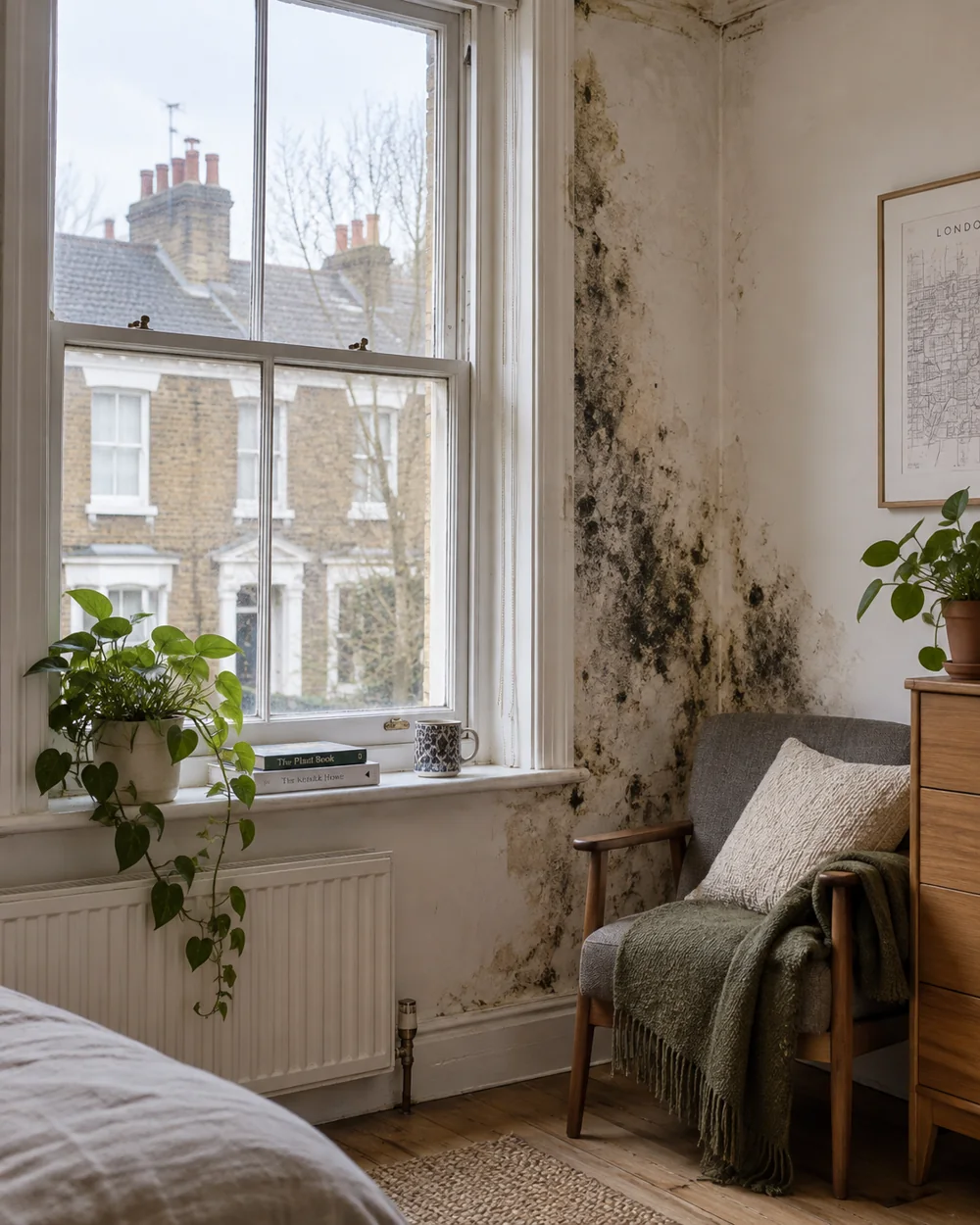
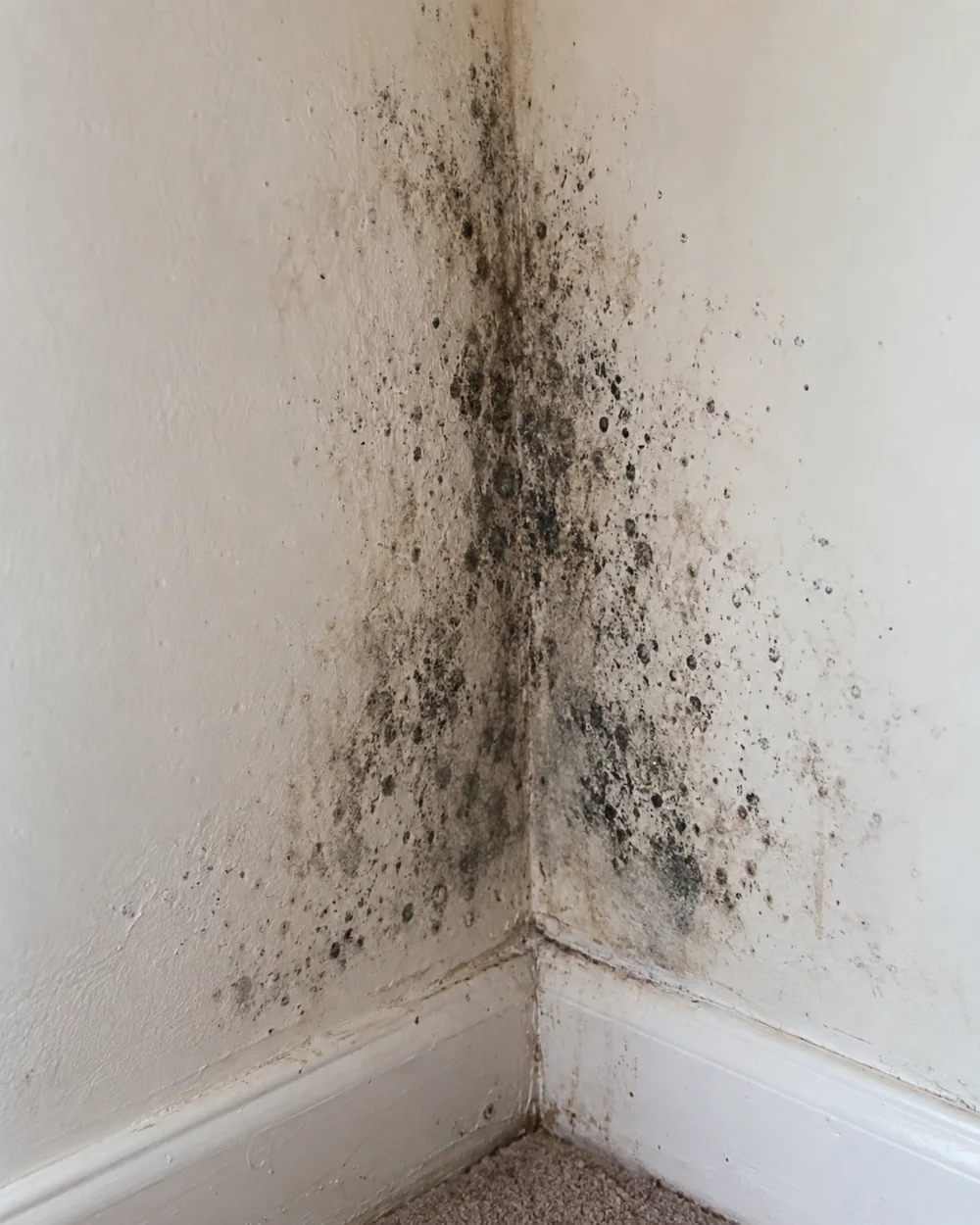
Start with the postcode, floor and room, then describe the position of the growth using a window, doorway or corner as a reference. Wide photographs make it easier for someone who has not visited to understand the location. Close-ups can show finish condition, but a cropped black patch gives little help with the room’s relationship to the rest of the building.
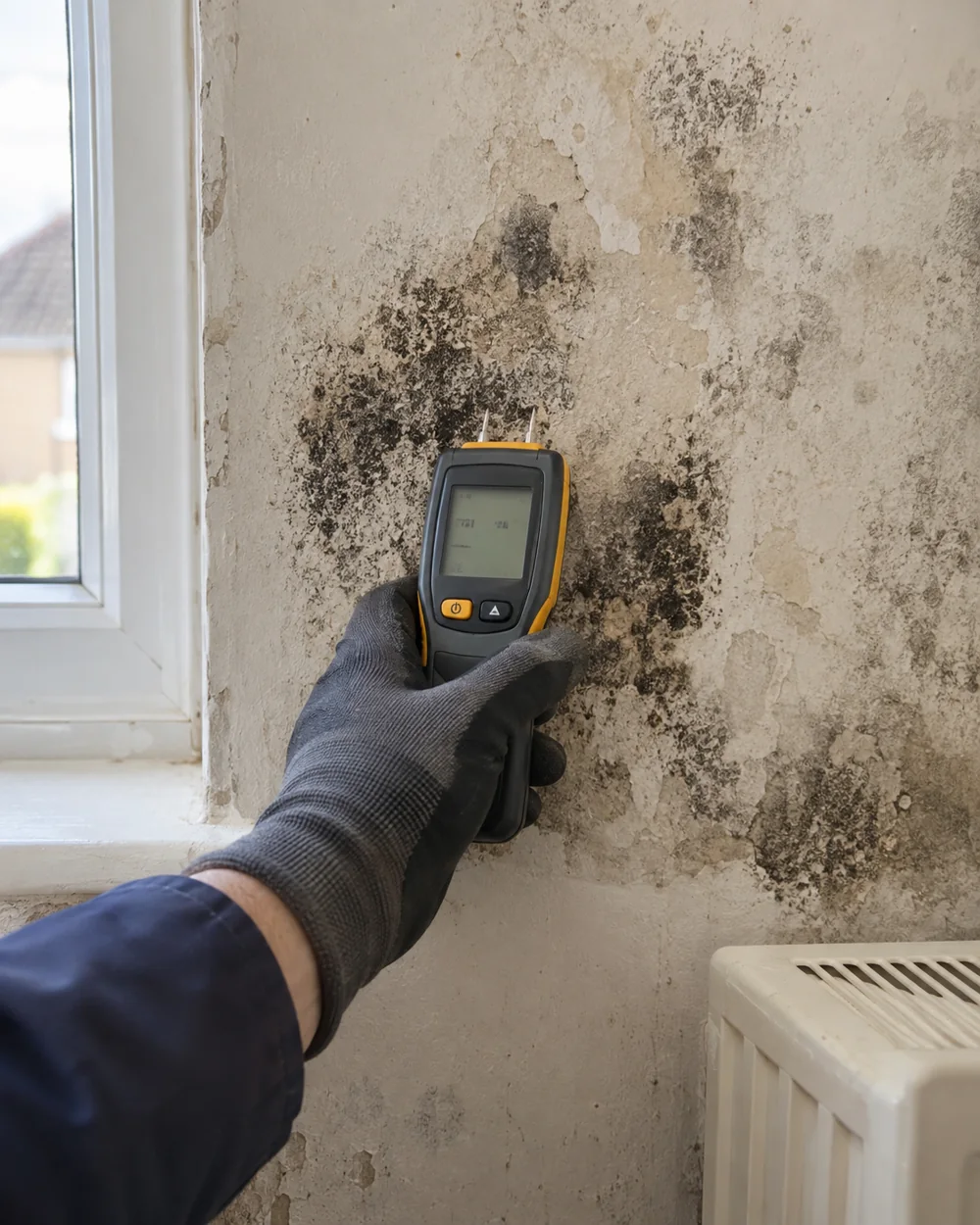
Keep the date of discovery separate from the date the problem may have started. An occupant may first see mould after moving a cabinet, while an earlier maintenance note mentions dampness in the same room. Both pieces of information matter. Our inspection service explains how accessible evidence and reported history can be considered without treating either as a complete diagnosis.
Questions about this problem
Can an owner enquire while the occupant provides access?
Yes. Explain that arrangement in advance, including who agrees the work and who can answer questions about the room. Clear contact roles make the visit and any follow-up easier.
Should all repair paperwork be sent immediately?
Start with relevant dates, locations and outcomes. The initial conversation can identify which documents may help, rather than relying on a large file without a clear connection to the affected surface.
Does a report decide who must pay for repairs?
Its scope should explain what evidence and observations it provides. Responsibility can involve agreements and information outside the inspection, so a surface finding should not be presented as a complete decision on that question.
Records worth bringing to the conversation
A short list of repairs is more helpful than an unfiltered folder of correspondence. Include what was repaired, where the work took place and whether the visible pattern changed afterwards. If somebody reports that a leak was fixed, explain how that was established. A repair invoice confirms that work was recorded; it does not, by itself, show the present moisture condition of the affected finish.
Where the enquiry concerns rented accommodation, our rental property report service can discuss the purpose of a written record. Ask which rooms and accessible surfaces it covers, what observations it contains and what limits apply. A report should not imply that every hidden part of the property was inspected, or assign responsibility beyond the evidence available.
If several people will receive the findings, agree the main contact and purpose before the appointment. An occupant may need preparation instructions while an owner needs the next repair decision. Both should refer to the same affected room and agreed scope. Keeping these needs explicit helps prevent a limited surface visit being described later as a full investigation of the building.
Agree who can authorise the next step
In a Southwark flat, the affected ceiling might sit beneath another dwelling, while a house may have a roof or room above it. Describe the actual arrangement. If further access depends on another owner or management team, identify that before booking. Surface treatment inside one room should not be presented as permission to investigate a separate space or alter a shared building element.
Our black mould removal service concerns an agreed treatment scope. Discuss the finish, reachable area and preparation first. Damaged board, loose coverings or a continuing damp stain may require another decision before decoration. The person arranging the visit should be able to explain what has been authorised, rather than leave the occupant to resolve scope questions when work starts.
A handover that supports follow-up
After agreed work, keep the original room reference and photographs. Record whether growth returns at the same boundary, whether a separate stain remains damp and which repairs or ventilation changes occurred in between. This makes a follow-up more useful than simply reporting that mould has returned somewhere. It also avoids asking the next person to reconstruct the history from messages with different descriptions.
For enquiries in selected surrounding areas, see Bermondsey or Westminster. For Southwark, send the room description and identify the person providing access. We can discuss an appropriate first appointment even when some records are missing, provided uncertainties are stated clearly and a reported explanation is not treated as an established finding.
LET’S DISCUSS THE NEXT STEP
Prepare a clear Southwark mould enquiry
When several people are arranging the work, choose one contact and a clear purpose for the enquiry. Provide the occupant’s description alongside any relevant repair records, keeping observations separate from assumptions. We can then discuss an appointment and readable scope that helps everyone coordinate the next step without treating surface removal as a decision about responsibility.