
MOULD & MOISTURE / LONDON
Bedroom & Living Room Mould Treatment London
Finding mould beside a bed or behind a wardrobe is unsettling, particularly when the wall looked fine a few weeks earlier. We look at mould in bedrooms and living rooms with attention to the wall, the room conditions and the way air moves around furniture. Treatment needs to be matched to the affected surface, and the reasons for recurring dampness need their own explanation.

YOUR PROPERTY / THE DETAILS
The patch hidden behind furniture
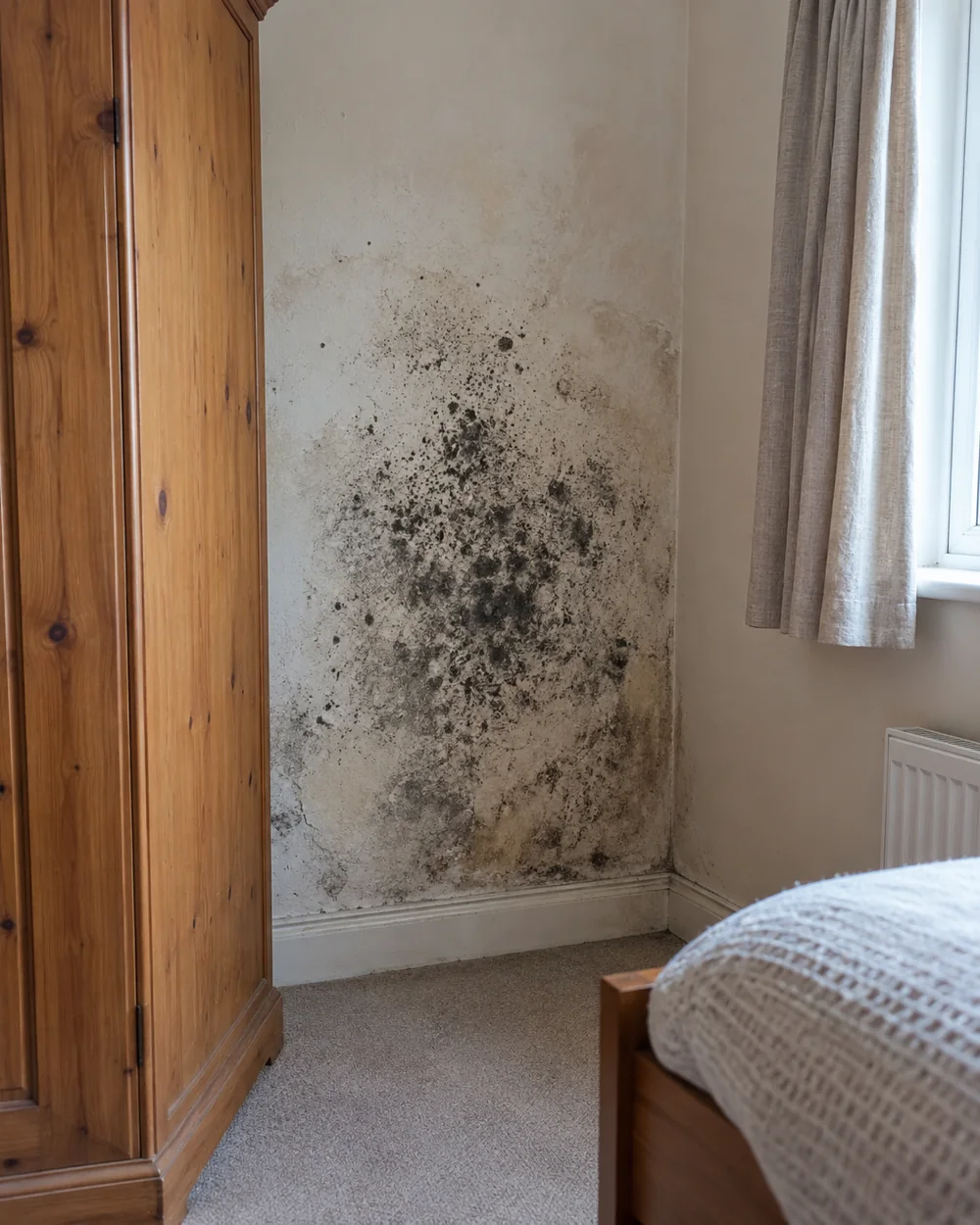
A wardrobe against an external wall can conceal a problem for months. The wall may be colder than the rest of the room, while the narrow space behind the furniture receives little moving air. Moisture can linger there even when the visible parts of the room seem comfortable. Often the first clue is a musty smell rather than an obvious stain.
That does not mean furniture placement is always the cause. Water entering through an external defect, a concealed pipe leak or an already damp wall can produce growth in the same area. The location is a clue to investigate, not a reason to settle on an explanation before looking at the building and the history of the problem.
YOUR PROPERTY / THE DETAILS
Bedrooms and living rooms behave differently
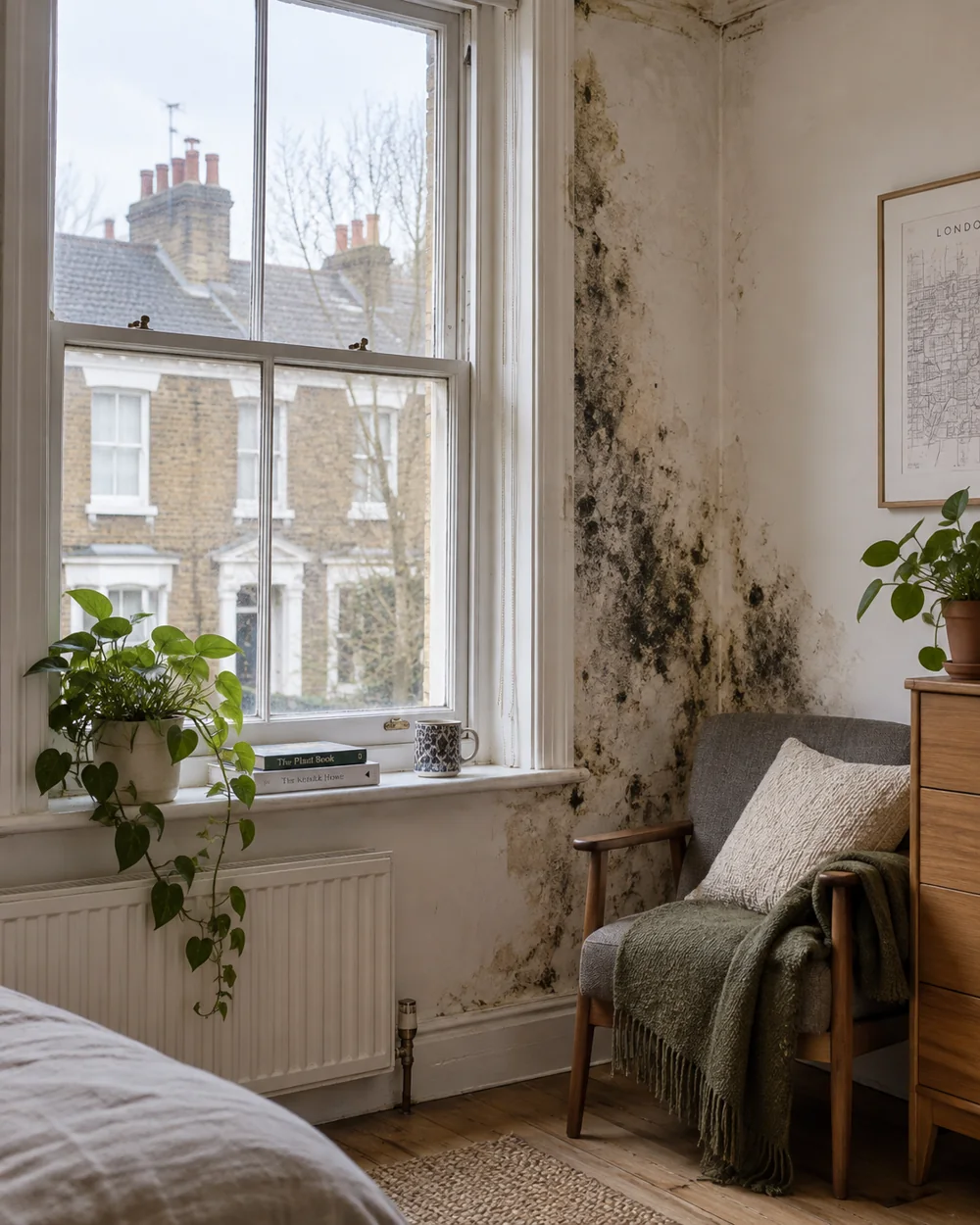
Bedrooms are often cooler overnight and may be closed for long periods. Moisture from people sleeping, drying clothes elsewhere in the home or an adjacent bathroom can reach a cold surface. A corner beside a window, the wall behind a headboard and the space behind heavy curtains can each have conditions that differ from the centre of the room.
Living rooms may have a different pattern. An external corner behind a sofa can remain poorly ventilated, while a bay window exposes more cold surface. In a converted flat, the shape of the room and its heating arrangement can leave some areas much colder than others. We consider those differences rather than offering the same furniture advice for every property.
YOUR PROPERTY / THE DETAILS
Inspect the wall and the belongings separately
We examine the visible growth and the condition of the wall finish, and discuss what is known about moisture and ventilation. Loose wallpaper, damp plaster and mould on a painted surface may need different next steps. If the patch extends behind fitted furniture, access limitations need to be acknowledged rather than assuming the visible edge represents the whole affected area.
Belongings are a separate part of the conversation. A wall treatment does not automatically include wardrobes, mattresses, upholstery or stored clothing. Let us know what has been affected so the agreed work is clear. Moving large or fixed furniture may require preparation and permission, especially in a rented home or a furnished flat managed by an agent.
YOUR PROPERTY / THE DETAILS
Treat the growth without losing sight of moisture
Appropriate mould treatment can address the affected surfaces once the scope is agreed. It cannot, by itself, repair a leaking wall or change a cold corner. Where decorative materials are damaged, we explain that cleaning, repair and redecoration may be separate stages. The condition beneath wallpaper or behind furniture may only become clear when access is available.
Prevention should be practical. Advice may involve improving airflow around a cold wall, checking extraction elsewhere in the home or investigating a building defect. A blanket instruction to heat every room more is not a useful substitute for understanding the room. If cold surfaces are a recurring issue, a cold wall and condensation survey can help clarify the pattern.
YOUR PROPERTY / THE DETAILS
Make the visit easier to plan
Tell us which rooms are affected, whether the mould is visible throughout the year, and what happens after cleaning. Mention any musty smell, damp belongings, recent decorating or changes to windows and heating. Photographs of the whole wall and the affected patch are usually more informative than a close-up alone, because the position in the room matters.
If access behind a wardrobe or sofa is limited, say so when arranging the visit. Do not promise that a fixed unit can be moved without checking. For tenants and landlords, a short history of reported problems and previous repairs helps everyone understand what has already been tried. An inspection should build on that history rather than start the discussion again.
BEFORE YOU CALL
A few useful questions
Is a musty smell enough to identify mould?
A smell can be a reason to investigate, but it does not establish the location or cause. Hidden growth, damp materials and other sources should be considered alongside visible evidence.
Will moving the wardrobe solve it?
A gap may improve airflow in some rooms, but it will not repair a leak or dry a persistently damp wall. We assess the wall before treating furniture position as the answer.
Can you inspect a furnished rental flat?
Explain the access arrangements and whether furniture can be moved. The visit needs to take account of occupied rooms, belongings and any permission required for inspecting concealed surfaces.
TELL US WHAT YOU HAVE NOTICED
Need help with this problem?
Have your postcode and the affected rooms ready. Tell us when the problem started, what has changed and any work already tried. We can discuss the appropriate starting point and the access or reporting arrangements before a visit is agreed.