
What to prepare before a mould inspection
You do not need to name the cause of the mould before making an enquiry. A few clear observations help explain the room and make the proposed appointment easier to arrange. Start with what you can see and identify what remains hidden.
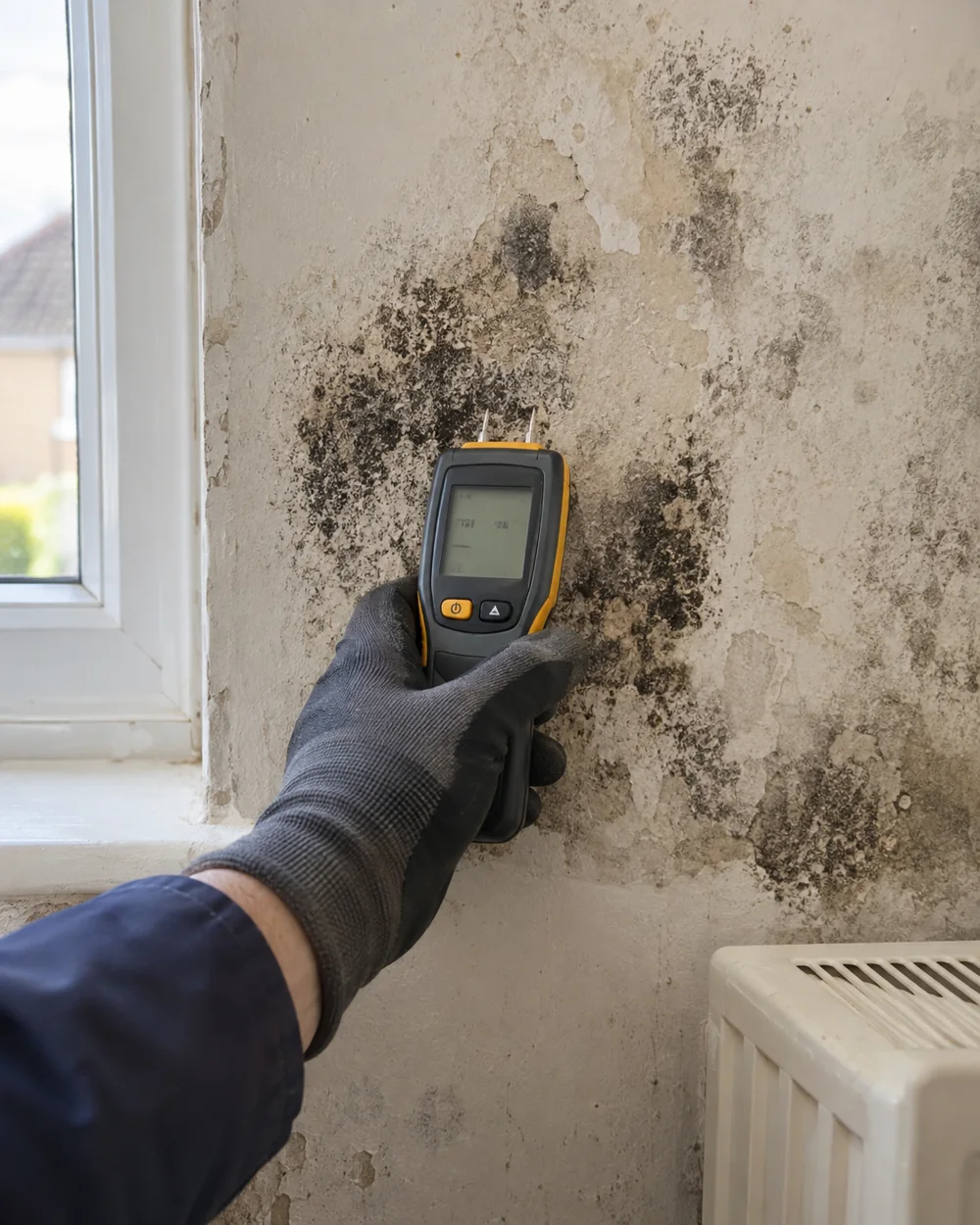
Take a wide view before a close-up
A photograph from the doorway shows the relationship between the affected wall, window, furniture and adjoining rooms. Add a closer view of growth, damaged paint or a separate water stain. Label the room if several places are involved. Ten photographs of the same dark corner may explain less than two views showing its setting.
If furniture conceals the wall, describe the part you cannot see. Do not move a heavy wardrobe alone or remove a fitted panel for the initial enquiry. Our Camden guidance explains three useful views of a concealed bedroom corner and the difference between movable furniture and fitted storage.
Put the events in order
Note when you first noticed the patch, whether it returned after cleaning and what changed before or afterwards. Include earlier leaks, window work, extraction repairs and decoration. Approximate dates are useful when you state they are approximate. The discovery date may be different from when growth began, especially behind furniture or in a little-used room.
Separate your observations from information passed on by another person. A previous occupant may describe a repair that you cannot confirm. Label that account and keep any written record. An inspection should use reported history alongside present findings, with missing details acknowledged rather than filled by a guess.
Agree entry and authority for further access
Say who can provide entry and whether the affected rooms are occupied during the day. Mention high ceilings, fitted units and any other restriction before booking. Permission to enter one room does not automatically authorise opening a finish, examining a neighbouring flat or working on a shared system. Those questions should be discussed around a defined purpose.
The Marylebone page starts with what access behind a cabinet would actually achieve. For a rented home, our report guidance also explains how to agree the document’s purpose, recipients and rooms. A maintenance record and a report required for a particular formal use may need different scopes.
Make preparation fit the appointment
Ask which surfaces must be accessible and how belongings should be arranged before work. Keep the room usable where possible, and describe practical constraints. Wall treatment, restoring furniture, repairs and decoration should not be assumed to be one task. A clear preparation list avoids dismantling the room before anyone has explained what space is needed.
Have your postcode, room list and known repair information ready when you contact the team. Explain the question you most need answered. After an appointment, keep findings and any agreed work together so a returning patch can be compared with the original observations rather than starting the history again.