
MOULD & MOISTURE / LONDON
Hidden Leak & Moisture Detection London
Sometimes the first sign of a leak is nowhere near a tap or pipe. Paint starts lifting, a skirting board changes shape, or a musty smell develops beside a wall that ought to be dry. Our hidden leak and moisture detection service investigates those signs and considers whether concealed water is involved. We explain what can be established from accessible areas and what may need further checks.
YOUR PROPERTY / THE DETAILS
Follow the moisture, not just the stain
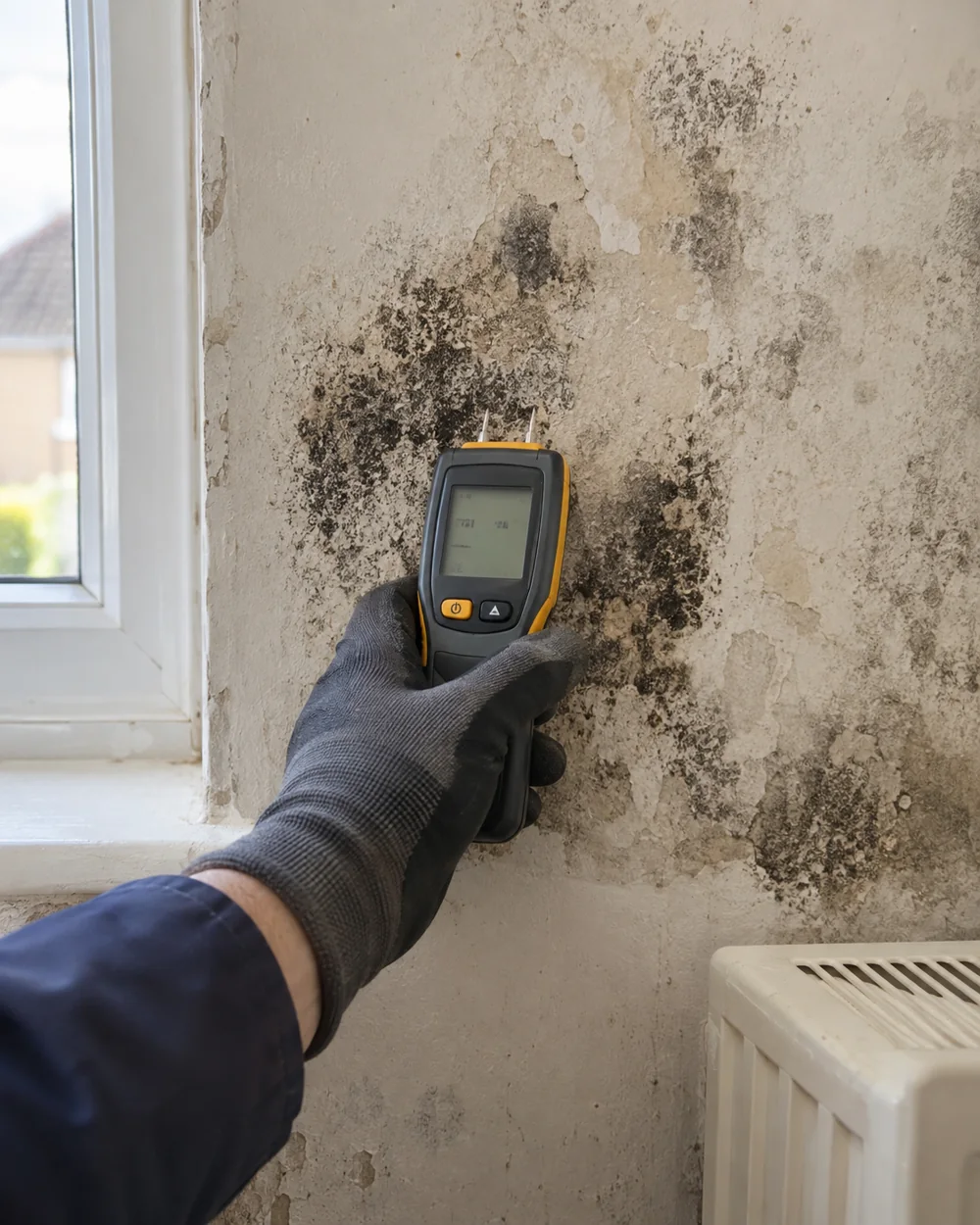
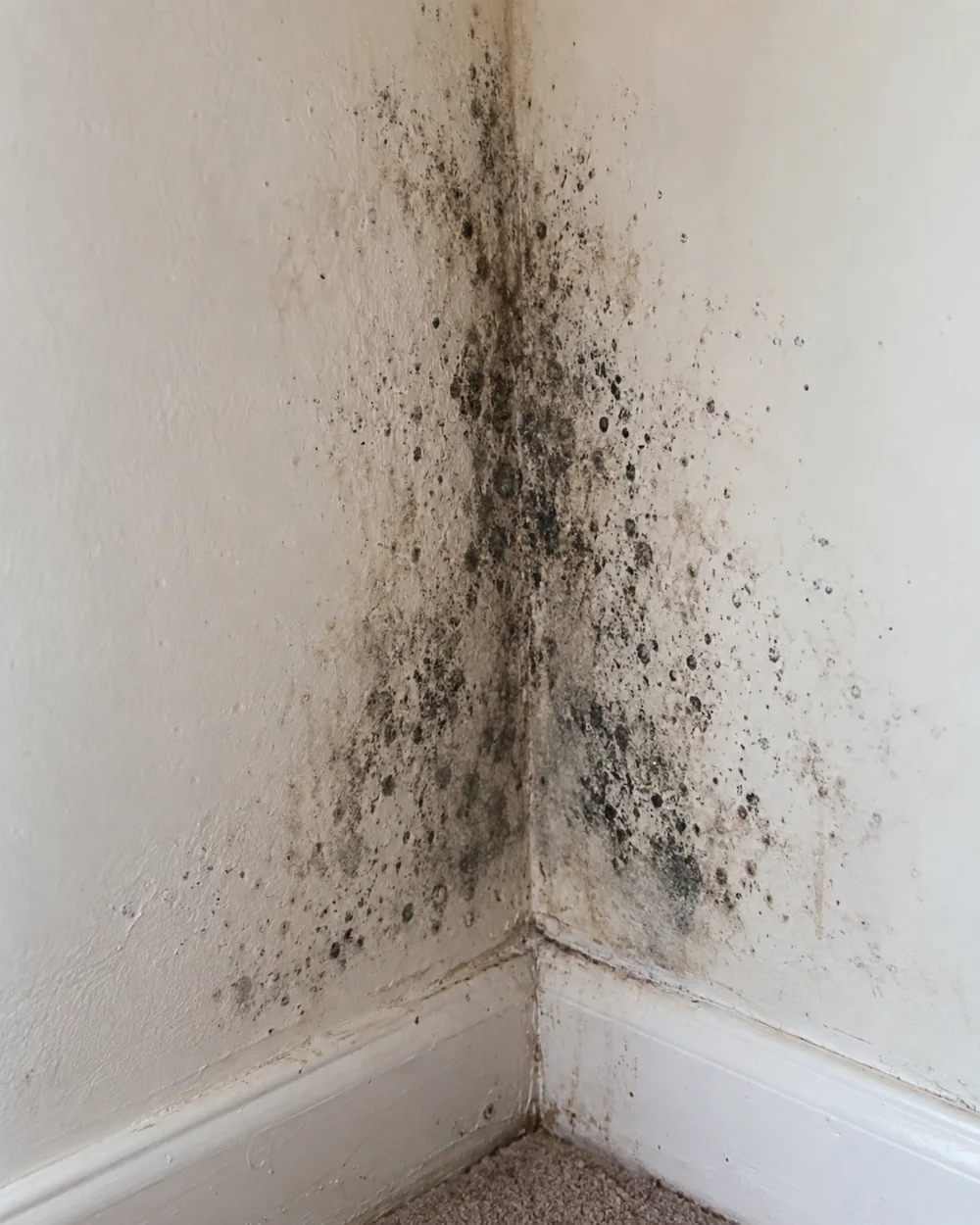
Water can travel along materials before it becomes visible. A mark on a ceiling may not sit directly below the source, and dampness beside a bathroom does not automatically identify a particular fitting. We look at the pattern across accessible surfaces and ask about the rooms and water services nearby. The stain is the beginning of the investigation, not necessarily its destination.
Intermittent leaks can be particularly difficult to understand. A patch may appear after a shower, following use of an appliance or during a period when nobody notices it growing. Describe those patterns if you can. Earlier photographs, repair notes and observations from other occupants can help build a clearer sequence without assuming that one event proves the cause.
YOUR PROPERTY / THE DETAILS
Check other explanations as well
A concealed plumbing leak is one possibility, but condensation, rainwater ingress and residual dampness can produce similar visible symptoms. In a London flat, another dwelling or communal pipework may also be relevant. We consider the surrounding construction and the history before treating every unexpected stain as a leak that can be found through one local test.
The distinction affects the next steps. An active water source needs different attention from materials still drying after a repair. A cold surface repeatedly collecting condensation needs another approach again. Our damp wall investigation service can help where the pattern is broader or the source is uncertain, while a focused leak enquiry may be appropriate when the evidence points to nearby plumbing.
YOUR PROPERTY / THE DETAILS
Accessible checks and their limits
We discuss the accessible areas, visible damage and relevant moisture patterns. Meter readings can help identify where conditions differ, but they need interpretation alongside the wall material and other findings. A device does not see every concealed pipe or establish that a particular joint is leaking. The explanation should be clear about what the checks show and what they cannot confirm.
Access is often the main limitation. Fitted cabinetry, tiled surfaces, floor coverings and another flat may hide the area that needs examining. Further access or opening-up work must be agreed, including who has authority to approve it. We do not treat an initial inspection as permission to remove finishes or promise that every concealed source can be located without disturbance.
YOUR PROPERTY / THE DETAILS
Repairing the source is only one stage
Once a likely water source has been identified, the appropriate repair needs arranging. That may involve plumbing or another trade, depending on the findings. Discuss whether the inspection includes any remedial work; do not assume it does. The next steps should explain who needs to act, what requires confirmation and which parts of the building remain unassessed.
Materials already affected may need drying, further assessment, mould treatment or replacement. Repainting too early can conceal continuing moisture or give a poor finish. We discuss the distinction between stopping fresh water, dealing with damaged materials and restoring decoration. If the visible growth is the main concern after the source is addressed, mould removal can be planned as a separate part of the work.
YOUR PROPERTY / THE DETAILS
Information that makes a difference
When you call, describe the patch, its position and whether it appears to be changing. Mention recent plumbing work, bathrooms or appliances nearby, any earlier leak and whether the problem changes after rain. If another property is above or alongside the affected area, let us know. These details help explain the scope and access questions before a visit is arranged.
For landlords and managing agents, tell us who occupies the property and who can authorise further access. Notes from a plumber or a previous inspection may be useful. If water is actively entering the home, explain that clearly when seeking help so an investigation is not confused with an urgent repair. A routine inspection should not delay attention to an ongoing water incident.
BEFORE YOU CALL
A few useful questions
Can a leak be found without removing finishes?
Sometimes accessible evidence is enough to guide the next step. In other cases, additional access is needed. We explain those limits rather than promising that every concealed leak can be confirmed without disturbance.
Does moisture after a repair mean the repair failed?
Not necessarily. Materials may remain damp after the water source has stopped, but fresh moisture is also possible. The history and changing pattern need consideration before drawing a conclusion.
Will you fix the plumbing during the inspection?
The agreed scope must be clear. Moisture investigation and plumbing repair are different tasks. Ask what is included, who would carry out any repair and what further access might be required.
TELL US WHAT YOU HAVE NOTICED
Need help with this problem?
Have your postcode and the affected rooms ready. Tell us when the problem started, what has changed and any work already tried. We can discuss the appropriate starting point and the access or reporting arrangements before a visit is agreed.