
YOUR HOME / BERMONDSEY
Black Mould Removal Bermondsey
Mould around a Bermondsey window can sit beside a stain that changes after rainfall. Those two observations may belong together, or they may reflect different moisture routes. We discuss the pattern across the opening and surrounding wall before agreeing removal, so a cleaner finish does not obscure a question about water entering the building.
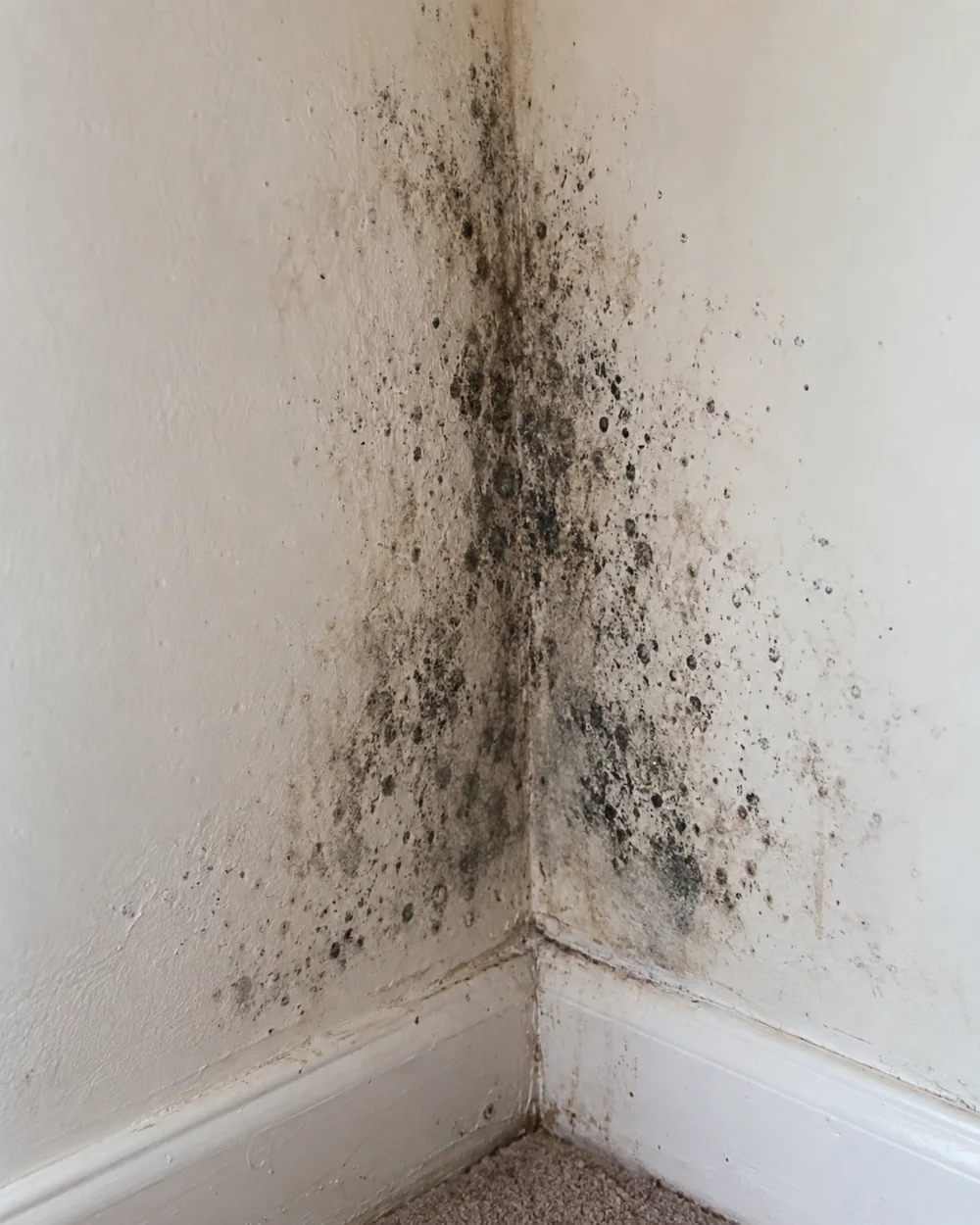
- Compare rain-related and indoor patterns
- Show the opening and wall together
- Keep exterior repairs in the right scope
Two marks beside the same window do not necessarily have the same cause.
Separate the observations before joining the explanation
Say exactly what changes after rain: a dark boundary, a damp sill, lifting paint or water on the room side of the glass. Mention how quickly the change appears and how long it lasts. The timing can guide a useful question, but it does not prove which exterior detail is responsible. A wall may also be affected by indoor moisture during the same period.
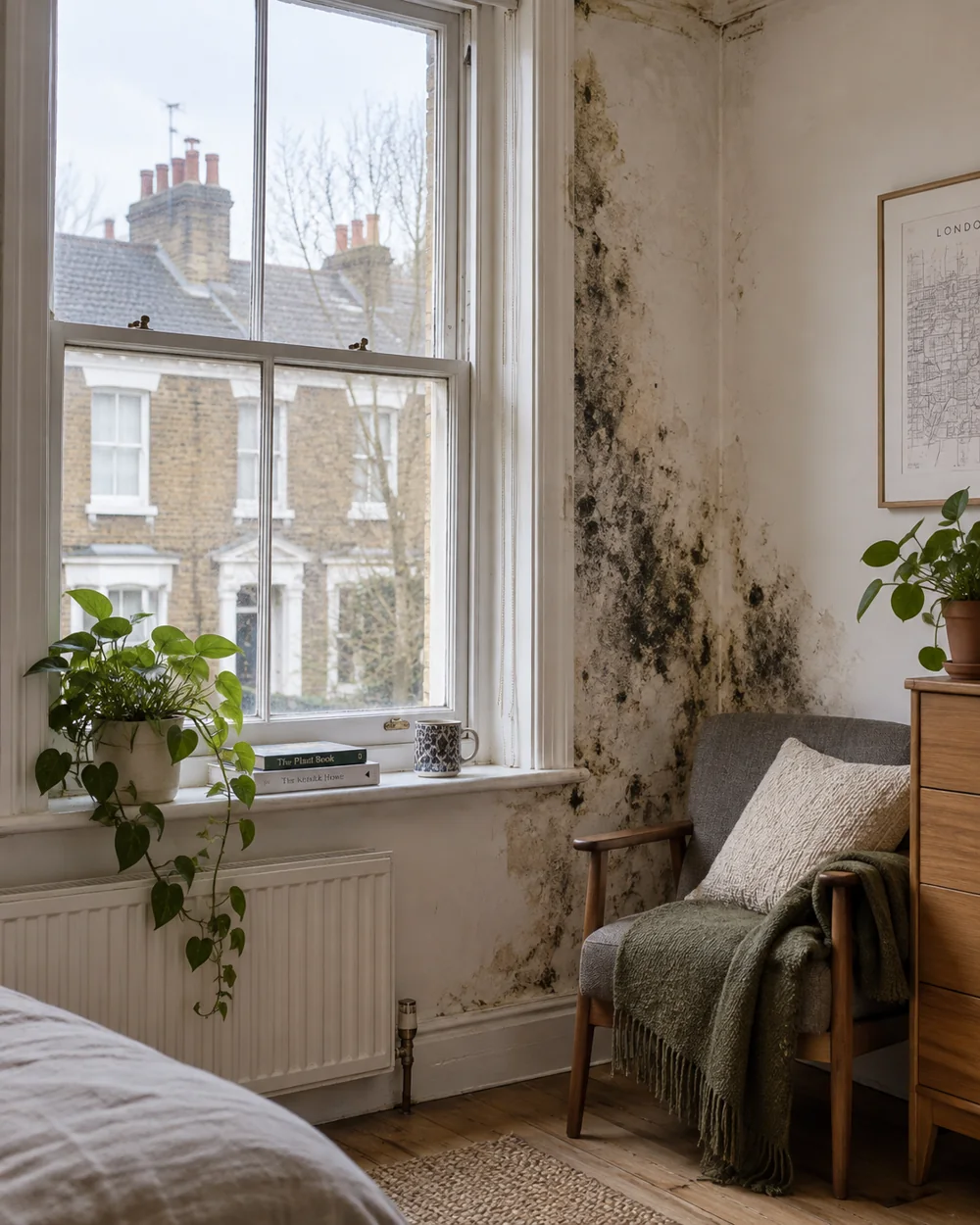
Our damp wall investigation service considers the reported history alongside accessible material condition. Explain whether the stain sits above, below or beside the opening and whether growth extends outside it. If photographs exist from both wet and dry conditions, keep them together. A single image taken after the surface dries can leave an important part of the pattern invisible.
The glazing has its own daily pattern
Water forming on glass overnight is a different observation from plaster becoming damp after rainfall. Describe both if they occur. Include the usual position of blinds or curtains and whether the room is heated and occupied. Our window mould treatment page discusses surrounding surfaces individually, rather than treating glass, seals, timber and painted plaster as interchangeable materials.
Do not assume that replacing a frame will answer every question about the adjoining wall. Equally, a condensation pattern should not dismiss a separate concern about water entry. For the Bermondsey property, explain the floor, opening position and what is reachable from indoors. A visit confined to the room may be unable to assess an external joint or higher building element directly.
Plan the exterior question without unsafe preparation
There is no need to lean out of a window or climb to obtain an exterior photograph for an initial enquiry. Describe the concern and provide any existing safe view or repair record. If a further external inspection is recommended, ask what it needs to establish and who can authorise it. Shared elevations or areas controlled by another party need appropriate access arrangements.
A recommendation should connect the proposed check to the observed pattern. A list of possible repairs without that explanation can be difficult to assess. Previous pointing, seal or gutter work may be relevant where it relates to the affected location, but its existence is not evidence that the original concern has been resolved. Keep the chronology of those changes alongside the room photographs.
If an exterior repair is arranged by someone else, ask for a usable record of its location and completion date. That allows later observations indoors to be compared with a known event. It is more informative than the general statement that the outside has been checked, particularly where more than one opening or building elevation could be involved in the enquiry.
Removal while the moisture question stays visible
Suitable black mould removal addresses agreed affected surfaces. Ask how dampness and loose finish will influence the treatment plan, and whether material repair belongs in a separate scope. Decoration should have an understandable place in the sequence. A newly painted boundary can make later comparison harder if no record of the earlier pattern has been kept.
After agreed treatment or repair, observe the original location through ordinary use and relevant weather changes. Record what remains different, rather than declaring success from one dry afternoon. The guidance for Southwark and Deptford is available for other addresses; keep your rain observations separate from the daily wet-glass pattern. Contact us about Bermondsey with the postcode, affected opening and the most useful dates in its repair history.
Questions about this problem
Does a stain after rain prove a window leak?
No. It is useful timing evidence, but water can reach a surface by more than one route. The location, building relationship and accessible condition still need consideration.
Should I photograph outside the frame?
Only from a safe normal position. Explain access limits instead of attempting to reach an exterior detail; a further check can be planned separately where needed.
Can mould and a water stain be treated together?
They can be discussed within one enquiry, but the surfaces and moisture questions should remain distinct. Treatment scope depends on material condition and what still needs investigation or repair.
LET’S DISCUSS THE NEXT STEP
Describe the Bermondsey window and wall pattern
Tell us whether the window mark follows rainfall, everyday room use or both, and show the surrounding wall as well as the frame. That distinction helps organise the questions before treatment is chosen. We can discuss accessible indoor surfaces and explain where an exterior concern requires another arrangement, so preparation does not depend on unsafe access outside.