
MOULD & MOISTURE / LONDON
Rental Property Mould Reports London
When mould is reported in a rented home, everyone needs a clear account of what is happening. A tenant may be worried about a bedroom; a landlord may need to decide which repair to arrange; an agent may be coordinating access. Our rental property mould reports focus on the observed condition, relevant moisture patterns and practical next steps. They should clarify the problem without jumping to blame.
YOUR PROPERTY / THE DETAILS
Begin with the occupants’ observations
The person living in the property can often explain details that are not visible during a short visit. A window may be wet every morning, a ceiling patch may change after rain, or mould may return soon after cleaning. We ask about those patterns and previous reports so the inspection considers the history, not only the appearance of the room on the day.
Photographs, repair records and earlier correspondence can help establish that sequence. They should be relevant to the property concern and distinguish observations from assumptions. For example, a report that a fan is noisy is not the same as confirmation that it extracts effectively. A useful assessment keeps those distinctions visible rather than treating every statement as a verified finding.
YOUR PROPERTY / THE DETAILS
Look at the building as well as room use
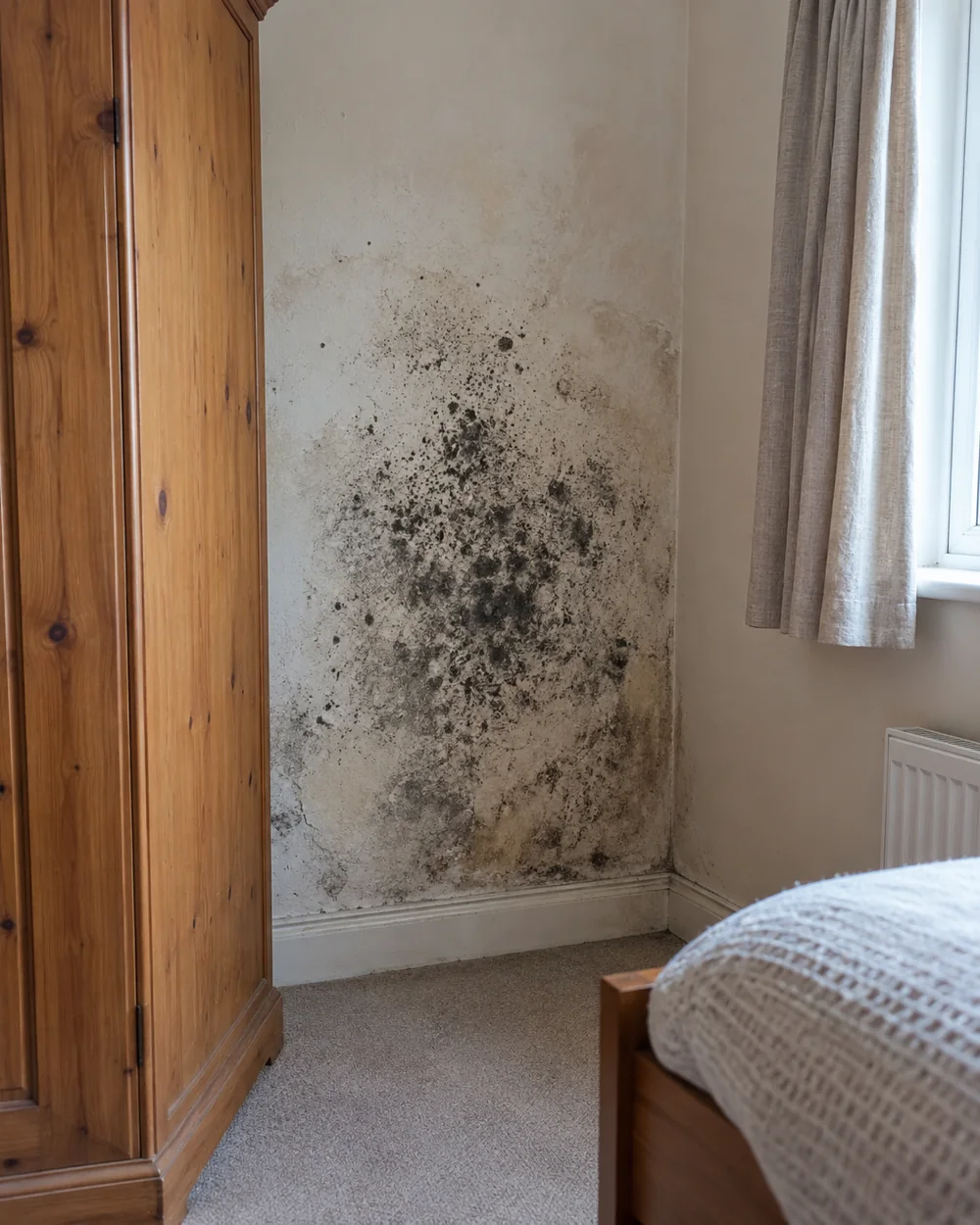
Condensation, ventilation, cold surfaces and water entering the building can all contribute to mould. The inspection considers where growth occurs and what conditions are evident in accessible areas. A bedroom behind a wardrobe and a bathroom beneath another flat may need different questions. We avoid assuming that similar-looking patches must have the same source or require identical repairs.
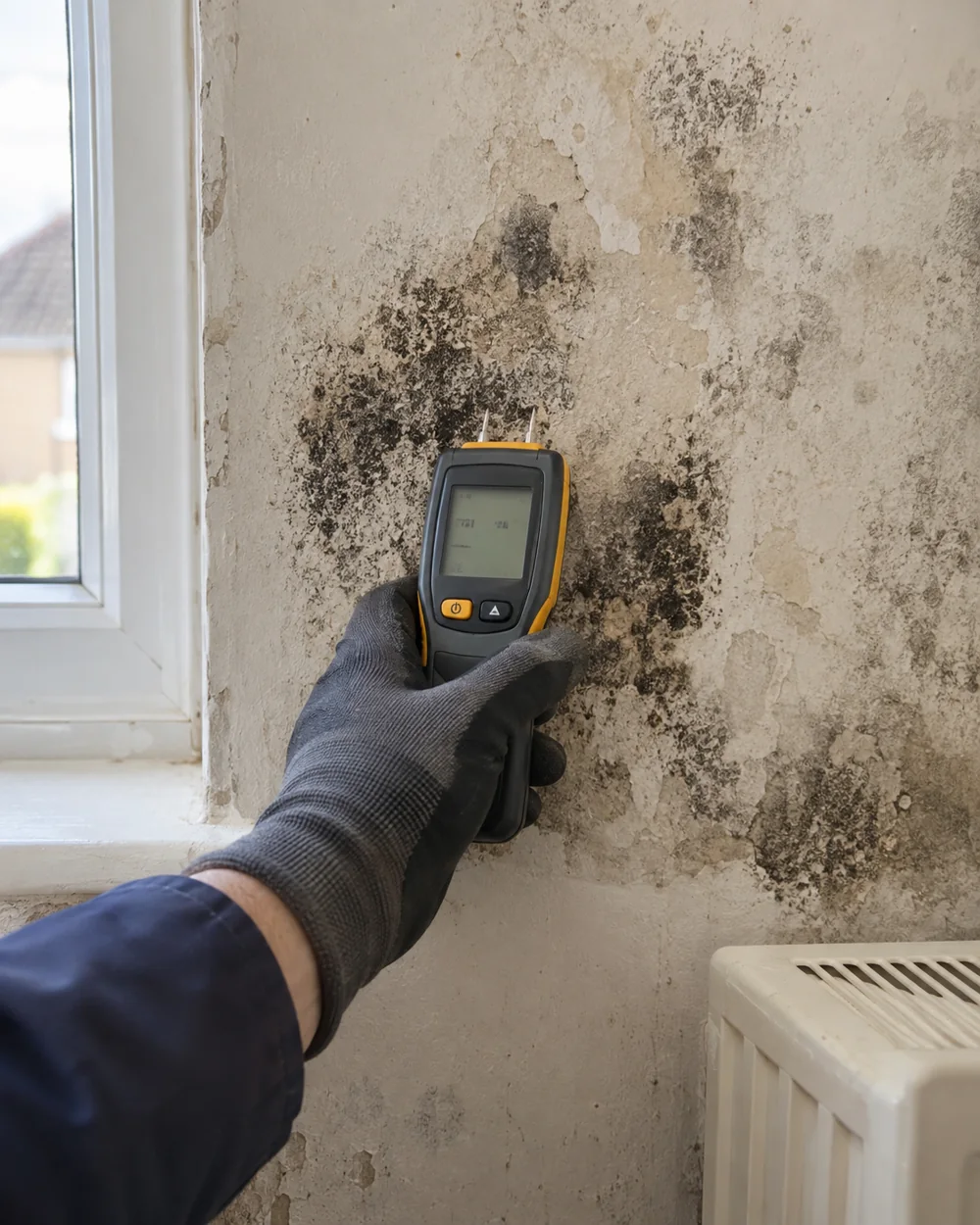
Ordinary household activities produce moisture, but that does not establish responsibility for a particular problem. The ventilation arrangement, heating distribution and building condition matter too. If a wall may be affected by a concealed leak or an external defect, that possibility needs investigation. The report should help decide what needs checking or repairing, rather than replace inspection with a judgement about lifestyle.
YOUR PROPERTY / THE DETAILS
Agree what the report is for
Before booking, explain who is commissioning the report and how it will be used. You may need a practical record for arranging maintenance, a written assessment for a property file, or information to coordinate treatment. The required scope, rooms, photographs and findings should be discussed in advance. A written report should not be assumed to include every possible survey or test.
Different purposes can require different qualifications, instructions or levels of investigation. If a report is intended for a formal dispute, an insurer or a particular decision-maker, explain that requirement before arranging the visit. A routine property assessment should not be described as a legal determination of responsibility. We discuss the intended purpose so expectations about the document are clear.
YOUR PROPERTY / THE DETAILS
Findings, limits and recommendations
The report needs to distinguish what was seen from what is considered likely. It should identify accessible affected areas, explain relevant observations and acknowledge anything that could not be inspected. A concealed section of wall, a neighbouring flat or restricted exterior access can limit conclusions. Those limits should remain visible rather than disappear behind a confident-sounding diagnosis.
Recommendations should be useful to whoever has to organise the work. Surface treatment, extraction checks, building repairs, further access and later decoration are separate actions. Their proposed sequence matters, especially when several people are involved. Ask us to explain which steps follow from the findings and which depend on further confirmation, so the document can support a practical maintenance plan.
YOUR PROPERTY / THE DETAILS
Arrange access and share the right information
Tell us the postcode, affected rooms and whether the home is occupied. Agree how the tenant will be informed and who can provide access on the day. Do not assume that a commissioning landlord or agent can approve entry to every neighbouring space. Permission for moving fitted items or opening finishes should be considered separately from a routine visual inspection.
Provide a short history of previous treatment, fan repairs, plumbing work or water ingress if available. The report can then consider what has already been attempted. If the inspection points towards a specific moisture investigation or mould treatment, those services can be discussed as next steps. The value of the report is a clearer basis for action, not simply more paperwork about the same unresolved patch.
BEFORE YOU CALL
A few useful questions
Can a tenant arrange an enquiry?
Yes. Explain your role and the access arrangements. If a written report is required, discuss its purpose, who will receive it and any permission needed before committing to an inspection.
Does the report decide who is legally responsible?
A property assessment records findings and recommendations within an agreed scope. It should not be treated as a legal ruling. Tell us beforehand if you need a document for a specific formal purpose.
Can you use earlier photographs and repair notes?
They can help explain the history. They do not remove the need to assess current conditions or confirm concealed causes. Please provide relevant dates and explain what each record shows.
TELL US WHAT YOU HAVE NOTICED
Need help with this problem?
Have your postcode and the affected rooms ready. Tell us when the problem started, what has changed and any work already tried. We can discuss the appropriate starting point and the access or reporting arrangements before a visit is agreed.