
MOULD & MOISTURE / LONDON
Cold Wall & Condensation Surveys London
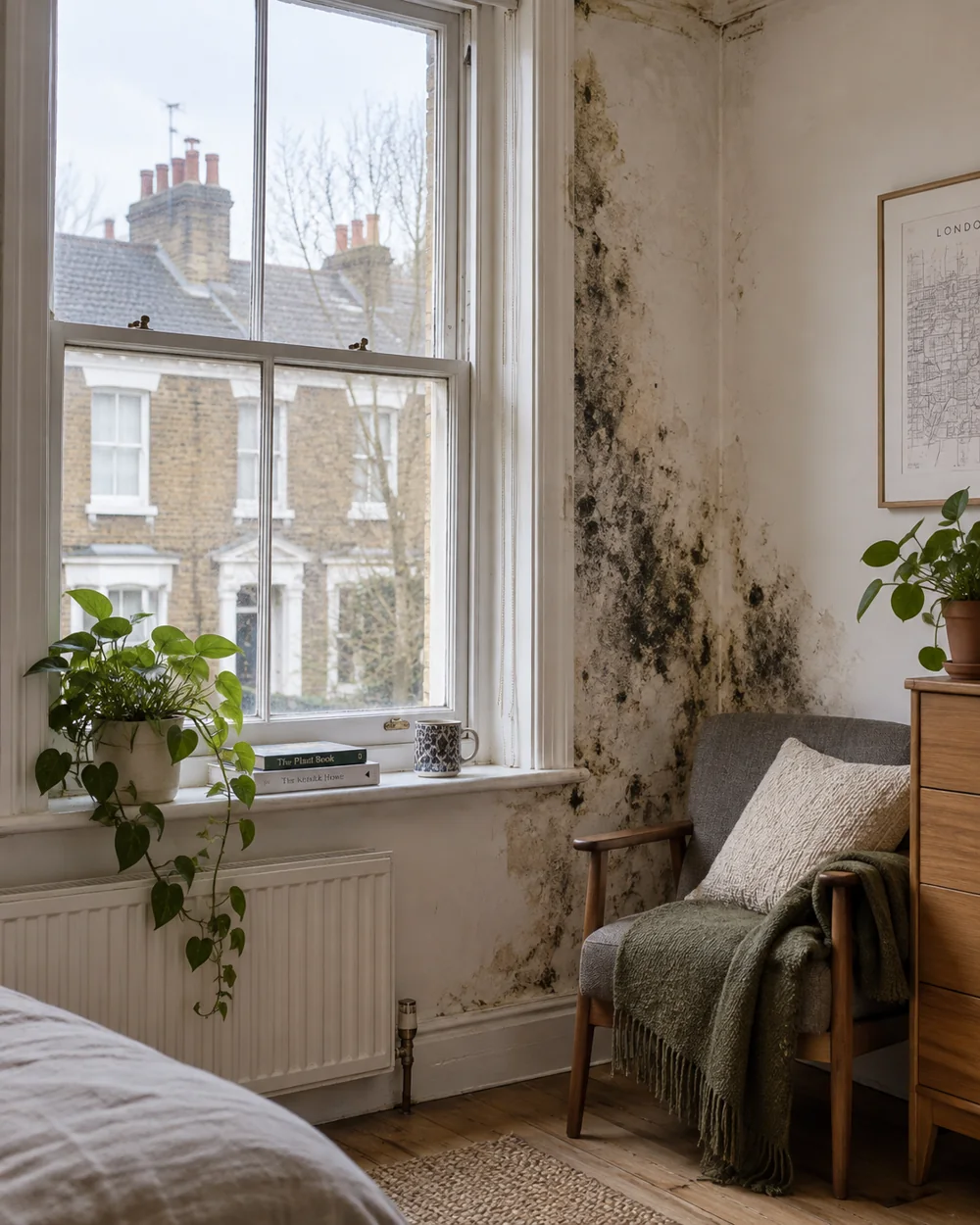
A room can feel reasonably warm while one wall remains cold enough to collect moisture. That is why mould may keep appearing in the same corner even when the rest of the home looks dry. Our cold wall and condensation surveys examine the relationship between room conditions, surface temperatures and airflow, so recommendations can be based on the affected areas rather than on assumptions about the household.
YOUR PROPERTY / THE DETAILS
A cold surface changes the picture
Indoor air carries moisture from ordinary use of the home. When that air meets a sufficiently cold surface, condensation can form. The wall does not have to look wet all the time for repeated dampness to become a problem. An external corner, window reveal or wall behind furniture may have a very different temperature from the surrounding room.
Buildings do not behave uniformly. A bay, an exposed upper-floor room or the junction between different materials may lose heat differently from adjacent surfaces. A converted Victorian house and a newer flat can therefore show different patterns. We look at where growth occurs and how the building is arranged before discussing what those cold areas might mean.
YOUR PROPERTY / THE DETAILS
Airflow is part of the survey
Air must be able to move through the room and moisture must have a route out of the property. Heavy curtains, closely fitted wardrobes and a sofa against an external wall can affect conditions locally. Elsewhere, weak bathroom extraction may contribute moisture to rooms beyond the bathroom itself. The investigation considers both the affected surface and the wider moisture path.
A survey also needs context about heating and ventilation. We ask how rooms are used, whether windows have changed, and when mould became noticeable. These questions help interpret the property; they are not an invitation to blame the occupants. A ventilation arrangement that is difficult to use, or a building defect that leaves materials damp, deserves attention in its own right.
YOUR PROPERTY / THE DETAILS
Measurements need an explanation
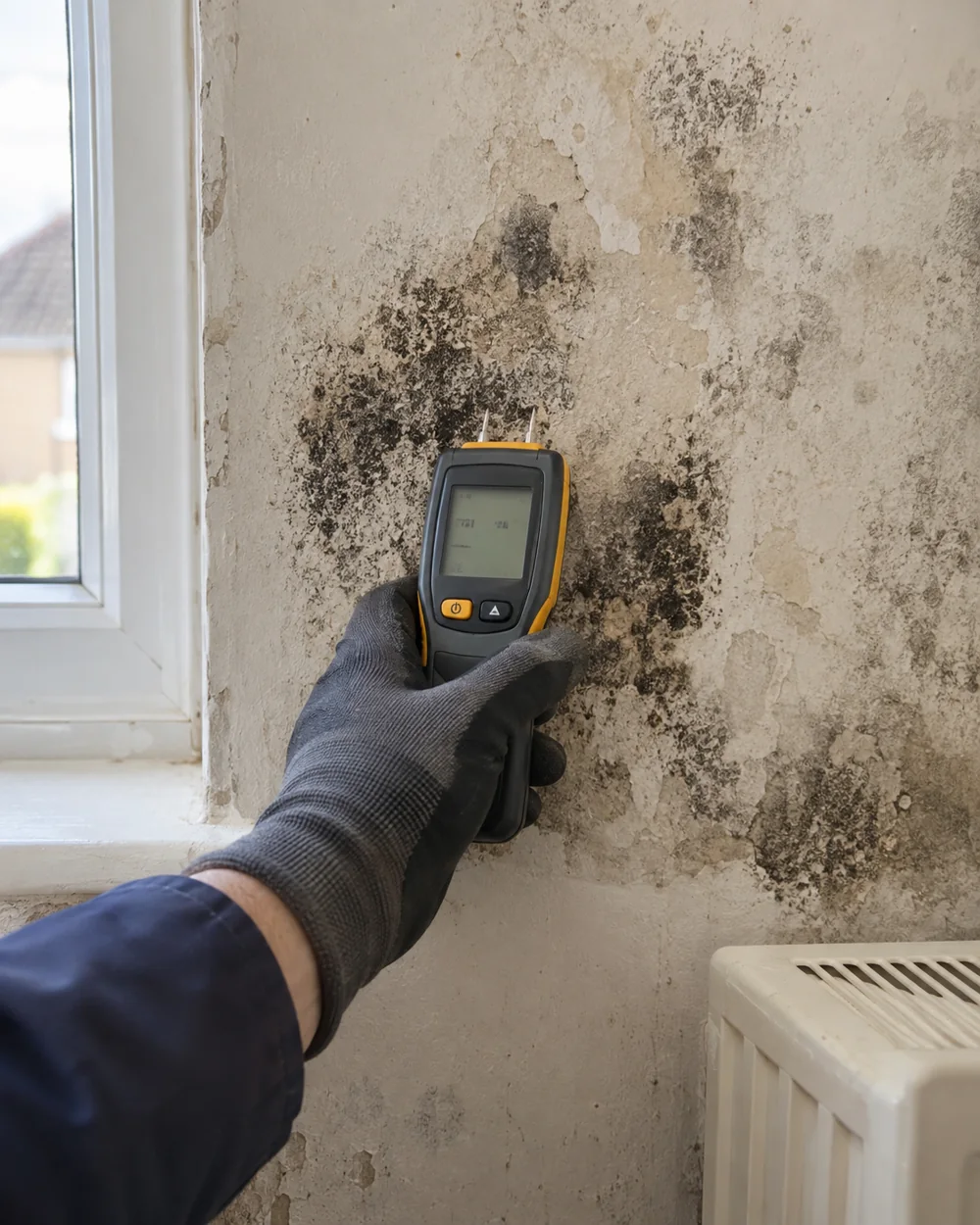
Readings taken during an inspection describe conditions at a particular time. Weather, recent heating, open windows and room use can influence what is observed. We consider measurements alongside the location of staining and the history supplied by the occupants. One number should not become the entire diagnosis, especially when the reported problem is intermittent or strongly seasonal.
Surface moisture checks also need care in interpretation. Different materials and finishes can affect readings, and a cold wall is not automatically a leaking wall. Where the evidence suggests water ingress or a concealed plumbing problem, those possibilities should remain part of the discussion. A useful explanation distinguishes observed conditions from conclusions that would need further investigation.
YOUR PROPERTY / THE DETAILS
Recommendations for the actual property
The next steps may involve extraction, airflow around furniture, heating distribution or investigation of an unusually cold building junction. They may also involve a separate repair if the wall is wet for reasons unrelated to condensation. We discuss the evidence for each recommendation and the order in which the work should be considered, so you are not left with an unexplained list.
Insulation and alterations to a building require their own assessment. A surface survey should not be treated as permission to cover a damp wall with an unsuitable lining. The proposed work needs to account for the construction and the source of moisture. If larger changes are being considered, ask what further technical advice or access would be needed before making that decision.
YOUR PROPERTY / THE DETAILS
When this service is a useful starting point
A cold wall survey may be appropriate when the same external corners develop mould each winter, windows regularly collect water, or growth appears behind furniture without an obvious plumbing leak. It is also worth discussing when cleaning and redecoration have changed the appearance but not the pattern. Tell us which surfaces are affected and whether several rooms behave similarly.
Before a visit, note when condensation is most noticeable and whether the wall changes after rain. Photographs from different times can help show the history. If the property is rented, let us know who will provide access and whether earlier inspection notes are available. A survey is more useful when previous observations and repairs can be considered together rather than in isolation.
BEFORE YOU CALL
A few useful questions
Can a warm room still have condensation?
Yes. A local surface can remain colder than the room air. External corners, window reveals and concealed wall areas may therefore be affected even when the room feels comfortable.
Is this the same as a leak investigation?
No. The focus is cold surfaces and condensation conditions. Signs of another moisture source may lead to a recommendation for damp investigation or concealed leak checks rather than a condensation-only conclusion.
Will a survey include an insulation specification?
Discuss any proposed building alteration separately. The survey can help identify questions that need answering, but detailed design or specification work should not be assumed to be included without agreement.
TELL US WHAT YOU HAVE NOTICED
Need help with this problem?
Have your postcode and the affected rooms ready. Tell us when the problem started, what has changed and any work already tried. We can discuss the appropriate starting point and the access or reporting arrangements before a visit is agreed.