
MOULD & MOISTURE / LONDON
Bathroom Ceiling Mould Removal London
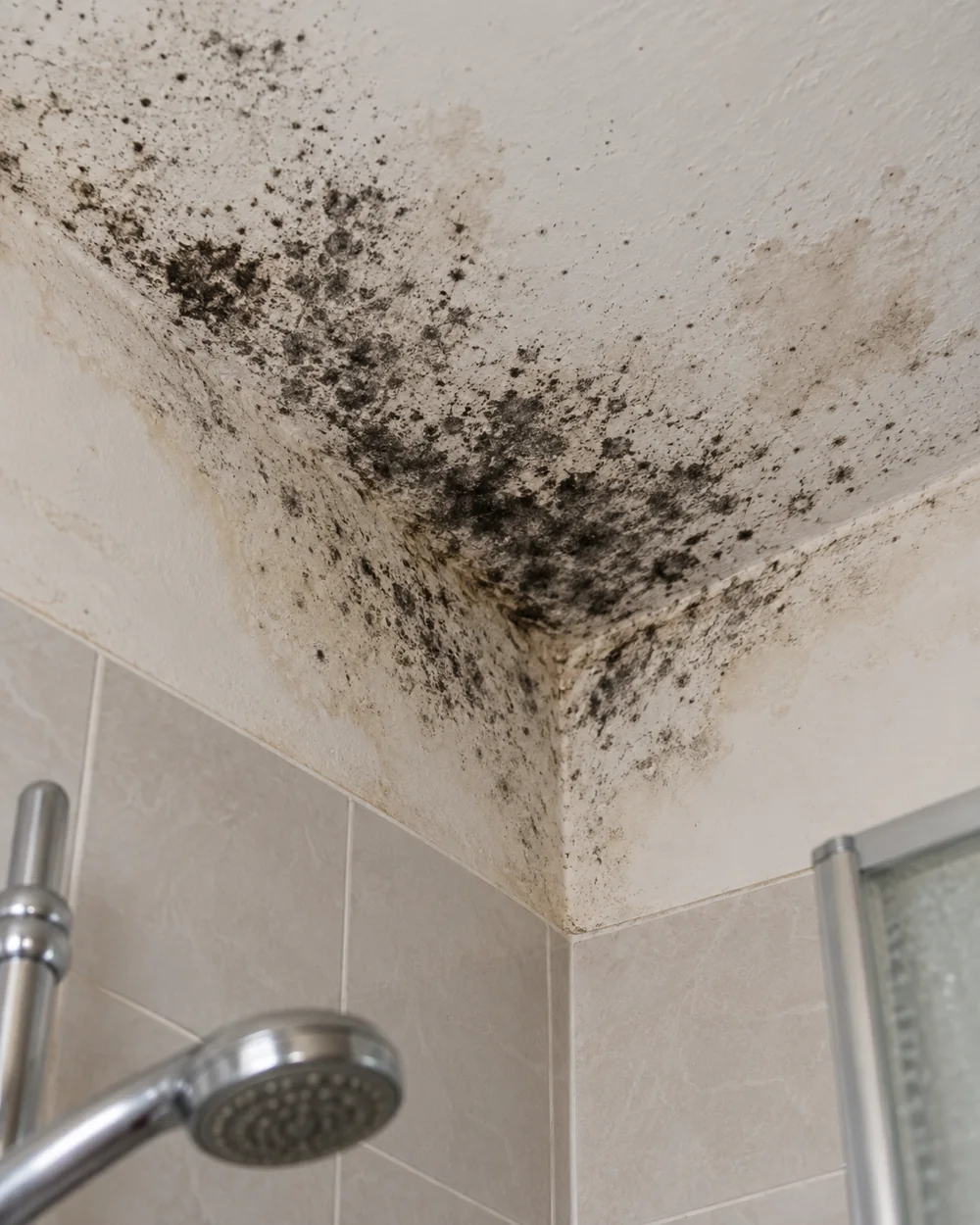
The first signs are often easy to dismiss: a few dark spots above the shower, paint lifting in a ceiling corner, or a patch that returns a fortnight after cleaning. We investigate bathroom ceiling mould and discuss treatment alongside the moisture conditions in the room. The aim is to understand why that ceiling stays damp, rather than simply making it look cleaner for a while.
YOUR PROPERTY / THE DETAILS
Steam needs somewhere to go
A shower releases moisture into a relatively small space. When that warm air reaches a colder ceiling, water can settle on the surface. If the bathroom is used again before the room dries out, the ceiling may stay damp through much of the day. Corners and areas above the shower are often the first places to show it.
An extractor fan making a noise does not necessarily mean it is moving enough air. A blocked grille, a poor duct route or a fan that stops too soon can leave moisture behind. A window may help, but an internal bathroom needs a workable extraction arrangement. We consider how moisture leaves the room, as well as how it gets there.
YOUR PROPERTY / THE DETAILS
Check the ceiling before choosing treatment
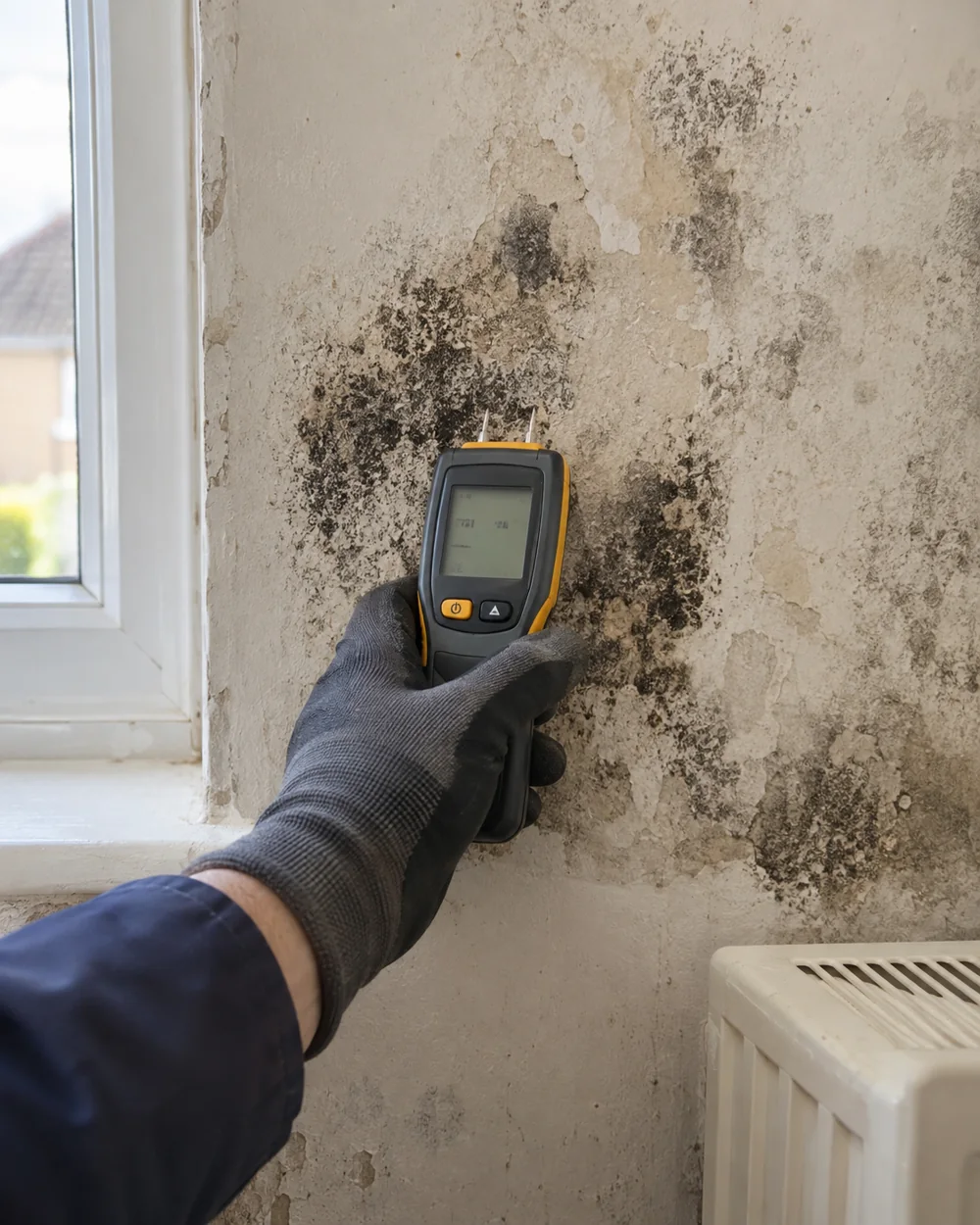
The surface matters. Sound painted plaster, flaking paint, water-damaged plasterboard and mould-stained sealant cannot all be treated in the same way. We look at the affected area and its surroundings, including ceiling joints, the upper walls and the position of the fan. Peeling decoration can reveal that there is more to address than a few surface spots.
A stain beneath another bathroom or near a roof needs further thought. Not every bathroom ceiling problem comes from steam. Plumbing leaks and water entering from above can create damp conditions even when extraction works well. Tell us if the patch changes after rain, after someone uses the room upstairs, or while the bathroom itself has been unused.
YOUR PROPERTY / THE DETAILS
Treatment and redecoration are separate decisions
The work should be explained before it begins, including which surfaces are affected and how the room needs to be prepared. Appropriate surface treatment can deal with visible growth, but deteriorated paint or softened board may require additional work. We discuss the condition of the ceiling so you can distinguish treatment from repairs and later decoration.
Painting over mould is not a substitute for addressing the problem. Even after treatment, a ceiling that remains damp can develop fresh growth. If redecoration is needed, the surface must be suitable and sufficiently dry for the proposed finish. Ask what is included in the visit, what is outside the agreed work, and what should happen before a decorator returns.
YOUR PROPERTY / THE DETAILS
A plan that fits daily use
A bathroom shared by several people can receive repeated bursts of steam every morning and evening. Advice needs to account for that pattern. We discuss extraction, airflow and how the room dries between uses, rather than assuming everyone can leave a window wide open all day. Practical changes should suit the actual layout and the people using it.
Sometimes the ceiling is the coldest part of the room because of conditions above it. In other cases, moisture lingers because the route for replacement air is restricted. These issues deserve their own recommendations. Our condensation and moisture control service looks at the wider moisture balance if several rooms are affected or bathroom dampness continues despite reasonable changes.
YOUR PROPERTY / THE DETAILS
What to tell us before a visit
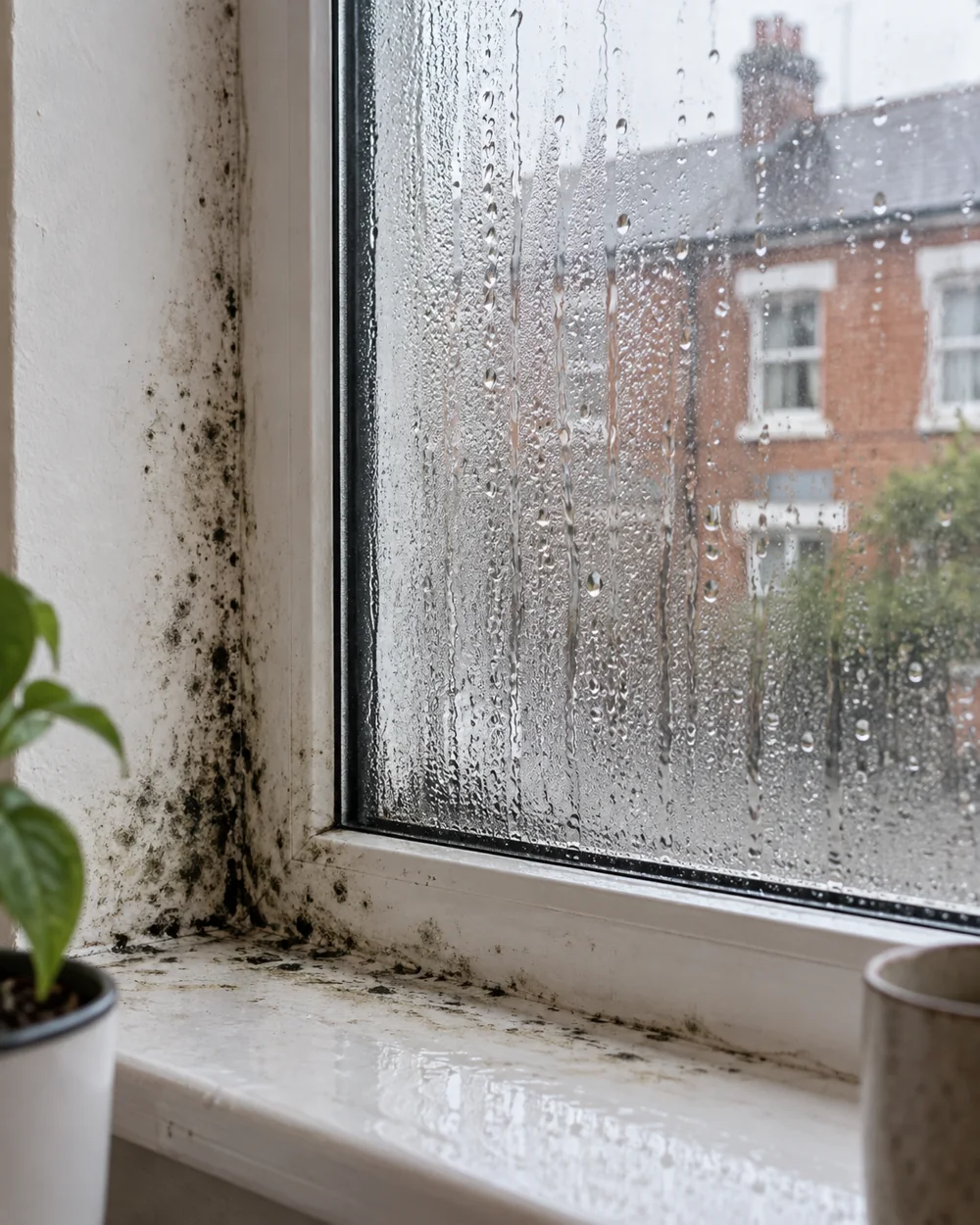
When you call, describe the size and location of the patch, whether the ceiling is flat or sloping, and whether there is a room or roof above it. Mention previous cleaning, repainting or repairs. Clear photographs can help show the pattern, although they cannot establish the moisture source or the condition behind the painted surface.
For a rented property, explain who is arranging the visit and how access will be agreed. There may need to be separate conversations about extraction repairs, surface treatment and decoration. We can discuss the reported problem without assuming that the tenant, the landlord or any single household habit is responsible before the room has been assessed.
BEFORE YOU CALL
A few useful questions
Will cleaning the ceiling stop it returning?
It may improve the surface, but recurrence depends on whether the ceiling continues to become damp. The moisture source, extraction and surface condition need to be considered together.
Can you tell from a photograph whether it is a leak?
A photograph shows location and appearance. It cannot confirm a concealed leak or rule one out. The history of the patch and checks at the property provide additional evidence.
Does the bathroom need repainting?
That depends on the condition of the finish. Treatment, making good and redecoration are different tasks. Ask us to explain what is appropriate for the ceiling before agreeing the work.
TELL US WHAT YOU HAVE NOTICED
Need help with this problem?
Have your postcode and the affected rooms ready. Tell us when the problem started, what has changed and any work already tried. We can discuss the appropriate starting point and the access or reporting arrangements before a visit is agreed.