
YOUR HOME / PADDINGTON
Black Mould Removal Paddington
When a Paddington flat has a damp wall beside a bathroom, the nearby plumbing is worth considering without assuming it is leaking. We discuss black mould removal with the pattern and materials in view. The history, access and relationship between rooms help determine whether surface treatment or a more focused moisture investigation should be the first step.
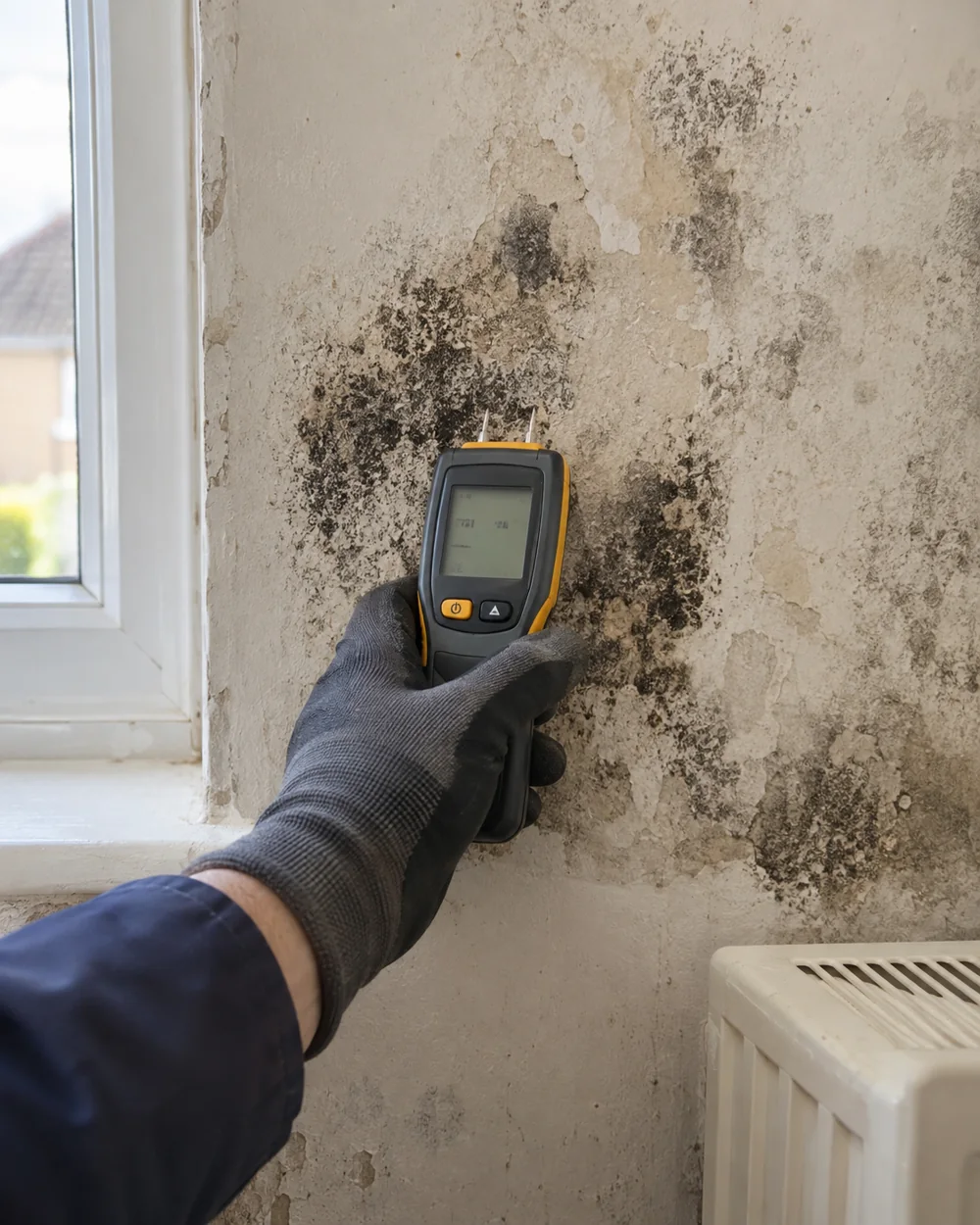
- Assess neighbouring room relationships
- Use the timing of dampness
- Distinguish inspection from repair
Nearby plumbing raises a question; it does not confirm the answer.
Describe both faces of the dividing wall
For a Paddington enquiry, explain which room contains the growth and which bathroom surface lies on the other side. A wall beside a bath, shower or basin raises different access questions. Photograph the affected room widely enough to show the doorway and wall boundary. If the bathroom side is normally visible, include that view without removing panels or fixtures.
Say whether marks appear on both sides or only one. A clean tiled face does not establish the condition behind it, while growth in the adjoining room does not identify a particular bathroom connection. This simple two-sided description helps the initial conversation focus on the wall relationship rather than treating a ceiling stain and a bathroom-side wall as the same enquiry.
Nearby plumbing raises a question; it does not confirm the answer.
Record an ordinary bathroom-use sequence
Note whether the wall changes after a shower, use of the basin or another regular event. Include how soon a change becomes visible and whether dampness persists when the bathroom has been unused. Observe normal use; there is no need to run extra water to produce a demonstration. Keep an unrelated rain pattern separate if one has been noticed.
Our moisture detection service discusses appropriate checks where concealed water is a concern. The sequence helps define that question without proving a leak. Water can travel within material, so a patch should not be treated as a map of the nearest pipe. Explain which bathroom fittings and concealed areas are accessible before expecting a particular source to be assessed.
Compare a repair date with the wall afterwards
If resealing or plumbing work has already occurred, identify the location and approximate completion date. Was dampness unchanged, reduced or first noticed afterwards? A remaining stain and fresh water are different concerns. Our damp wall investigation considers the pattern and material rather than declare the last repair unsuccessful simply because discolouration is still visible.
Keep earlier photographs if the wall was decorated after the repair. Record what finish changed and whether the boundary returned in the same place. Those details let the assessment compare known events. They are more useful than the general statement that the bathroom has been refurbished, which leaves unclear which part was repaired and what happened to the adjoining surface.
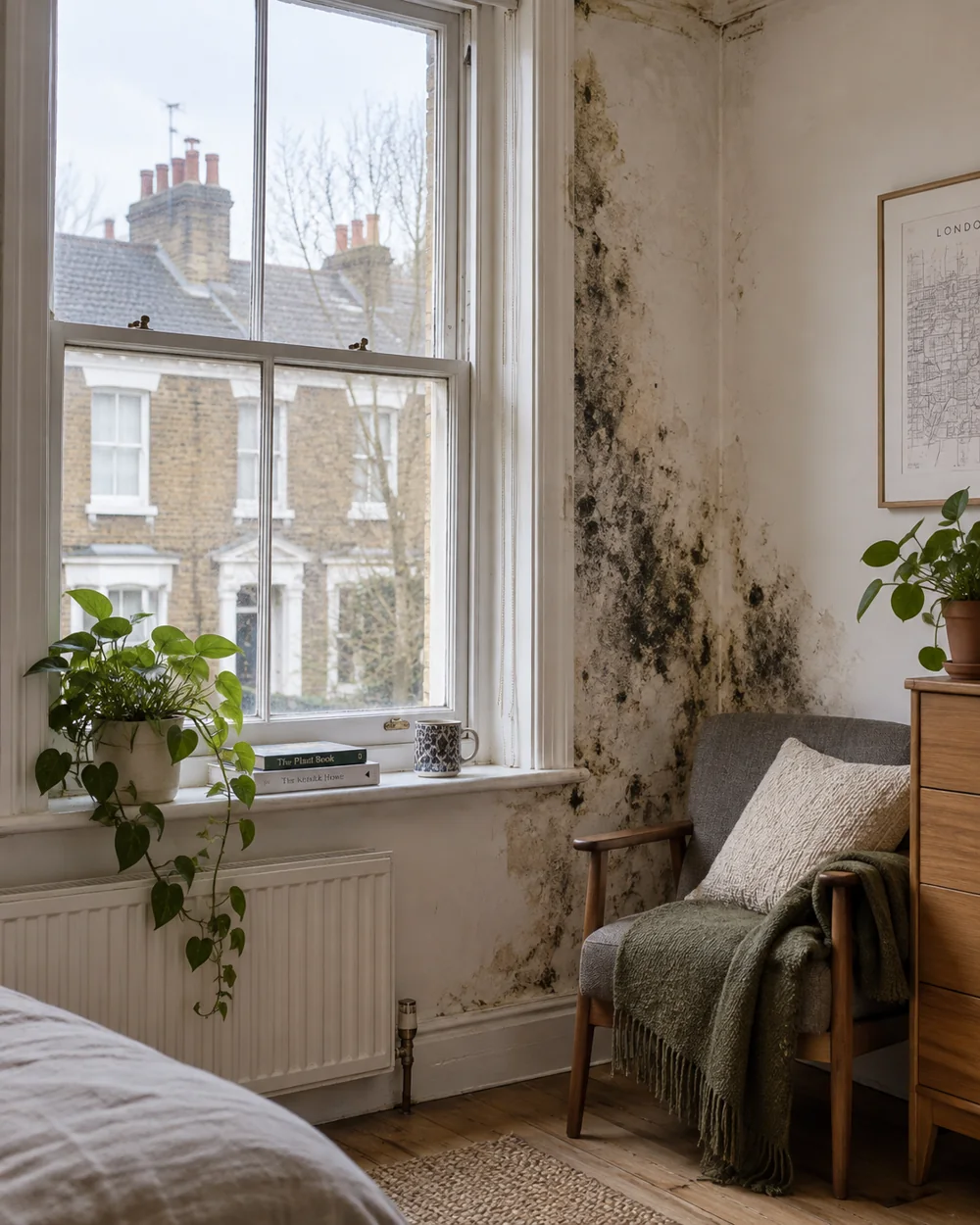
Check the air relationship as well as the partition
A bathroom doorway can also connect humid air with a colder adjoining room. Describe wet glazing, door positions and extraction during the same ordinary-use sequence. Our mould inspection can discuss whether accessible evidence supports a focused water check, a surface-condensation question or further observation. The presence of a bathroom should not force every mark into a plumbing explanation.
Mention any fitted unit covering the affected wall and who can authorise further access. Opening a finish should answer a stated question, not be assumed as routine preparation. If another dwelling or managed component becomes relevant, arrange permission separately. The planned visit should state which wall faces can be assessed and which parts remain concealed.
Choose the next task from that evidence
Agree the reachable treatment surfaces and explain loose paint, damaged coverings or persistent dampness beforehand. A proposed source repair, material replacement and decoration should have separate purposes in the sequence. Following work, reuse the same wall references and bathroom-use observations so a change can be assessed against the original pattern.
You can find separate enquiry guidance for Marylebone and Notting Hill; the bathroom-to-wall relationship remains the useful starting point here. Contact us about Paddington with the affected room, bathroom relationship and relevant repair dates. This gives the conversation a useful starting point without requiring you to disconnect a fitting or choose a diagnosis before the accessible evidence is considered.
Questions about a wall beside the bathroom
Does a shower next to the patch prove a leak?
No. It is useful context, but both plumbing and room moisture need consideration. The timing and accessible evidence should guide further checks.
Can materials remain damp after a repair?
Yes, but ongoing water is another possibility. The history and pattern need assessment before the remaining mark is interpreted as either resolved or newly active moisture.
Who authorises opening a concealed area?
The appropriate owner or responsible party needs to agree access and its purpose. A routine inspection does not automatically include destructive work or entry to another dwelling.
LET’S DISCUSS THE NEXT STEP
Talk about dampness and mould in Paddington
Explain how the Paddington wall relates to the bathroom and whether its condition changes after ordinary use. Include known plumbing work and any separate wet window pattern. The next discussion can identify a focused question for assessment, with clear access limits, before removal is expected to solve moisture arriving from the neighbouring room.