
YOUR HOME / MARYLEBONE
Black Mould Removal Marylebone
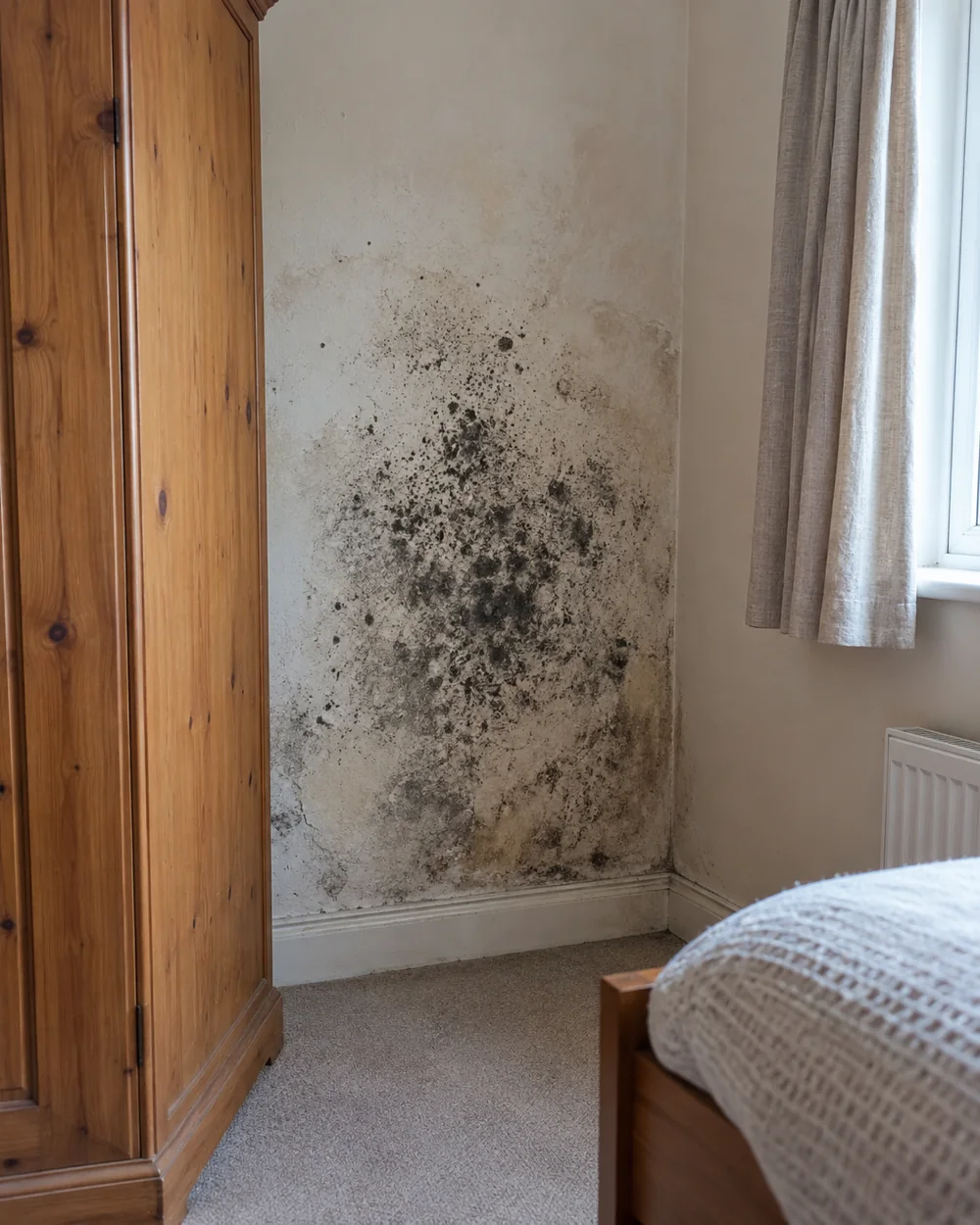
Mould behind a fitted cabinet in Marylebone may be partly visible but difficult to inspect. We discuss the accessible patch and the purpose of any additional access before removal is agreed. The wall’s condition, moisture history and relationship with the surrounding rooms matter as much as the storage itself; an unseen surface should not be presented as fully assessed.
- Clarify fitted-storage access
- Separate finishes and belongings
- Explain the evidence and its limits
Further access should answer a defined question.
Decide what access would achieve
Before arranging removal of a fitted cabinet, identify the unanswered question. Is the concern a patch extending behind it, damaged wall material or moisture that appears to arrive from an adjoining room? Explain what can already be seen through the existing opening. Our inspection service can discuss a starting point that uses available evidence before a larger access task is assumed.
Describe how the cabinet is fixed and whether shelves, panels or contents prevent a view. Say who owns the unit and who could authorise changes. Dismantling, protecting the cabinet and making good afterwards need a plan of their own. The useful access arrangement is one that answers a defined question safely, rather than an instruction to remove everything before anybody has explained why.
Map the cabinet and wall separately
Identify whether growth sits on the cabinet lining, the room wall, a removable shelf or stored belongings. Mention peeling paper, softened material and any wetness at the base. A smell is worth reporting, but does not map the hidden extent. These distinctions help discuss which materials need assessment and prevent an enquiry about a fitted unit becoming an undefined promise to restore every item inside it.
The room treatment service concerns agreed affected surfaces. Wall work, furniture restoration and replacement materials should be named separately. Ask what preparation is required and where contents can be placed without obstructing the room. If the unit must remain in place, the proposed scope should explain which sections can be reached and which will remain outside the work.
Use observations from the occupied room
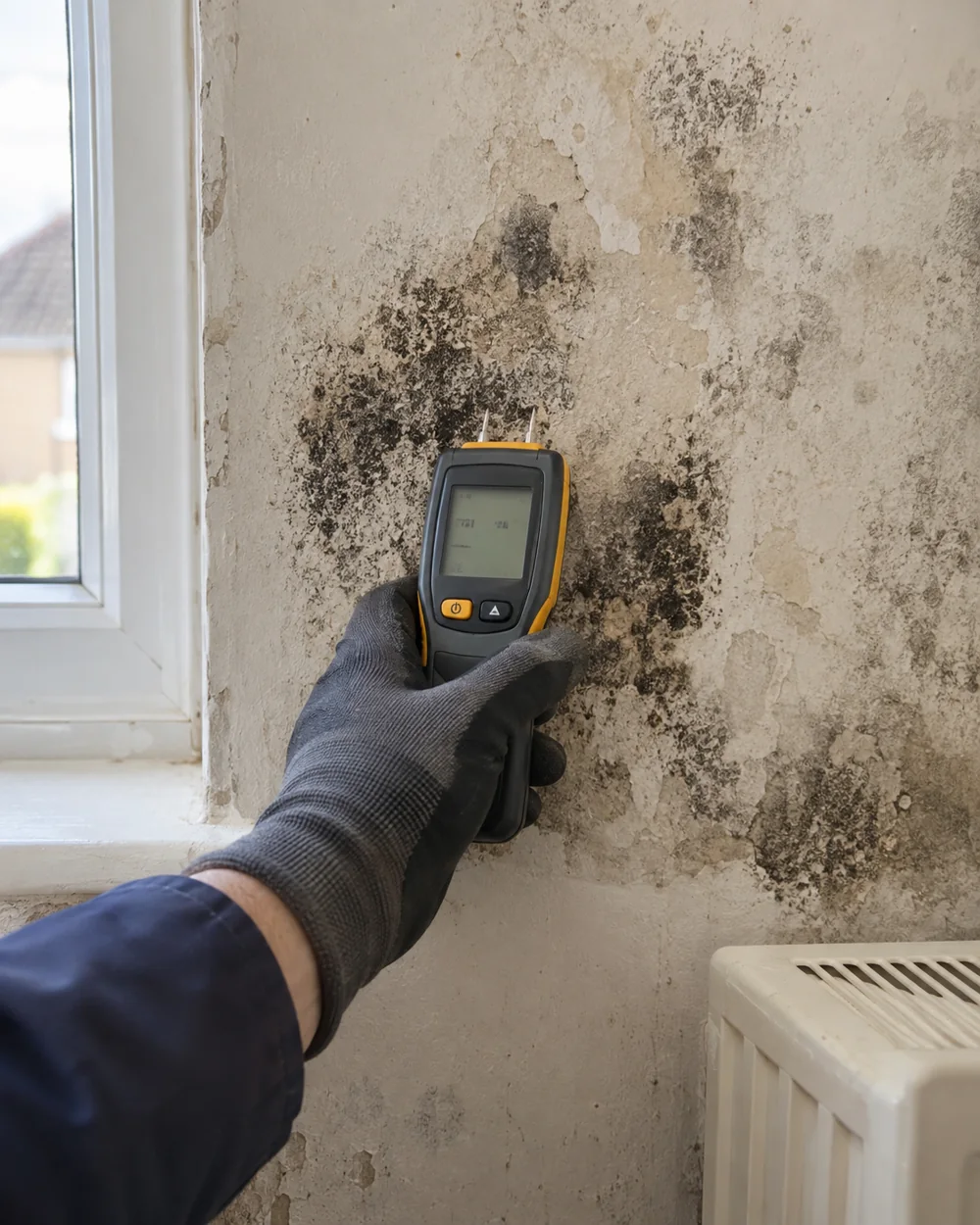
Tell us whether the adjoining exposed wall has marks, whether the window is wet in the morning and how the room is heated and used. Our cold wall survey discusses local surface conditions in that wider setting. A concealed area may behave differently from the open room, but its position alone does not explain every damp mark behind a cabinet.
Include any plumbing event, renovation or earlier cabinet alteration, with approximate dates where necessary. If the unit was installed against a wall already showing marks, say so; if that history is unknown, keep it unknown. Comparing the visible surfaces before and after a change is more useful than filling the missing history with a confident assumption about what lies behind the fitted panels.
Questions about this problem
Will the inspector remove a fitted cabinet?
Do not assume so. Removal or opening-up work needs its own purpose, authority and preparation arrangements, separate from a routine accessible inspection.
Can a hidden patch be estimated from its visible edge?
The edge is useful evidence but does not confirm extent. The explanation should state the access limit rather than invent a complete assessment of the concealed wall.
Are stored items included in treatment?
Only if explicitly discussed. Belongings and wall finishes are separate questions, so describe what has been affected before agreeing the work.
Agree the point at which the plan changes
Ask what would prompt further assessment during the appointment, such as finding material in a different condition from the accessible edge. Explain who can authorise an additional task and whether they will be available. This avoids a visit stalling because a decision-maker cannot be reached, and keeps a limited treatment booking from expanding informally into cabinet removal or building repairs.
Prepare a focused Marylebone enquiry
Send the room description, cabinet arrangement and visible material condition, alongside the relevant alteration history. Mention any restrictions on moving contents or reaching the fitted edges. Selected nearby pages cover Paddington and Soho. For Marylebone, the first conversation can establish a useful access and treatment boundary while leaving concealed questions clearly identified for any necessary next step.
LET’S DISCUSS THE NEXT STEP
Ask about concealed mould in Marylebone
Before booking for Marylebone, explain whether the cabinet is fixed and who could authorise any change to it. Show the accessible patch and nearby wall, identifying what the photographs cannot reveal. We can discuss whether additional access would answer a worthwhile question and define treatment without claiming an unseen surface has been assessed.