
YOUR HOME / BARNES
Black Mould Removal Barnes
Mould around a Barnes fireplace or chimney breast deserves a description that separates the visible growth from stains, salts and damaged finishes. Several conditions can affect the same wall, and a photograph cannot settle every question about concealed construction. We discuss the surface and its history before agreeing removal, especially where a fireplace has been closed or the room recently redecorated.
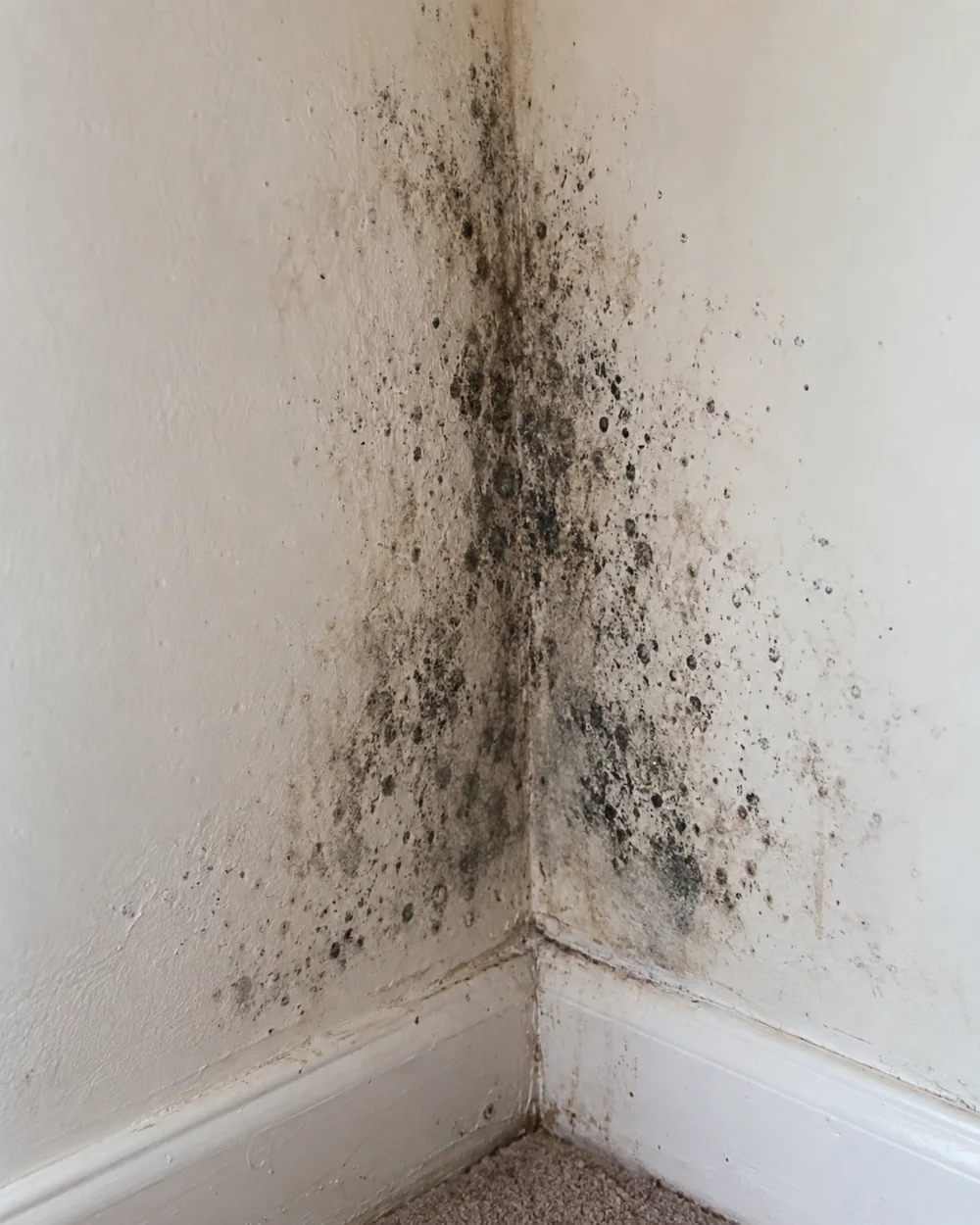
- Distinguish growth from other markings
- Explain fireplace alterations clearly
- Respect access and finish limitations
A chimney-breast location is useful evidence, not a diagnosis.
Show what surrounds the mark
Take a wider photograph of the wall as well as a close view of the affected finish. Say whether the mark follows the chimney breast, appears at a ceiling junction or continues onto another wall. Include any powdery deposits, discolouration and lifted paint separately in your description. Different visible marks may need different consideration rather than being treated as one uniform patch.
Explain what you know about the fireplace: whether it is used, closed or altered, and when that changed. Do not guess at the state of the flue or roof. If a previous repair concerned the chimney, keep its date and stated scope available. An interior visit should not be presented as inspecting exterior or concealed parts that the appointment cannot actually reach.
Read the history before specifying removal
Has the same boundary returned through several coats of paint, or is this the first appearance after an alteration? Does it seem to change after rain, during colder weather or without an obvious pattern? Our damp wall investigation service considers such observations alongside accessible material condition. Timing offers clues, but should not be turned into certainty about the source.
For a Barnes flat, explain whether the chimney structure continues through another dwelling and who controls access. For a house, say which floor contains the affected surface. These relationships influence what can be checked and who may need to be involved. The postcode alone cannot tell us the construction, repair history or permissions, so the enquiry stays focused on the individual property.
Protect the distinction between tasks
Suitable removal work addresses agreed affected surfaces. It does not automatically include chimney repairs, flue work, replacement plaster or decoration. Ask which materials appear sound enough for treatment and which concerns need a separate decision first. A clear scope helps prevent the visible growth becoming the only part of the wall that receives attention.
If an old finish or unfamiliar material raises uncertainty, describe it before disturbing it. You do not need to strip coverings to improve an initial photograph. Further opening should have a defined purpose, permission and appropriate responsibility. Where another trade is needed, the proposed order should explain how that work relates to the moisture question and when surface treatment fits into the plan.
Questions about this problem
Is every mark on a chimney breast mould?
No. Discolouration and deposits may have other explanations. Describe their appearance separately and avoid assuming that one treatment is appropriate for every visible mark.
Can you confirm the exterior chimney is sound?
An interior surface appointment cannot confirm inaccessible exterior construction. The scope should state what is assessed and whether another inspection or trade is needed.
Should I strip the wall before asking?
No. Explain the finish and history first. Disturbing material can lose useful evidence, and any further opening should be planned for a clear reason.
Consider the rest of the room
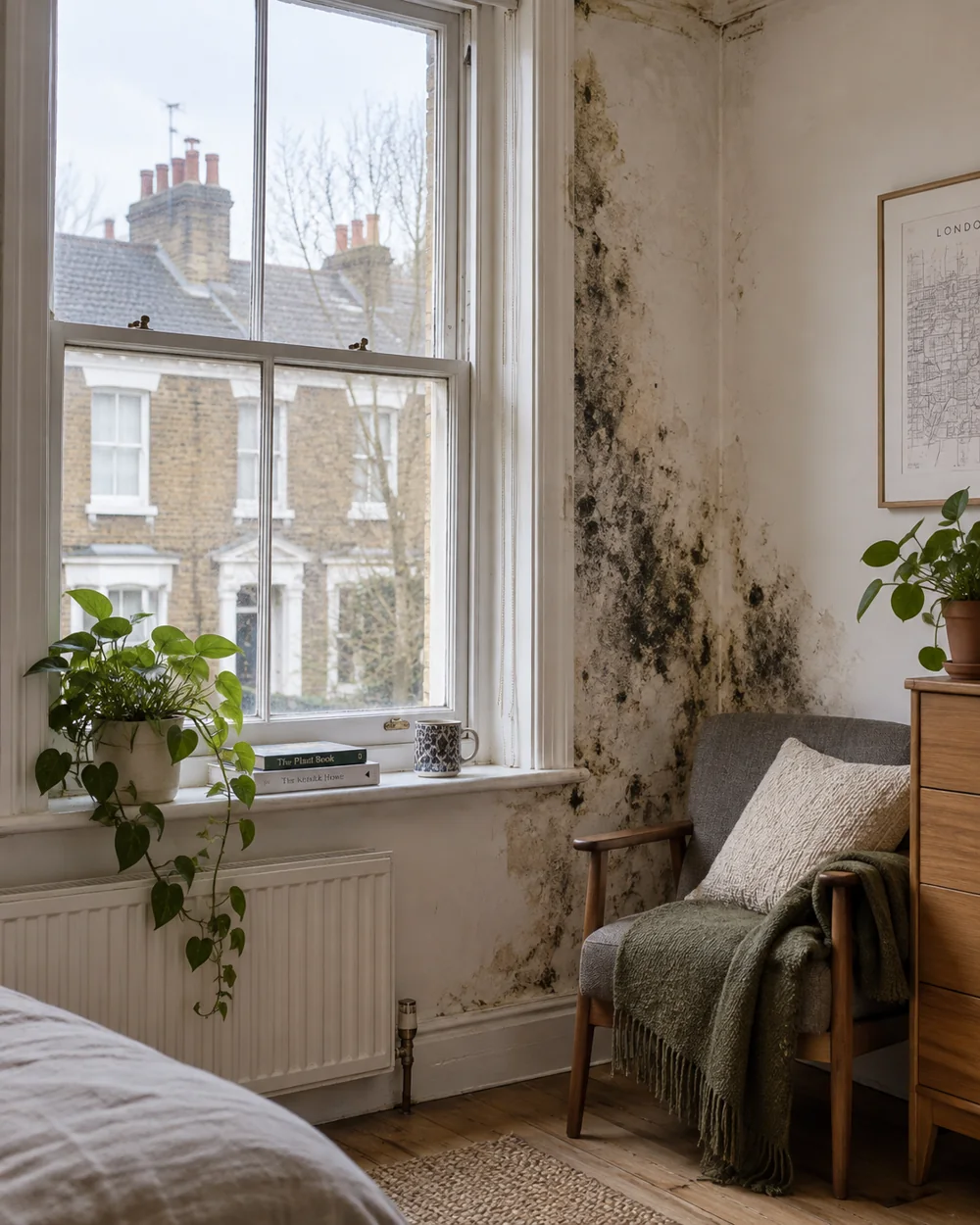
The same room may also have wet windows or colder corners, even where the chimney-breast mark has another explanation. Our inspection service can discuss how to record these separate patterns. Finding one moisture influence should not erase evidence pointing towards another. Explain which surfaces are affected, rather than describing the entire room as having a single established cause.
Ordinary heating, ventilation and use belong in the conversation, but should not replace building history. A practical recommendation takes account of the room’s actual layout and accessible surfaces. If a change in airflow is suggested, ask which observation it addresses. That makes the advice easier to follow and prevents a general recommendation being mistaken for confirmation that concealed construction is sound.
Keep a useful record for the next step
Store photographs taken before repairs or redecoration. After agreed work, compare the same boundary and note whether the finish stays damp or a different mark appears. Record any change in fireplace use or room arrangements too. A returning pattern is easier to discuss when the sequence is available than when the earlier surface has been covered without a record.
For selected nearby coverage, see Mortlake and Putney. Contact us about Barnes with the postcode, affected floor and alteration history. We can discuss an appropriate appointment without claiming to diagnose a chimney from a photograph or promising that surface removal replaces a necessary building repair.
LET’S DISCUSS THE NEXT STEP
Discuss the affected wall in your Barnes home
For a fireplace-wall enquiry, tell us whether the fireplace is used, closed or altered, and show the marks beyond the chimney breast if possible. Those details help distinguish a surface-treatment request from a question about inaccessible construction. We will discuss the proposed indoor scope clearly, so chimney repairs or replacement finishes are not left as unspoken expectations.