
YOUR HOME / ENFIELD
Black Mould Removal Enfield
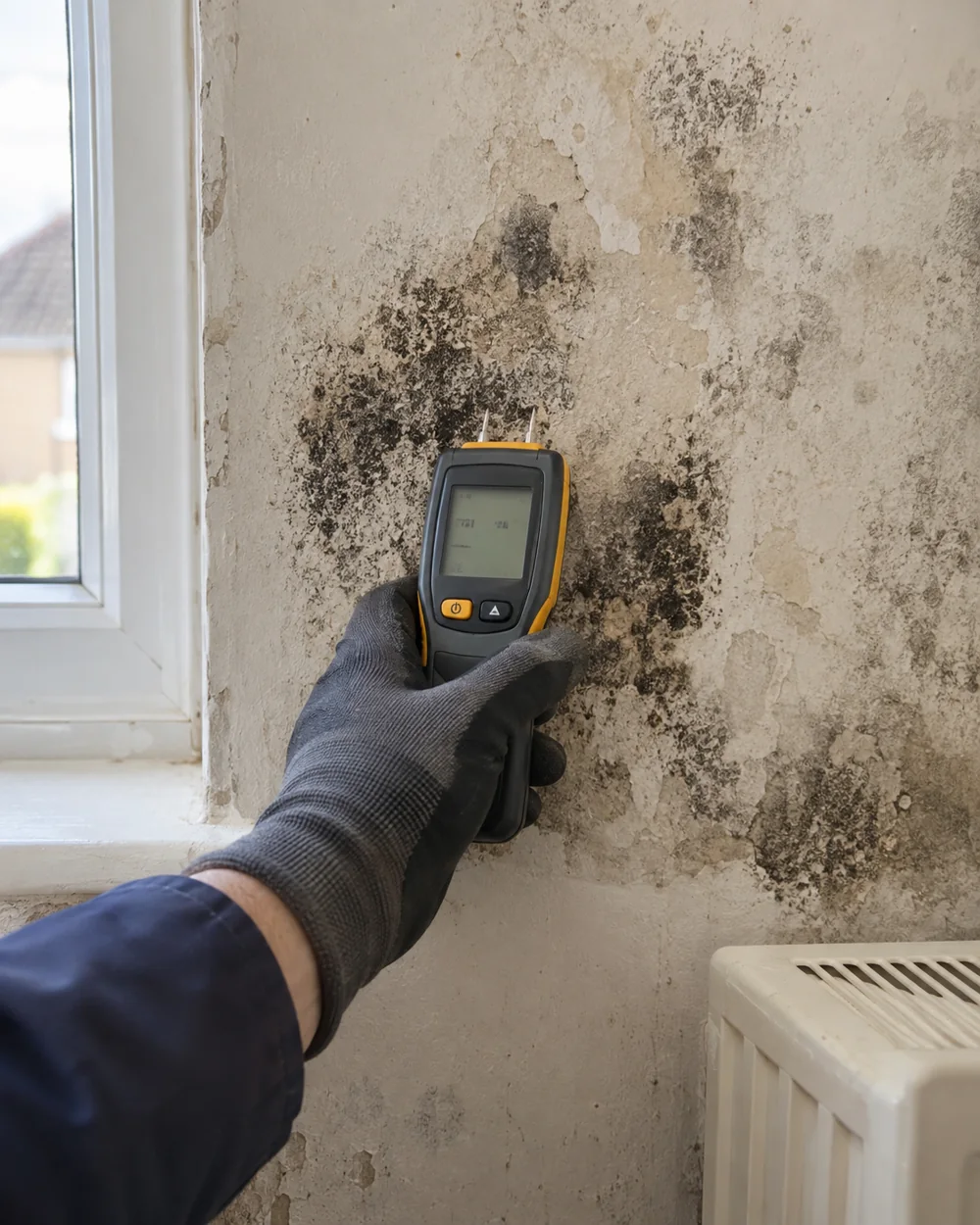
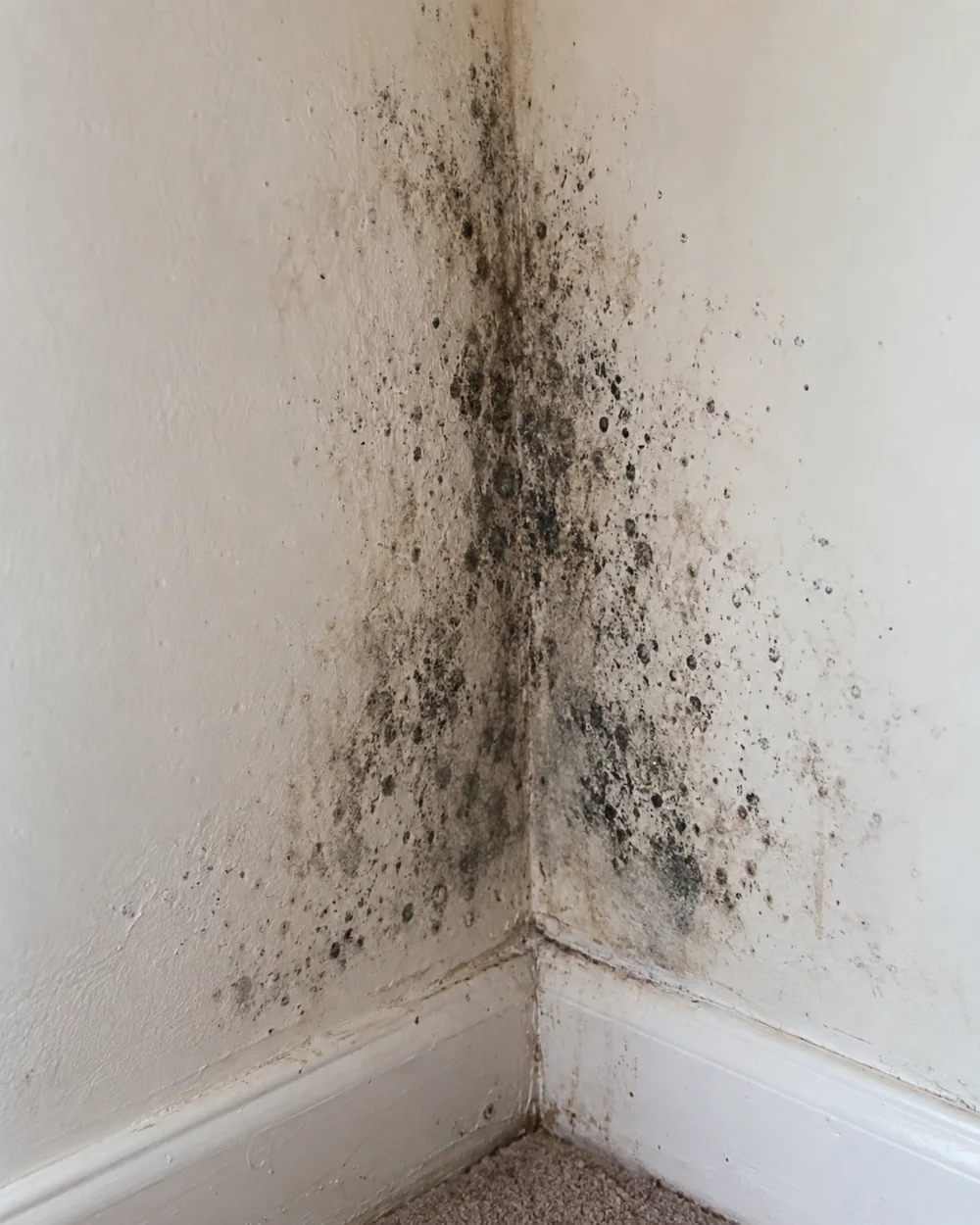
A mould enquiry in Enfield may begin with a repair that seemed successful, followed by a patch returning months later. The delay matters. We discuss whether the material remained damp, whether normal room conditions changed and whether another source needs investigation. Suitable removal should fit that history rather than repeat an earlier treatment without understanding what has happened since.
- Use the interval after a repair
- Distinguish residual and renewed moisture
- Ask what the previous work covered
A returning patch and an active leak are not interchangeable observations.
Rebuild the sequence around the repair
Write down what was repaired, which surfaces were affected and when growth returned. Say whether the wall ever appeared dry and whether decoration occurred before the change. A repair invoice can clarify the scope, but it does not establish the present condition of concealed material. Our moisture detection service discusses how reported history can guide accessible checks.
Do not turn an uncertain date into a definite conclusion. If the room was rarely used, the first new photograph may only show when the problem was noticed. Explain that limitation. A complete sequence also includes changes to heating, ventilation or furniture after the repair, since several conditions may have altered before the new mark appeared.
A returning patch and an active leak are not interchangeable observations.
What does the surface show now?
Report dampness, staining, damaged paint and visible growth as separate observations. Material can remain affected after a water event, while a new moisture source can create a similar-looking patch. A mould inspection should consider the location and history together. It should not promise to settle the state of a hidden pipe from the colour of a wall.
For Enfield, include the floor, type of home and relationship with nearby rooms or exterior. Those details help arrange an appropriate assessment of the individual property. If the repair concerned a neighbouring dwelling or shared component, explain who holds its records and controls access. Further checking may need authority beyond permission to enter the room containing the stain.
Treatment belongs within the new scope
Repeating an old process without checking current material condition can leave the same questions unresolved. Our removal service concerns suitable affected finishes and agreed access. Replacement board, drying, plumbing and decoration may require separate actions. Ask how those decisions fit together, including what needs confirmation before new coverings hide the surface again.
It is reasonable to ask what the proposed visit is intended to answer. A treatment appointment and an investigation are different starting points. If the cause remains uncertain, the scope should explain which evidence is being sought and the limits of the available access. A longer list of services is not automatically a better plan than a focused first step.
Make the next record easier to use
Keep before-and-after photographs of the same wall area and note any agreed changes. If the patch returns, describe whether it follows the previous boundary or has moved. Information about rain, plumbing use and everyday room conditions may help interpret the sequence, but it should remain an observation rather than a claim that one event has confirmed the cause.
If you are arranging work at a second address, the selected pages for Finchley and Walthamstow offer additional enquiry guidance. For your Enfield home, start with the postcode and repair timeline. We can discuss a practical next step without assuming the earlier repair failed or promising that another treatment will resolve concealed moisture.
Questions about this problem
Does mould returning mean the original repair failed?
Not necessarily. Residual moisture, a new source and changed room conditions are different possibilities. The current evidence and sequence of events need consideration.
Is a repair invoice useful?
Yes, particularly where it identifies the work actually undertaken. It adds history, but it does not by itself prove that every affected material has dried.
Can the enquiry start without exact dates?
Yes. Explain the approximate order and which details are uncertain. A clear sequence is still more useful than presenting a guessed date as established fact.
LET’S DISCUSS THE NEXT STEP
Review returning mould in your Enfield home
A delayed return in Enfield is easier to discuss with a simple timeline: the repair, the apparently dry period and the first renewed mark. Say what normal use changed during that interval. We can then consider the current material and unanswered moisture question, rather than automatically repeating work selected for the earlier stage.