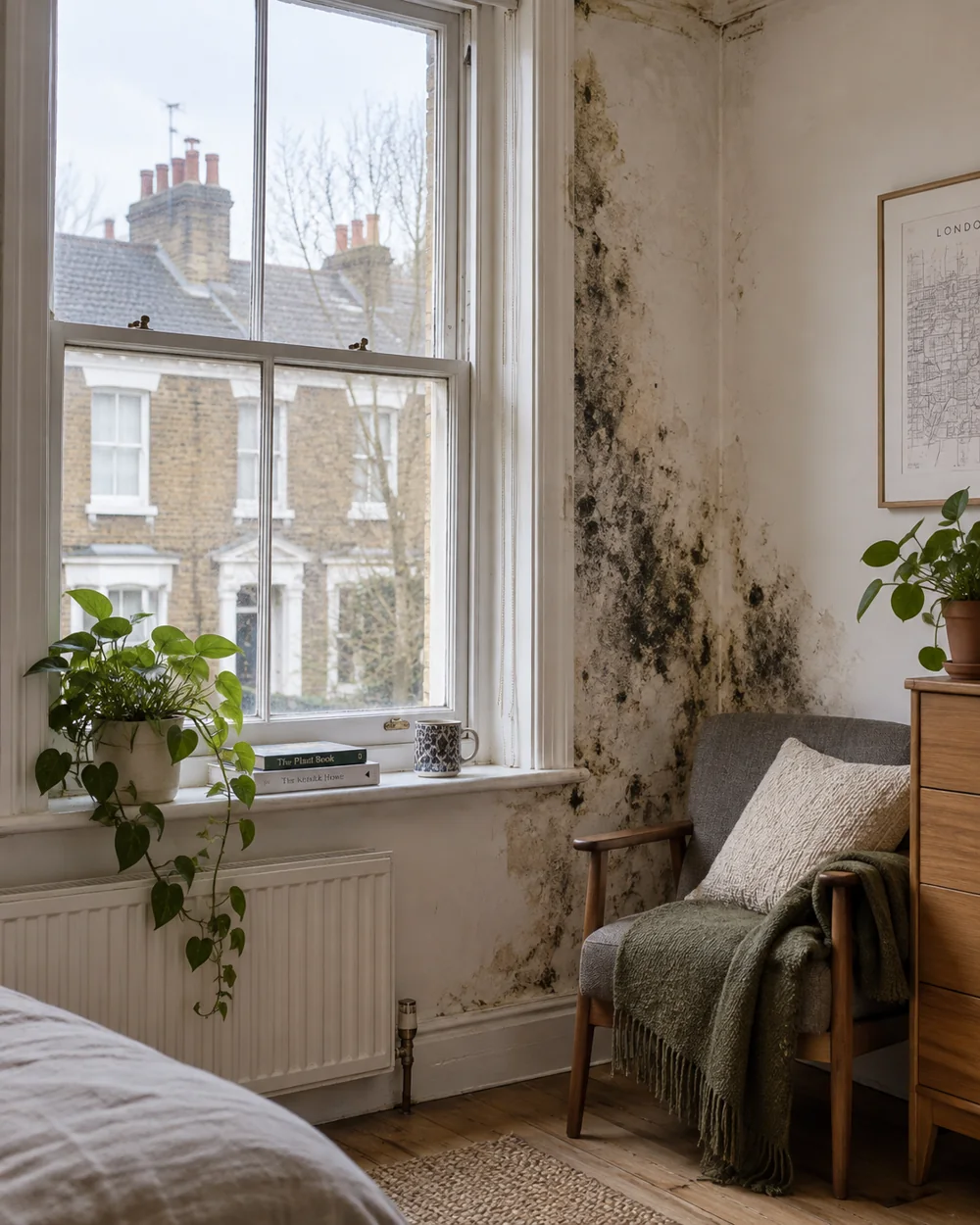
YOUR HOME / FINCHLEY
Black Mould Removal Finchley
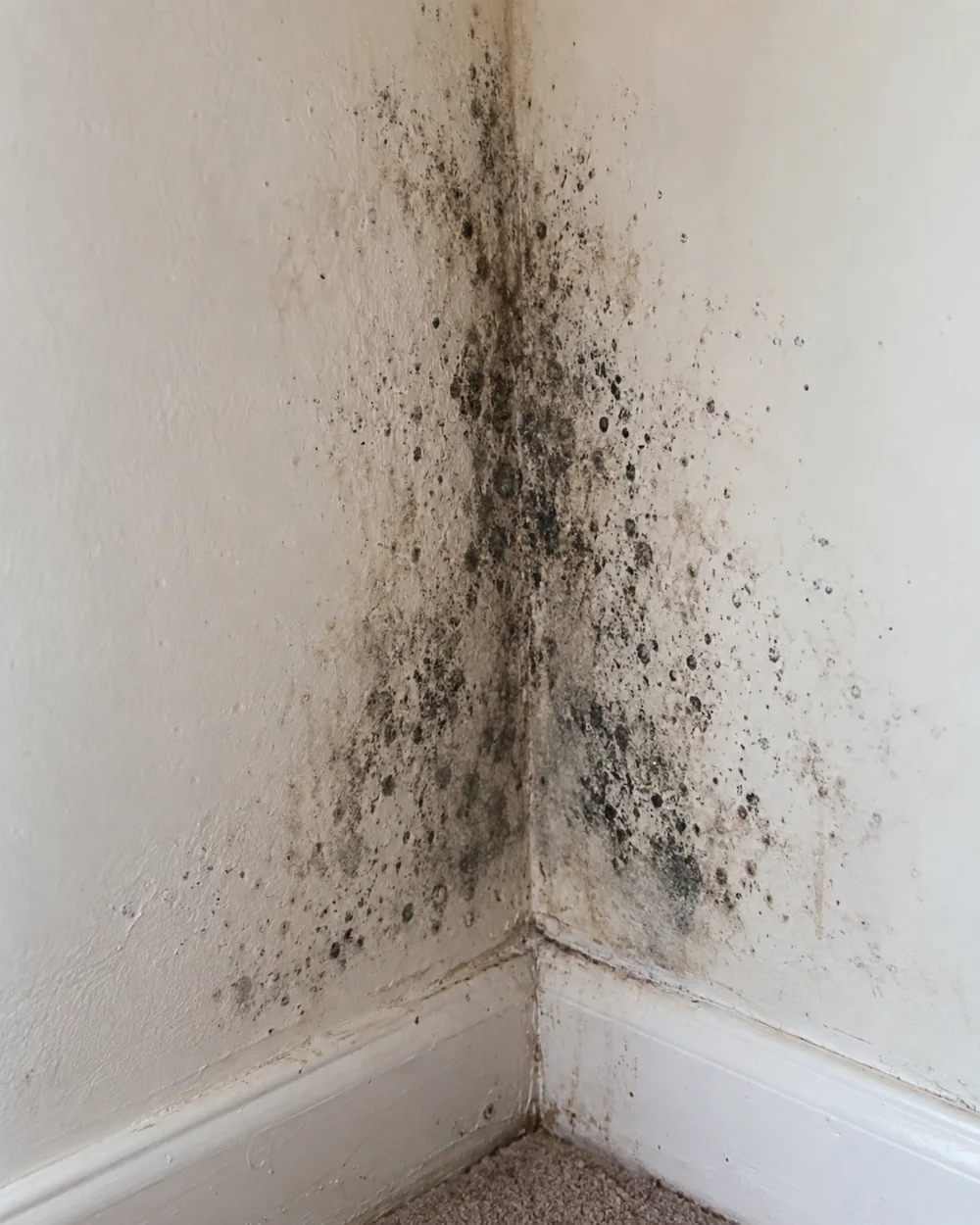
In a Finchley home, a narrow strip of mould along a wall-to-ceiling junction may be easy to overlook until decoration is planned. We discuss that boundary in relation to the roof or room above, the external wall and any changing dampness. The aim is to agree suitable removal while keeping an unresolved moisture source visible in the plan.
- Examine the junction as a whole
- Use the room-above relationship
- Avoid decorating over unanswered dampness
A line of growth needs context on both sides of the junction.
Follow the line, not just its darkest point
Describe whether growth continues across an external wall, turns a corner or stops beside an opening. A whole-room photograph can show that relationship. Mention stains, cracking and changes after rain separately from the black marks. The damp wall investigation service considers moisture evidence without assuming that the most visible part of a line identifies the source of water.
The timing is useful too. Explain whether the line becomes more noticeable during colder periods or after a particular incident. If earlier paint covered it, say when the finish changed and when the pattern returned. A freshly decorated surface can make inspection harder by hiding the earlier boundary, so photographs from before the work can add context to current observations.
What is beyond the ceiling?
For your Finchley enquiry, explain whether another room, dwelling, roof space or exterior sits above the affected surface. We do not infer that relationship from the district or the appearance of the ceiling. If another person controls access, that should be discussed before booking. An assessment limited to the room may leave questions that need a separate visit or repair record.
A colder junction is also a possibility. The condensation survey looks at vulnerable surfaces in context. It should acknowledge other moisture evidence rather than treating an external-wall location as a complete explanation. Proposed insulation or construction changes need their own consideration; a surface observation does not establish which alteration would be appropriate for the building.
Define the finish work in stages
Suitable black mould removal concerns agreed affected surfaces. Loose paint, damp board or deteriorated plaster may require decisions beyond cleaning. Ask what is reachable and how the condition will be considered before a replacement finish is applied. A narrow strip can still involve more than one material, particularly where a ceiling meets a different wall finish.
If an ongoing source needs a repair, the practical sequence should explain which task addresses it and which deals with existing damage. The treatment should not be described as fixing the roof, adjoining plumbing or the building envelope unless those tasks are explicitly commissioned. Clarifying that sequence helps avoid a decorative change being mistaken for evidence that the junction will remain dry.
Questions about this problem
Does a ceiling line always indicate a roof leak?
No. The building relationship, timing and accessible evidence matter. A colder surface or another moisture route may also explain the pattern.
Can an inspector assess a roof from the room alone?
The room provides some evidence, but exterior or roof access may be a separate requirement. The scope should state where the assessment is limited.
Should I keep photographs taken before painting?
Yes. They can show a boundary or stain that the current finish conceals. They add history without confirming what lies within the construction.
Describe the follow-up boundary
After agreed work, record whether changes remain on the same line, spread farther down the wall or appear in another location. Keep the original wider photograph for comparison. Report dampness and visible growth separately, since one may change before the other. These observations help a follow-up enquiry focus on what is new instead of repeating an earlier assumption about the room.
The selected pages for Muswell Hill and Hampstead are nearby enquiry options. For Finchley, call with your postcode, the affected junction and what sits above it. Explain pending decoration and earlier repairs so the proposed starting point addresses the remaining moisture question rather than simply fitting around a painting date.
LET’S DISCUSS THE NEXT STEP
Ask about your Finchley ceiling junction
Include the full length of the Finchley junction in a photograph where possible, not only its darkest point. Describe what is above it and whether the line changes after rain or colder periods. We can discuss the checks and finish work in a sensible sequence before another coat makes the earlier boundary harder to follow.