YOUR HOME / NOTTING HILL
Black Mould Removal Notting Hill
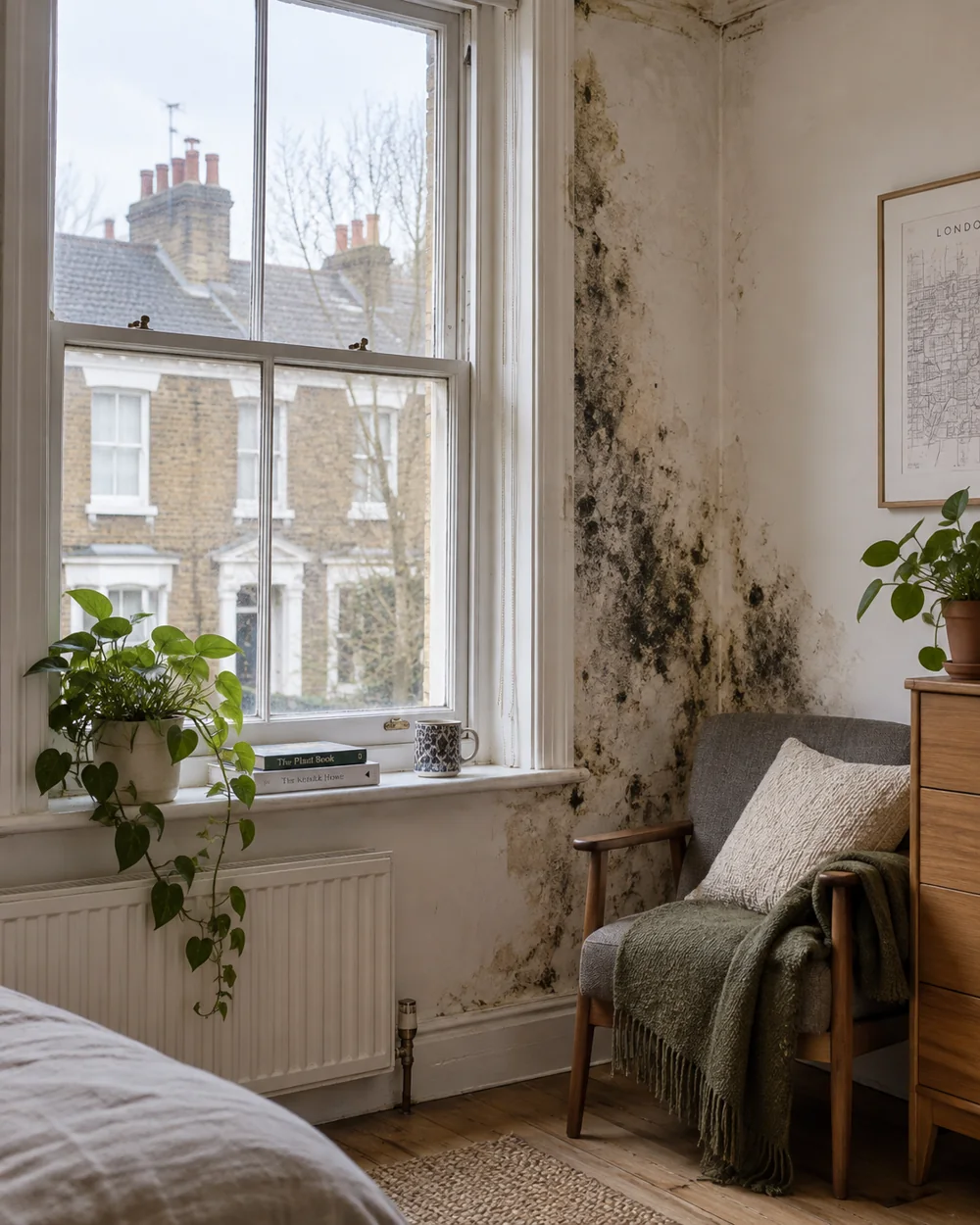
Mould appearing around a Notting Hill window after its replacement needs a careful explanation, not an immediate verdict on the installation. Room airflow, cold reveals and earlier wall conditions may all be relevant. We discuss removal with the sequence of changes and the affected materials, so suitable treatment is distinguished from a repair or ventilation question that still needs checking.
- Review the sequence after window changes
- Distinguish glass, seals and plaster
- Consider the surrounding room
A newer window and a colder reveal can coexist.
What changed with the opening?
Explain when the window was replaced and whether ventilation details, curtains or room use changed at the same time. A tighter opening can alter incidental airflow without being faulty. The surrounding reveal may still have different surface conditions from the glazing. An earlier stain concealed by decoration is another possibility, so photographs or notes from before the work can provide useful context.
The window mould service considers affected materials rather than treat the complete opening uniformly. Sound paint, persistent sealant staining and damaged plaster need different decisions. Ask which work is suitable and whether resealing, replacement or decoration is separate. Removal should not be expected to correct a glazing issue that has not been assessed.
Describe which surface receives water
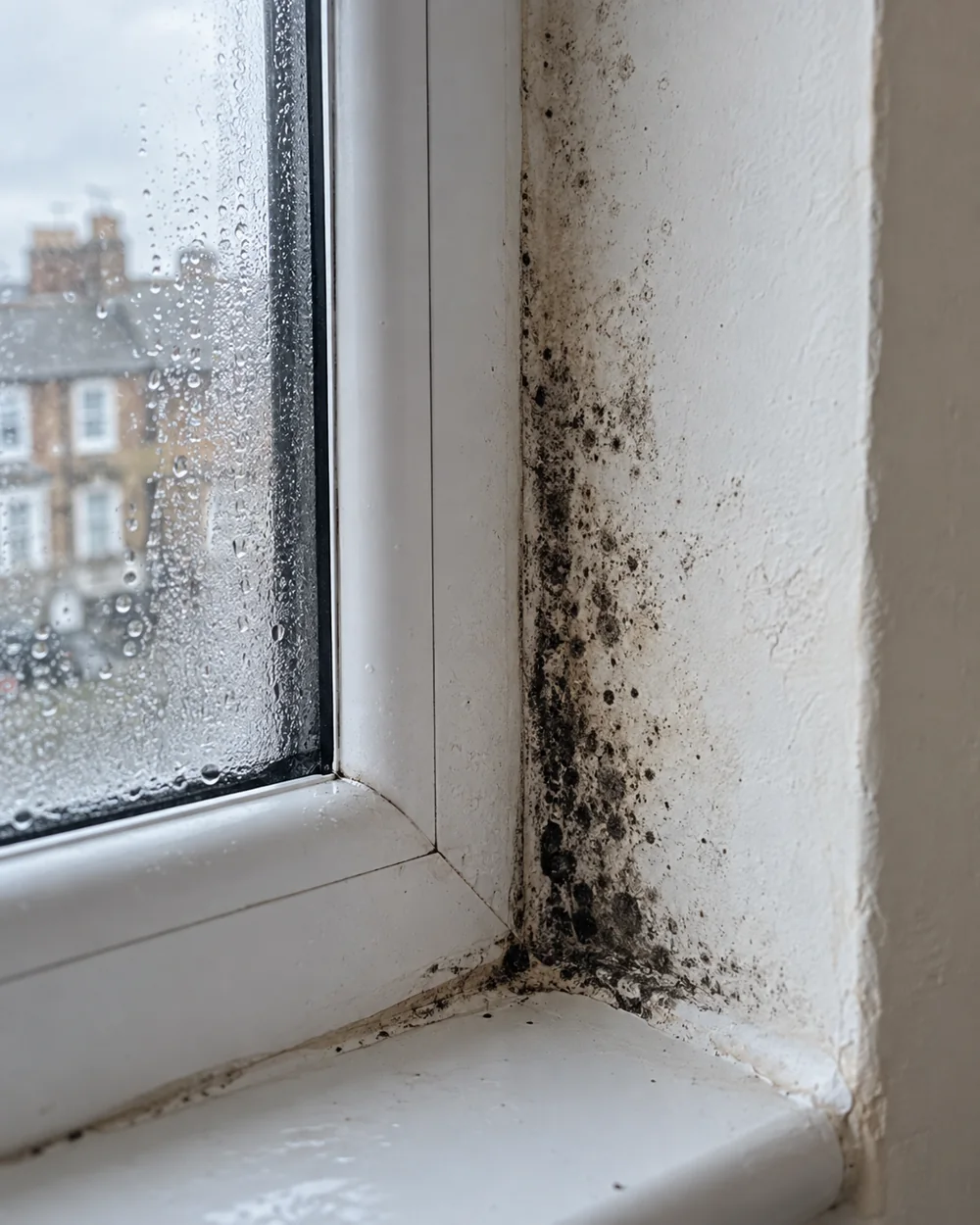
Moisture on the room side, between panes and inside adjacent plaster are different observations. Tell us whether the pattern is strongest overnight, during colder periods or following rain. A close photograph should be accompanied by a complete view of the opening. The position in the room helps frame the enquiry; it does not establish a concealed cause on its own.
Our cold wall survey discusses local surface vulnerability. A room can feel warm while a reveal remains cooler. Readings need interpretation with weather, material and room use. If the evidence suggests water entering from elsewhere, that possibility should remain part of the assessment rather than be excluded because condensation is also visible.
Questions about this problem
Which window-replacement details are useful?
The completion date, openings changed and any work to adjacent reveals help establish the sequence. Include earlier photographs if available; an installation record alone does not diagnose the present moisture pattern.
What if the mark existed before new glazing?
Explain its earlier boundary and whether it changed afterwards. A pre-existing mark should not be attributed to the new window solely because it is now more noticeable.
Should the installer be given the wall photographs?
They may help explain a concern about completed work. Keep the enquiry factual, with dates and locations, rather than presenting a surface photograph as proof of an installation defect.
Record the room around the replacement window
Tell us whether the opening is in a house or flat, which floor is involved and whether the exterior can be assessed. Keep any records of the window replacement and earlier wall repairs available for the enquiry. Alterations can leave construction and ventilation differing within the same property.
A moisture assessment considers humid air reaching the window, possibly from another room. Advice should fit the actual layout and access arrangements. It should not blame a recent change or an occupant’s routine automatically. Explain previous repairs and how the room behaved afterwards so recommendations can address the unresolved pattern.
Agreement before another round of decoration
Suitable removal has a defined surface scope. Repairs, damaged material and a new finish may require other decisions, sometimes after further evidence is obtained. Ask why each action is recommended and whether its outcome depends on a moisture source being resolved first. A cleaner-looking opening should not be treated as proof that the exterior or room ventilation has been corrected.
Call with the postcode, affected room and change history, including who can provide access. The pages for Kensington and Paddington cover other enquiries; retain the window-replacement dates when explaining your own moisture pattern. For Notting Hill, the initial discussion can focus on the sequence and materials without asking you to diagnose the installation or remove finishes before an appropriate assessment is planned.
LET’S DISCUSS THE NEXT STEP
Discuss mould around your Notting Hill window
Keep the glazing date and any photographs from before replacement with your Notting Hill enquiry. Describe the present glass, frame and reveal separately, including what stays wet. We can discuss whether the next step concerns accessible treatment, ventilation or a repair question without deciding that the installation is responsible simply because growth appeared afterwards.