
YOUR HOME / KENSINGTON
Black Mould Removal Kensington
A cupboard smell gives you a reason to look, but it cannot tell you what is behind a fixed lining. For Kensington enquiries, start with accessible staining, the cupboard opening and any affected belongings. The guidance below separates wall treatment from contents and explains when further access could answer a useful question.
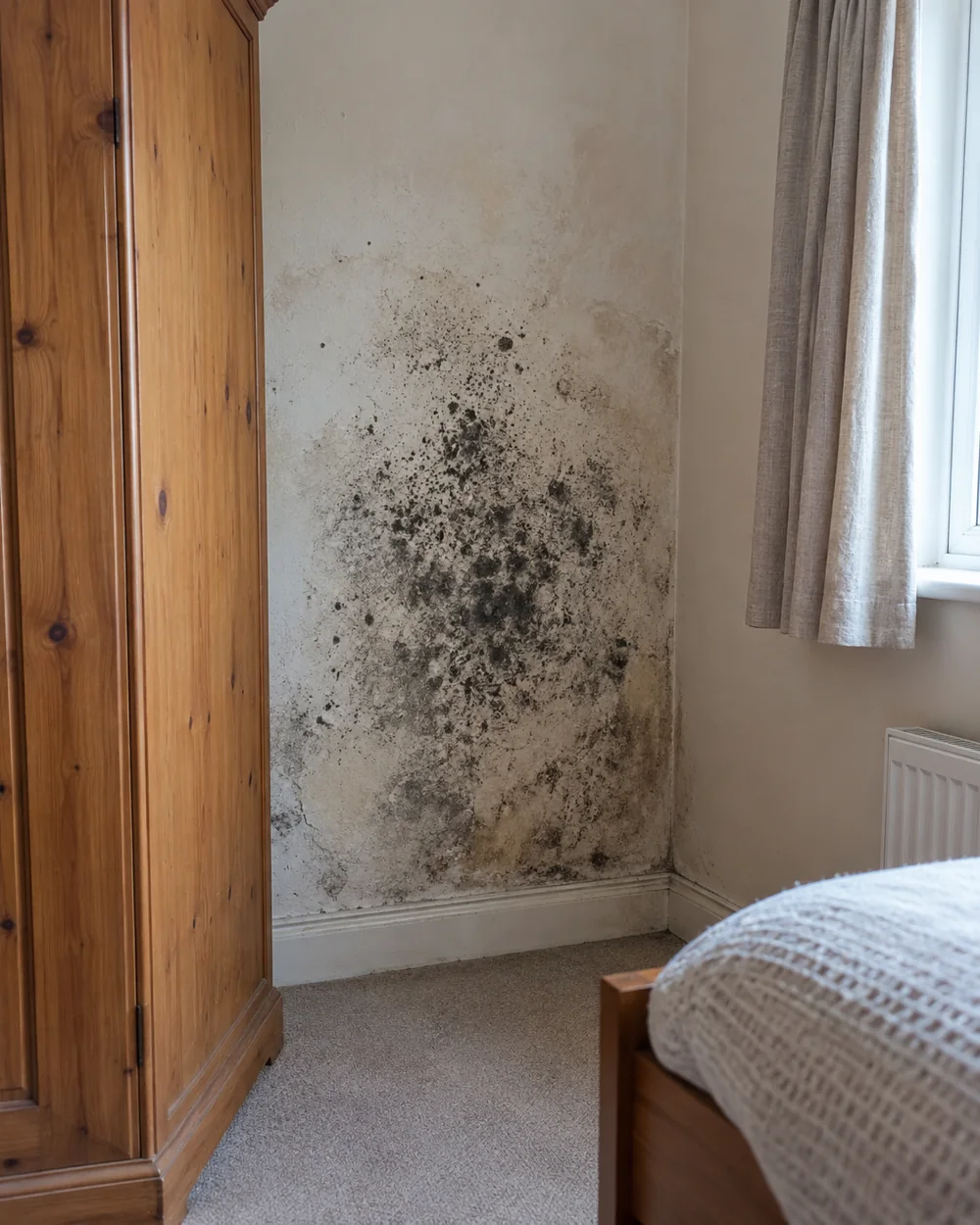
- Assess accessible concealed areas
- Keep belongings and walls distinct
- Explain limits before proposing work
The edge of a patch is not always the edge of the problem.
Start with the smell and the visible evidence
A smell can be a reason to investigate, but does not identify a mould species or establish how far growth extends. Check what you can observe without disturbing fixed materials: the location of staining, damaged paint and whether stored items are affected. Explain whether the concern is inside a cupboard, behind a wardrobe or on an external wall that furniture partly hides.
A photograph of the cupboard opening and adjoining room can help put the issue in context. Stored belongings and the wall are separate treatment questions. Do not assume that a wall service automatically covers fabrics, upholstery or every item inside a fitted unit. We discuss the affected surfaces and access so the scope is clear from the beginning.
The edge of a patch is not always the edge of the problem.
Why the building type does not settle the cause
Kensington’s council records buildings of different ages in the conservation area. Your property still needs its own description: house or flat, floor level, exterior relationship and any changes to the room. A cupboard can restrict air circulation against a cold surface, but an unresolved leak or water entering a wall is another possibility. Architectural age alone does not decide between them.
The inspection service can help when the reason is uncertain. Readings and observations need interpretation together, while a cold wall survey may be useful if surface temperature and local airflow are central questions. Neither should be presented as proof that an unseen lining or neighbouring space has been fully assessed.
Working out which access is worth arranging
Additional access should answer a defined question. If a lining hides the affected wall, ask what removing or opening it would help establish. Who can authorise that work, and what will need making good afterwards? These are different decisions from opening a cupboard door for a routine inspection. We explain restrictions rather than treating permission as implicit in the initial enquiry.
If the property is rented or managed, establish who can provide entry and who holds records of earlier repairs. A tenant may know when the smell appears, while the owner knows what was built or repaired behind the unit. Bringing those observations together can be more useful than repeatedly cleaning the visible edge without understanding what remains inaccessible.
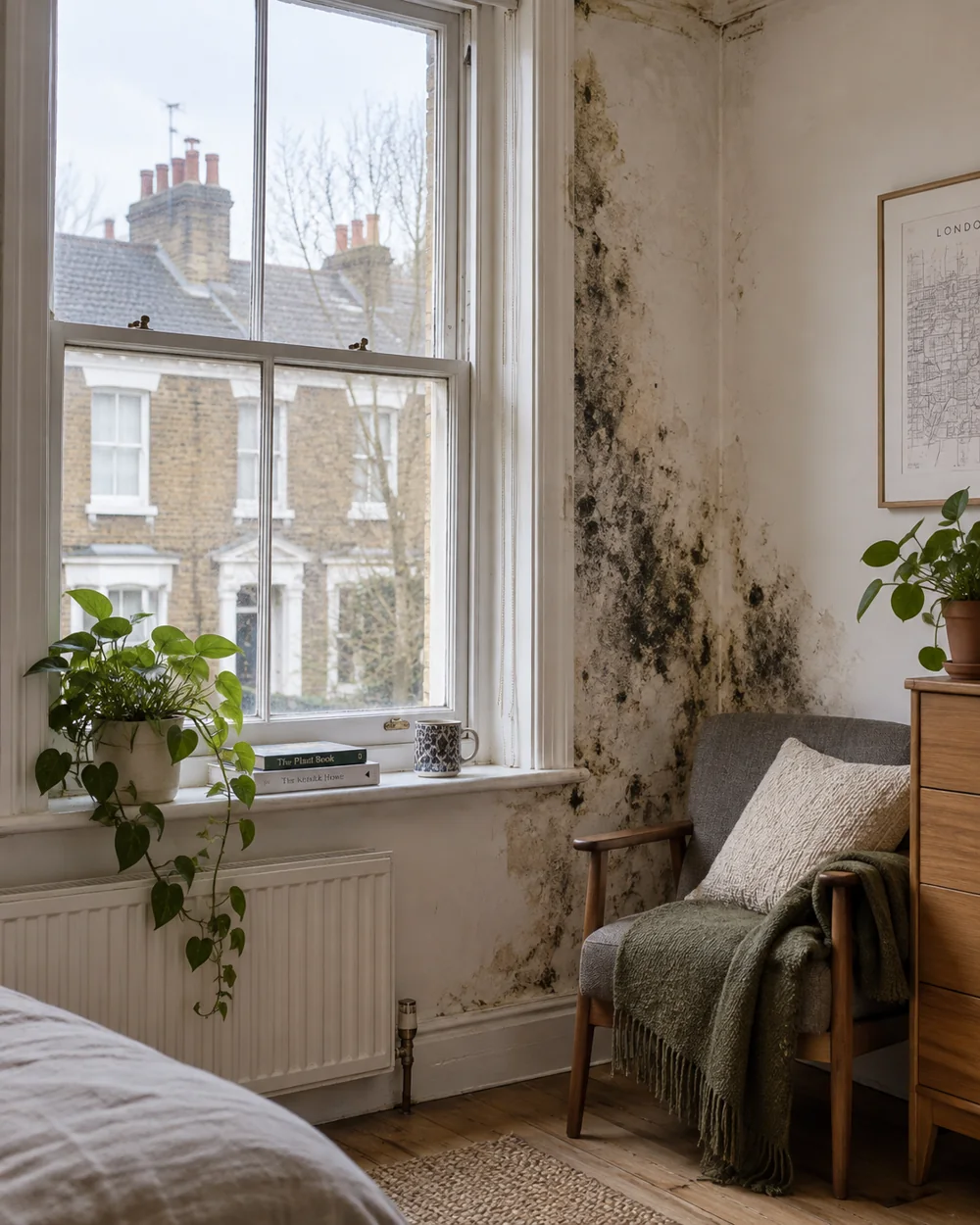
Treatment follows the surface condition
The bedroom and living room service discusses growth behind furniture and attention to different finishes. Loose paper, damp board and sound painted plaster do not all respond to the same proposed work. Removal needs an agreed material scope, while repairs, replacement and later decoration should be explained as separate stages where appropriate.
Keep a record of whether the smell or patch changes after cleaning, use of nearby plumbing or different weather. That history may guide further assessment if an initial visit leaves questions open. For nearby selected areas, Chelsea considers decorative finishes and Notting Hill examines room changes after alterations. Call about Kensington with your postcode and the accessible evidence; there is no need to commit to dismantling a unit before discussing the concern.
Questions about this problem
Does a cupboard smell prove there is hidden mould?
No. It warrants consideration alongside staining, material condition and other observations. An inspection should not claim a concealed location or extent from smell alone.
Can fixed furniture limit the inspection?
Yes. The report or explanation should state which surfaces were accessible and what further access would achieve. Permission to remove a unit is a separate matter.
Could the contents require different attention from the wall?
Yes. Clothing, furnishings and stored materials are not automatically included in a wall treatment. Describe what has been affected so the scope can be discussed properly.
LET’S DISCUSS THE NEXT STEP
Ask what can be checked inside your Kensington cupboard
Do not remove a cupboard lining simply to make a Kensington enquiry more complete. Start with the visible opening, the smell you notice and any dampness on adjacent surfaces. Explain who could authorise additional access. The conversation can then identify a useful purpose for further checks before an unseen wall is treated as fully understood.