
YOUR HOME / BALHAM
Black Mould Removal Balham
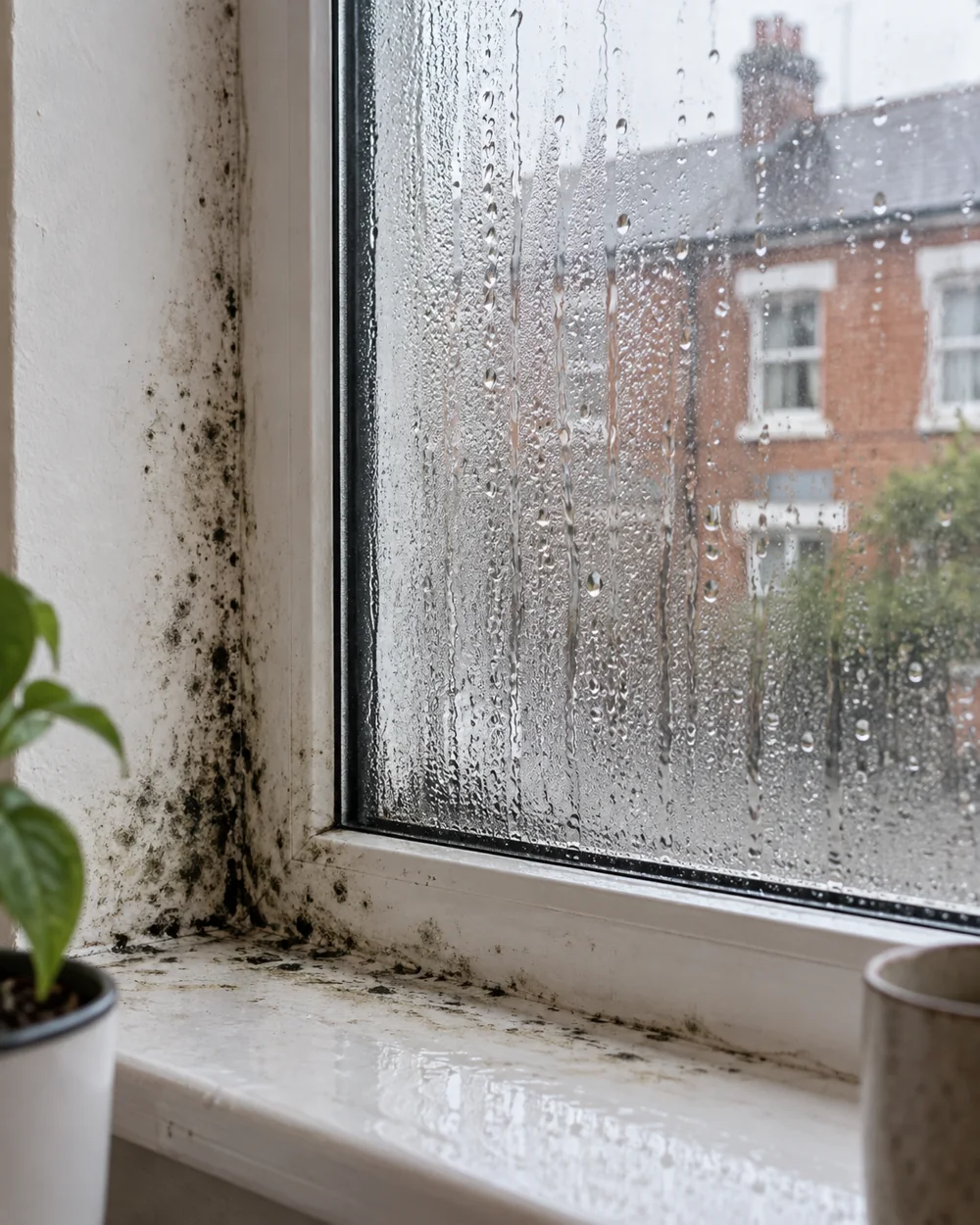
A Balham bedroom window can be dry during the afternoon and wet again the next morning. If mould develops around it, the overnight pattern is useful evidence. We discuss removal with attention to the room’s colder surfaces, curtains and moisture arriving from elsewhere, while keeping leaks and damaged materials in consideration where the observations call for them.
- Use observations from different times
- Consider curtains and cold reveals
- Separate treatment from moisture control
The afternoon view may miss the overnight pattern.
Record the conditions you actually see
Describe which side of the glass gets wet, whether water reaches the sill and where growth appears. Photographs taken at different times can show a pattern a one-off visit might miss. A bedroom may receive moisture produced elsewhere in the home, while local surfaces remain colder overnight. The history helps place the visible mould in that wider context.
Keep observations separate from a presumed diagnosis. Wet glazing does not rule out another source affecting the adjacent wall, and a closed curtain does not automatically explain the whole issue. Tell us if a patch worsens after rain or if the plaster remains damp when the pane is dry. Those differences deserve their own questions.
Look behind the curtain edge
Curtains and blinds can change circulation around a reveal. The affected area may extend beyond the first dark line you notice. Explain whether growth sits on plaster, seals or the frame. Our window mould service distinguishes these surfaces, because staining inside sealant and mould on sound paint may require different attention.
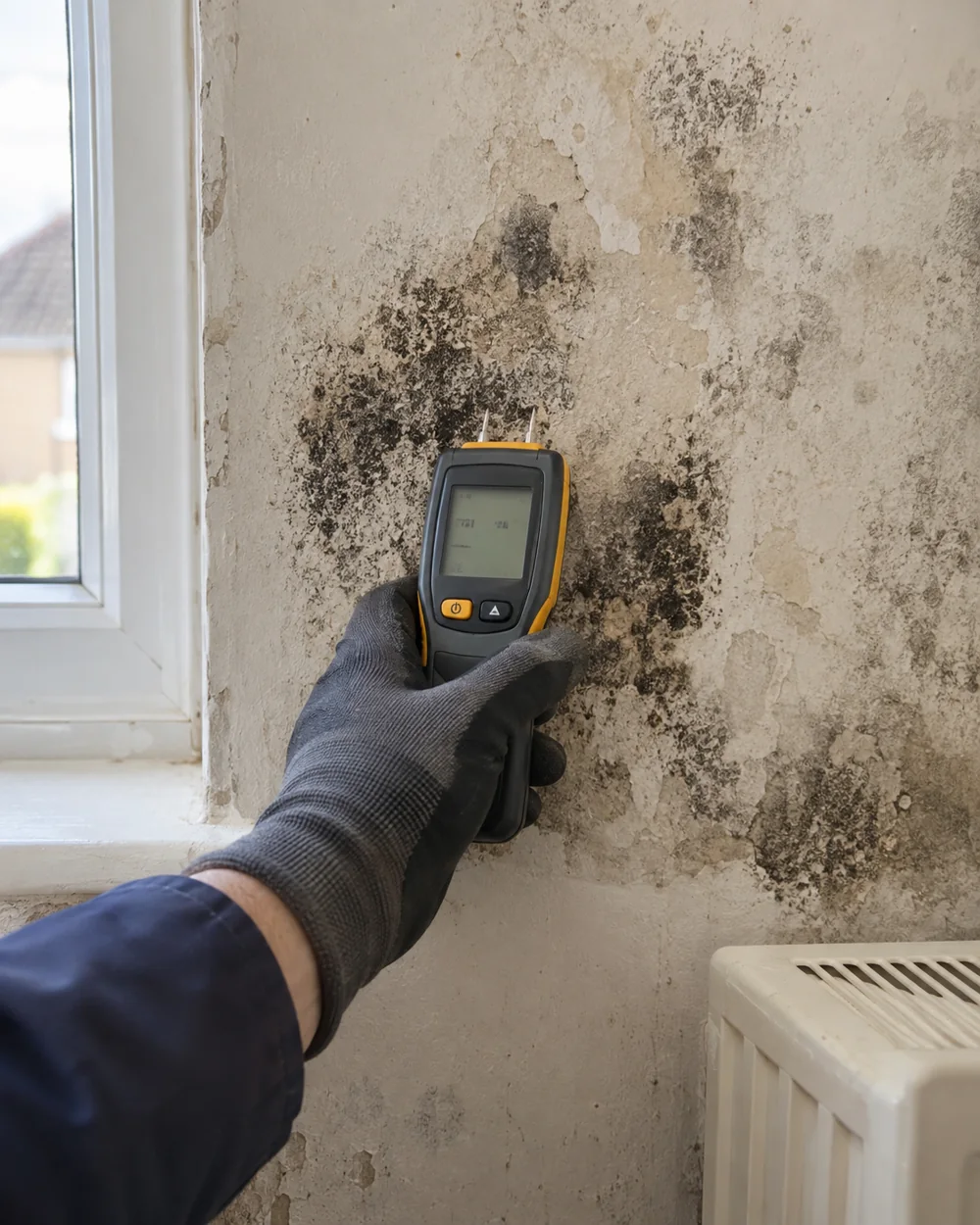
A cold external wall near the opening can also be relevant. The cold wall survey considers vulnerable surfaces and the evidence for condensation. Readings describe the conditions at the time; weather, recent heating and room use still matter. The explanation should not turn one measurement into proof of what happens every night.
Show the curtain and window arrangement
Tell us whether the home is a flat or house, which floor the bedroom occupies and which walls face outside. If the room’s use or window arrangement changed before mould began, include that sequence. This property information is more useful than a broad claim that every Balham home has the same kind of window, wall or airflow problem.
A moisture assessment can consider bathroom and kitchen extraction as well as the affected bedroom. Recommendations should explain how humid air reaches the colder surface and what can reasonably be changed. Advice must take account of the occupied room, rather than expect the people using it to follow a routine that the layout makes impractical.
Agree treatment and check what returns
Before surface work, establish what materials are included and whether damaged finishes need separate assessment. Removal does not automatically replace seals, repair the exterior or redecorate the room. Ask which tasks are appropriate and whether further investigation is needed before a prevention plan is settled. A clearer scope is more useful than a promise that one treatment will prevent every future moisture event.
After changes, note whether wetness and growth return together or differently. That record can guide further discussion. For a property in Tooting or Clapham, use those area pages and bring the same morning-to-afternoon comparison to the conversation. When you call about Balham, have the postcode, affected room and overnight observations ready, along with any fan, window or plumbing work already tried.
Questions about this problem
Will an afternoon inspection still be useful?
Yes, especially with a clear history and photographs of the overnight pattern. Findings should acknowledge that conditions can vary rather than assume the appointment captures every moisture event.
Does condensation on the glass explain damp plaster too?
It may contribute, but the plaster and opening need consideration. A leak or another wall moisture source should not be ruled out simply because droplets also appear on glass.
Should curtains be removed before the visit?
Explain access and the affected location first. Preparation can be agreed according to what needs inspection; do not assume every furnishing must be removed to make an enquiry.
LET’S DISCUSS THE NEXT STEP
Talk about recurring window mould in Balham
Keep one wide photograph of the Balham opening before the morning water clears, if that is safe and convenient. Tell us whether the reveal remains damp later and how curtains sit overnight. The enquiry can then address the daily pattern and the affected materials, rather than depend on an afternoon image that misses the reported conditions.