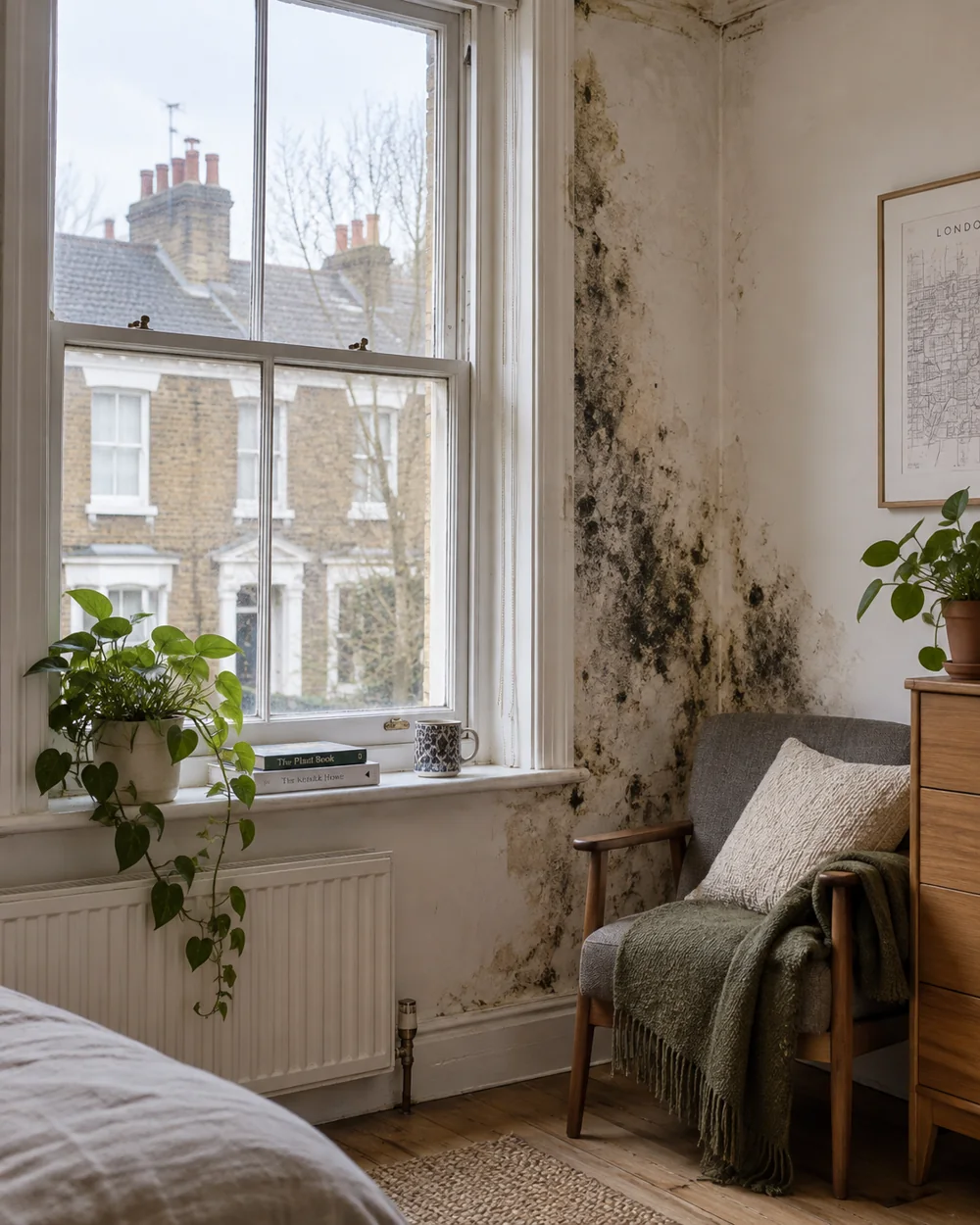
YOUR HOME / CLAPHAM
Black Mould Removal Clapham
Mould returning behind a wardrobe deserves a closer look than another coat of paint. For a Clapham home, we discuss the affected room, the wall condition and what changes through the day or season. Removal can address suitable surfaces, while an inspection helps establish whether cold walls, limited airflow or another moisture source need attention.
- Look behind the visible patch
- Explain cold-wall conditions
- Agree the treatment scope
A dry room can still contain a damp corner.
Behind the wardrobe is still part of the room
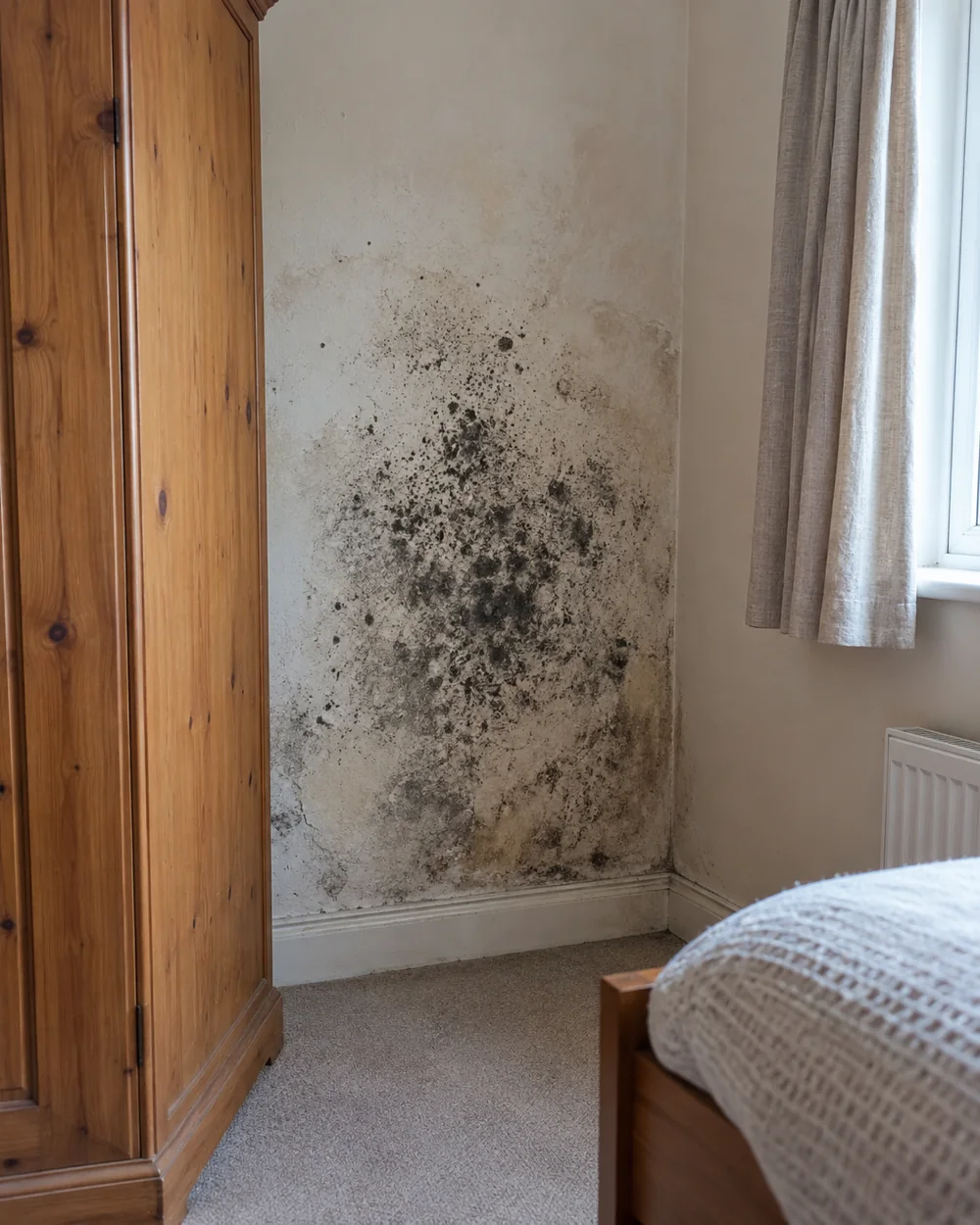
A fitted or freestanding wardrobe can hide a wall that behaves differently from the space you can see. Less air moves behind it, and an external wall may stay cooler there. When you discover a patch, note how far it extends, whether the finish feels damaged and whether stored belongings have been affected. These observations help define the problem before work is discussed.
Moving furniture may improve access, but it is not proof that furniture caused the growth. Dampness entering the wall, an earlier leak and condensation can each produce similar staining. We consider the construction and history as well as the gap behind the wardrobe. If a fitted unit restricts inspection, the limitation needs to be recorded rather than ignored.
Show which wall the wardrobe covers
For a Clapham bedroom, begin with the wall behind the wardrobe and the rooms around it. Explain whether the property is a house, a converted flat or a purpose-built apartment. If rooms occupy different floors or an exposed corner, that arrangement is more useful to the inspection than a general assumption about older London housing.
A converted home can have rooms with different heating and ventilation arrangements. The mould may be in one bedroom while moisture is produced elsewhere. Describe the bathroom extraction, visible window condensation and changes made before the problem began. Mention whether the affected bedroom becomes wet while the bathroom or kitchen is in use.
A useful distinction: removal and investigation
Our bedroom and living room treatment page explains attention to affected finishes and access behind furniture. Sound paint, loose wallpaper and softened plaster need different decisions. The proposed work should identify the surfaces involved and distinguish treatment from replacing materials, moving fixed units or redecorating afterwards. Ask which of those tasks is included before making preparations.
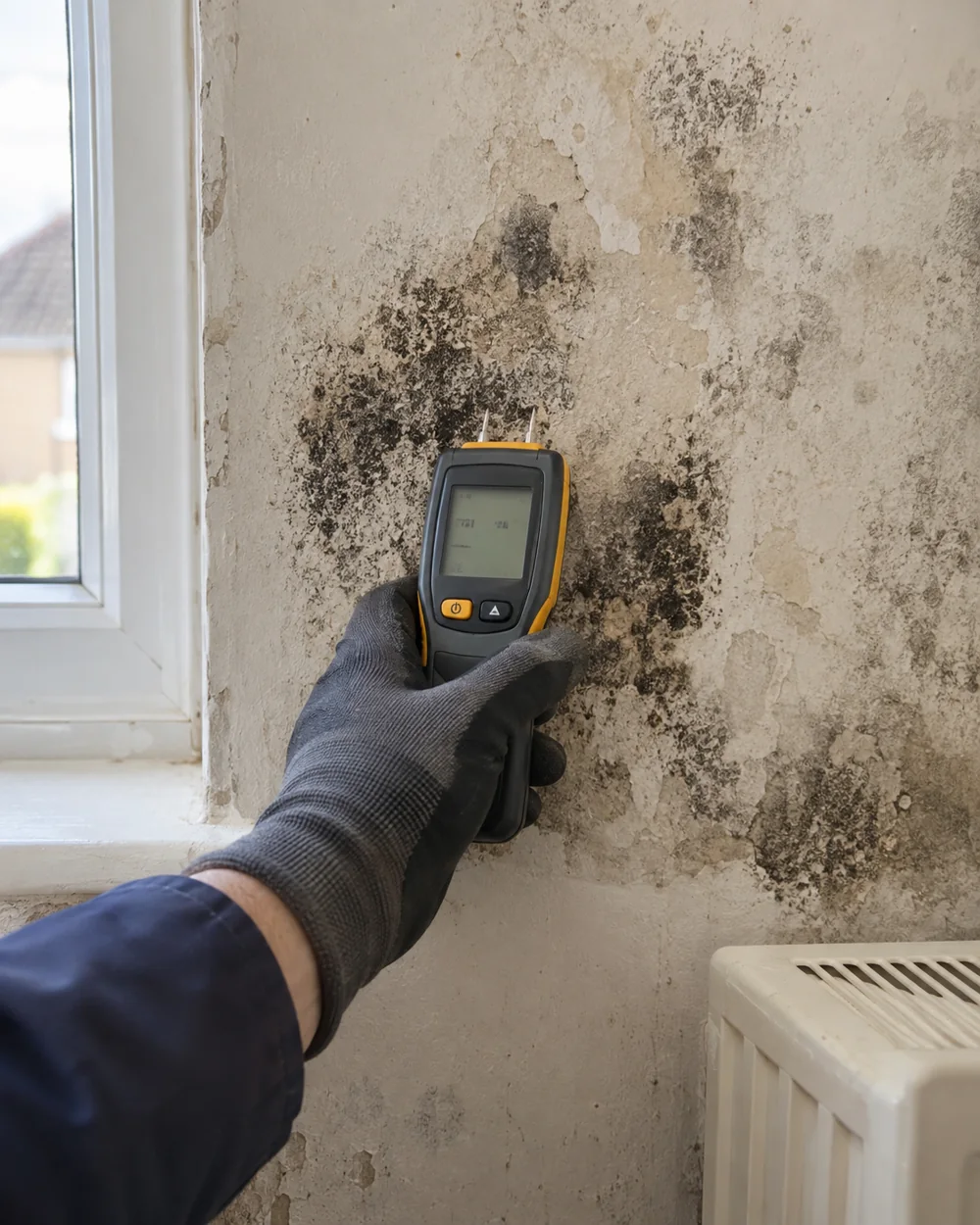
If the moisture source is unclear, a mould inspection can be the starting point. An inspection considers the location, relevant readings and reported history. It does not turn the colour of the growth into a species identification or guarantee that every concealed cause can be established in one visit. Further access may be needed where the evidence remains incomplete.
What the patch does between cleaning attempts
The interval before mould returns can help explain the pattern. Does the same corner spot over each winter, or does dampness persist even when the room is unused? Has rain been followed by a change? Keep earlier photographs and note whether cleaning, heating changes or repairs altered the location of the growth. A simple sequence is useful even without exact dates.
Where the affected wall remains unusually cold, a cold wall survey can help explore surface conditions. Where there are signs of another water source, investigation may need to follow that instead. We discuss recommendations in an order that makes sense: understand ongoing moisture, agree appropriate treatment and consider repairs or decoration separately.
Arrange the enquiry around access
Tell us your postcode and who can provide entry to the affected rooms. In a rented flat, the person reporting the patch may not be the person arranging payment or authorising additional access. Explain those arrangements early. Do not remove fitted furniture or wall coverings merely to make the first enquiry; discuss what access is actually needed and who can approve it.
For another property in this part of south-west London, the Balham page discusses overnight condensation, while Battersea considers access in managed apartments. Those links are alternatives for nearby enquiries, not evidence of specific jobs. When you call about Clapham, describe the room in your own words and mention any previous repairs.
Questions about this problem
Should I move a wardrobe before calling?
Explain whether it is movable or fixed. Photographs and a description are enough to begin; additional access can be discussed without risking damage to furniture or finishes.
Could one bedroom be affected while the others are dry?
Yes. Surface temperature, exposure and airflow vary within a home. A local patch needs its own assessment rather than an assumption that all rooms share identical conditions.
LET’S DISCUSS THE NEXT STEP
Discuss your Clapham mould problem
Before shifting the wardrobe, tell us how much of the wall is visible and whether the unit can be moved safely. Include a view of the room, the dates of earlier cleaning and any wetness elsewhere. We can then discuss a Clapham appointment that accounts for the hidden surface instead of relying on its exposed edge.