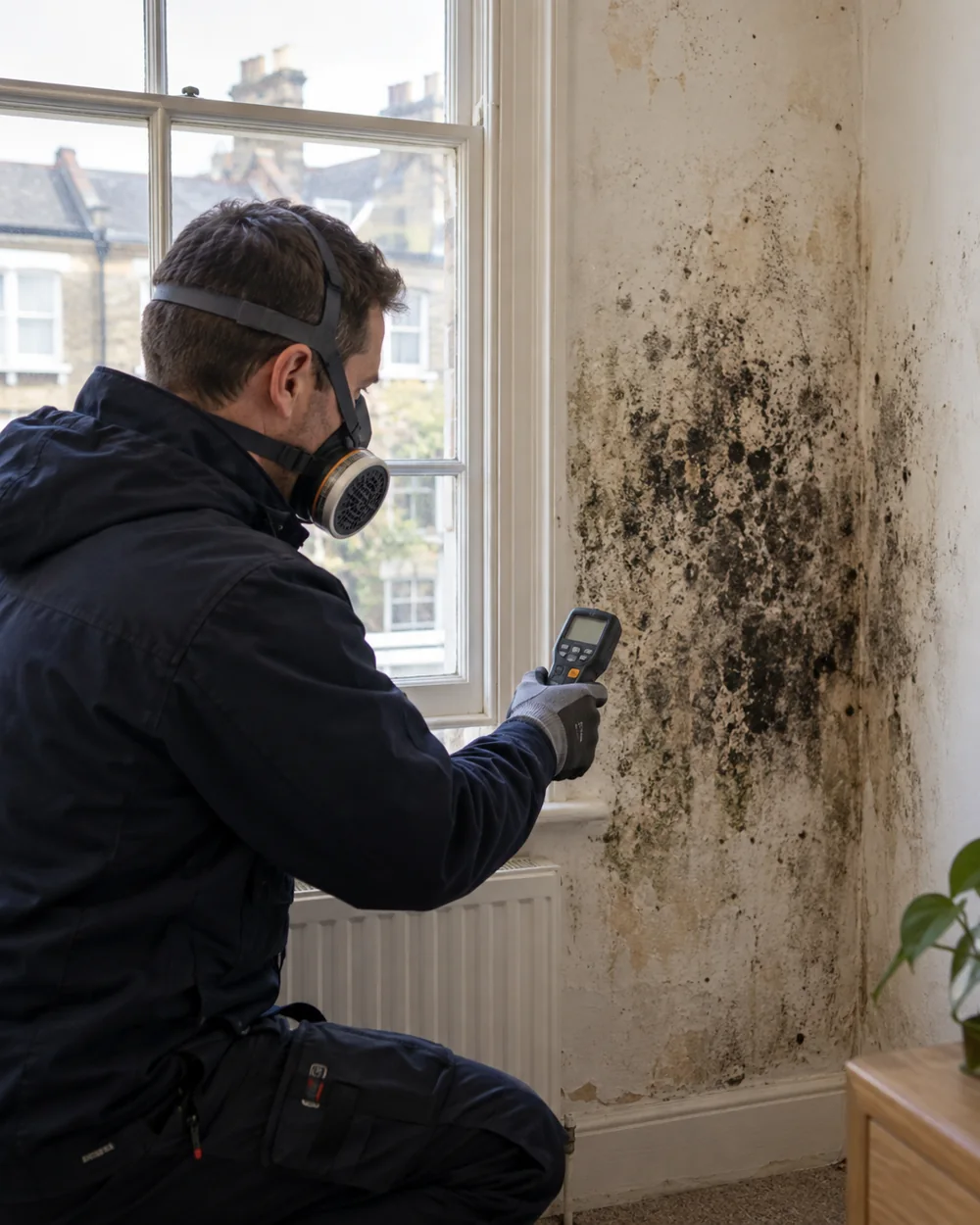
YOUR HOME / RICHMOND
Black Mould Removal Richmond
Mould in a Richmond home can prompt a quick decision to repaint, particularly when the patch sits in an otherwise well-kept room. Before repeating that work, consider whether the wall is staying damp and why. We discuss suitable removal alongside the pattern of moisture, taking account of the affected finish, exterior relationship and any previous repair rather than assuming good decoration means sound conditions underneath.
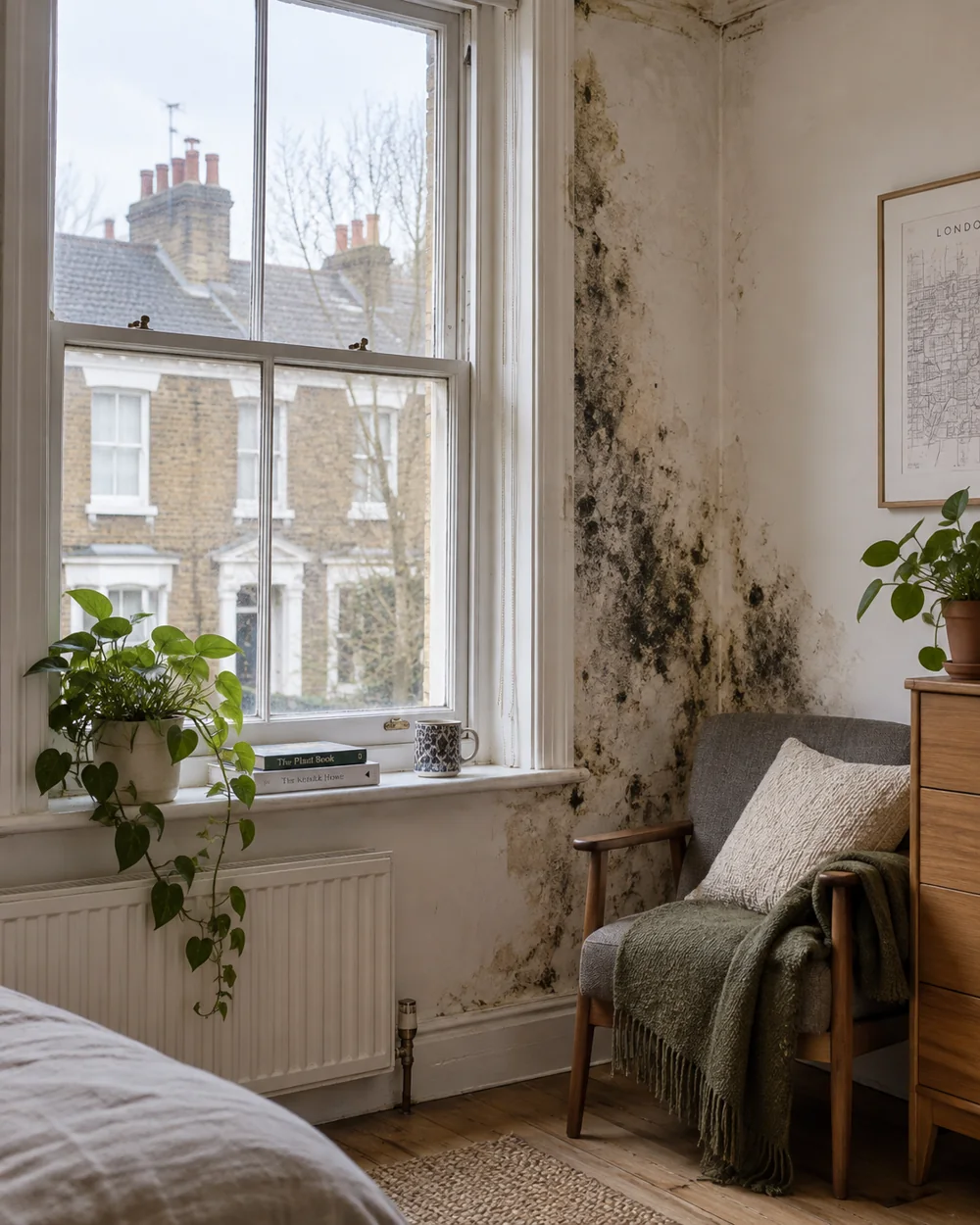
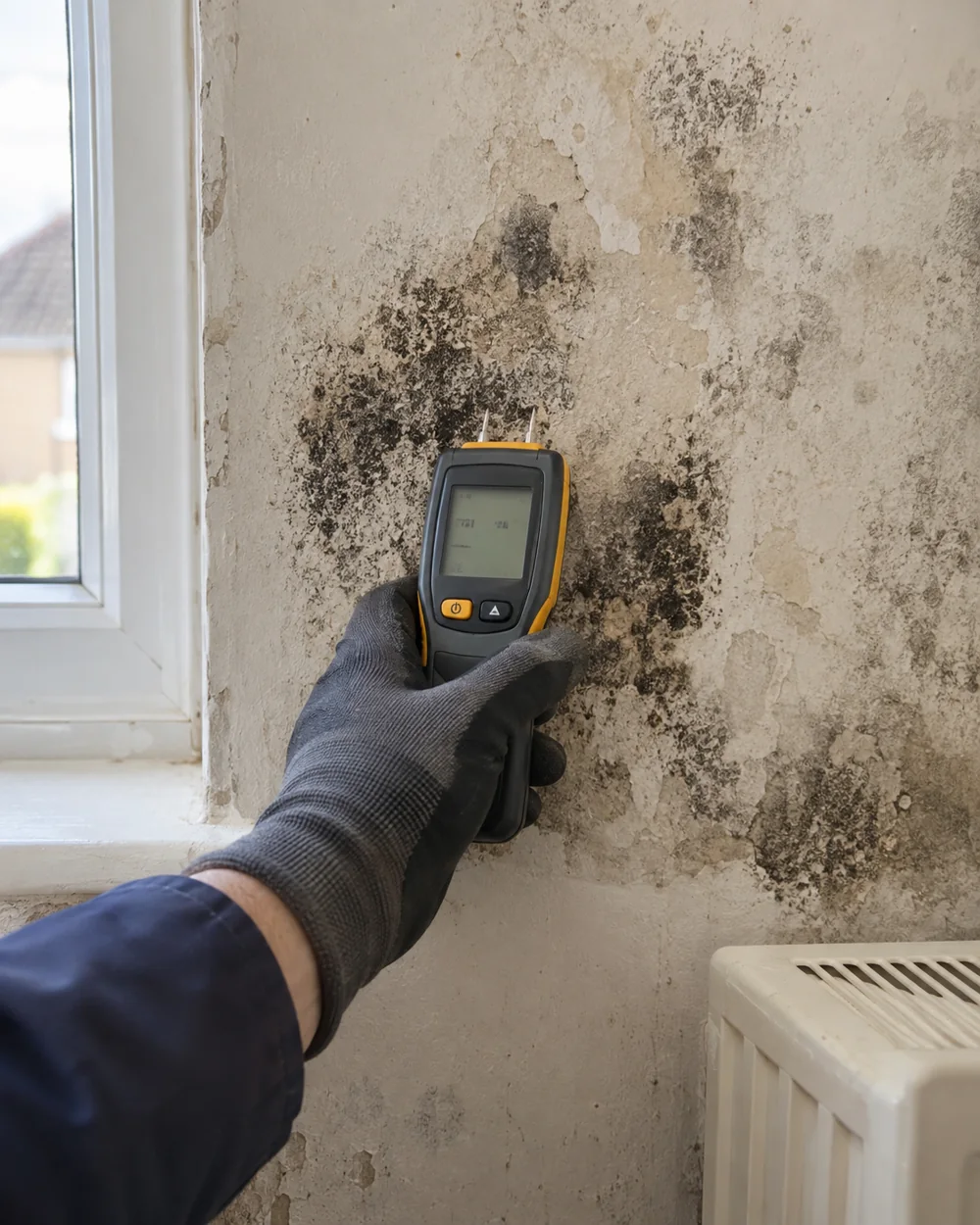
- Look at the wall before repainting
- Consider weather-related changes
- Plan treatment and repair separately
A tidy room can conceal a continuing moisture question.
The exterior relationship comes first
For a Richmond enquiry, explain which affected walls face outside and what lies above or alongside them. In a house, an accessible roof junction or window surround may be relevant; in a flat, a shared part of the building may need separate arrangements. The property description helps decide what can be assessed. The postcode does not establish whether rainwater, condensation or plumbing is responsible.
A change after wet weather deserves a record, but is not conclusive proof of a particular exterior defect. Staining can appear away from the point where moisture enters. Compare the wall with adjacent ceilings and openings, and keep photographs showing the complete pattern. Our damp investigation page explains why surrounding construction and access matter as well as the visible mark.
A tidy room can conceal a continuing moisture question.
Why the latest paint may not tell the whole story
Decoration can conceal earlier damage, and recently repaired material can differ from the wall beside it. Tell us when the finish was applied and what was done beforehand. Was a leak stopped, a surface treated or plaster replaced? The sequence can help explain whether the enquiry concerns fresh moisture, residual dampness or growth recurring under conditions that were never fully assessed.
Our mould removal service distinguishes suitable surface treatment from repair and redecoration. Ask which finishes are included and which need other attention. A sound painted patch and loosened wallpaper may require different decisions. No new coating should be expected to repair a water source or substitute for assessing materials that remain damp beneath the finish.
Cold surfaces deserve their own explanation
When a patch appears mainly in colder months, local surface temperature and airflow may be relevant. A room can feel comfortable while a particular corner or reveal remains vulnerable. Furniture and curtains may change circulation in that small area. Those factors should be considered without turning their presence into automatic blame or assuming that every damp wall is a condensation problem.
A cold wall survey can help explore the reported pattern. Measurements taken during a visit need interpretation with weather, room use and materials. If uncertainty remains, monitoring or further access may be useful. The explanation should identify which question each next step addresses, rather than use one reading to justify a broad programme of work.
A workable plan for the occupied home
Tell us who can provide access, whether furniture restricts the affected area and whether another person manages exterior maintenance. Do not remove finishes or move fixed items simply to make an enquiry. We discuss the accessible evidence and what preparation would be worthwhile. In a rental, the occupant’s daily observations can be useful alongside the owner’s repair history.
Keep notes after any agreed work about whether the surface dries and where growth reappears. A better-looking finish alone does not settle the moisture issue. For another address, Twickenham and Mortlake provide additional enquiry routes. The condition beneath a new finish still needs its own description. For Richmond, call with the postcode, affected rooms and what has already been tried so the next conversation can focus on the question that remains unresolved.
Questions about this problem
Does a patch changing after rain confirm water ingress?
It raises an important question but does not locate the source by itself. The surrounding construction, timing and accessible evidence need to be considered before a specific repair is recommended.
Can the exterior need inspection even when the mark is indoors?
Yes. The relationship may be relevant, but access and authority must be agreed. An indoor assessment should explain when exterior information is missing rather than present that area as already checked.
Should I arrange decoration at the same time?
Discuss the moisture findings and material condition first. Treatment, drying, repairs and decoration can have different requirements; the appropriate order should be clear before a new finish is expected to last.
LET’S DISCUSS THE NEXT STEP
Talk about mould in your Richmond property
For your Richmond enquiry, explain what lies outside the wall and whether the patch changes after rain or through colder periods. Keep earlier decorating and exterior repair dates together. We can discuss the surface work with that history in view, especially where a new coat has made the previous boundary harder to recognise.