
YOUR HOME / TWICKENHAM
Black Mould Removal Twickenham
A bedroom can smell musty when first opened and seem normal later in the day. If that happens in your Twickenham home, note the timing alongside any visible marks. This page helps you describe an intermittent concern, keep belongings separate from wall surfaces and prepare an enquiry even when the smell may be absent during a visit.
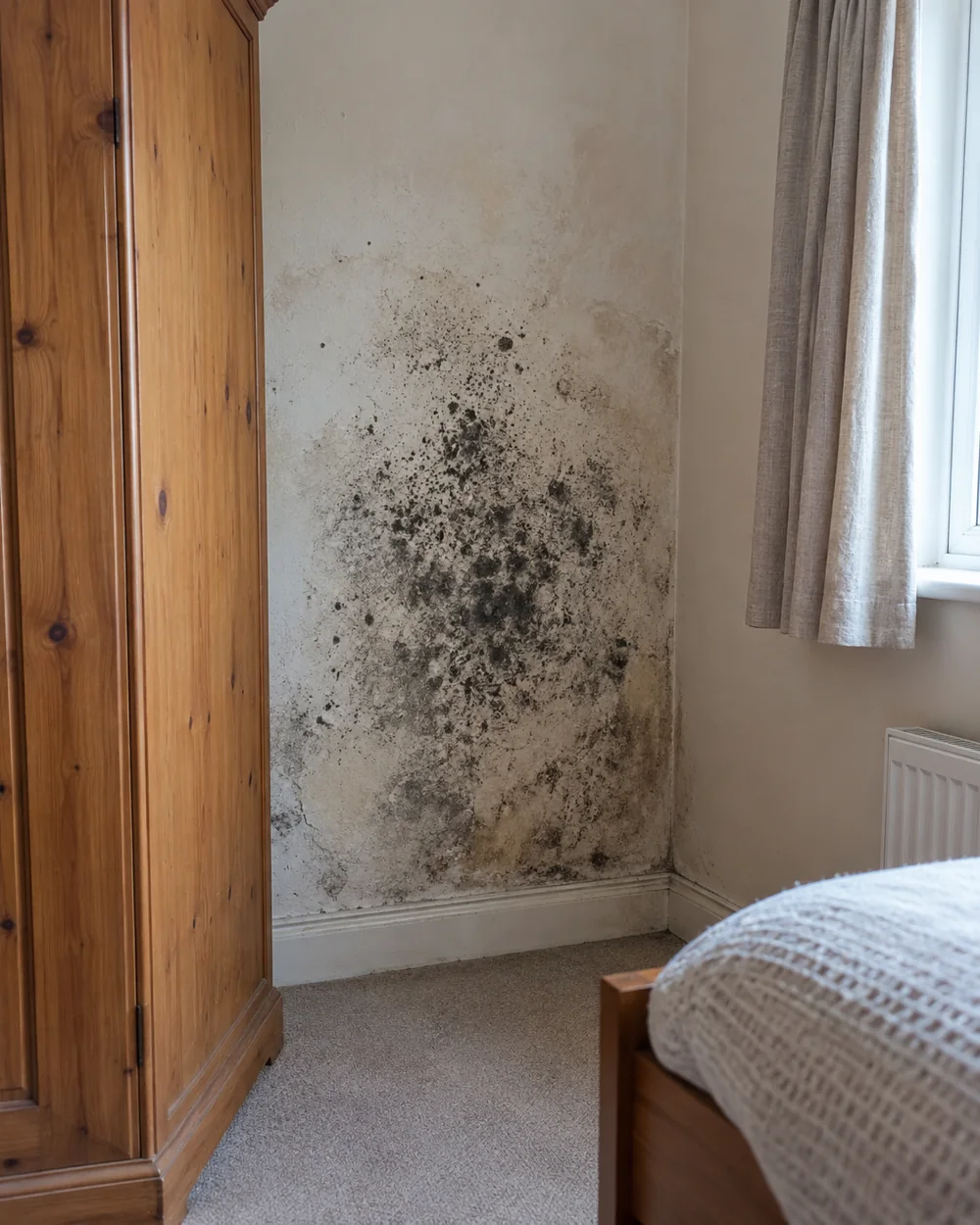
- Consider visible and hidden evidence
- Discuss occupied-room access
- Define the affected materials
A smell is a starting observation, not a diagnosis.
Use the room’s history to explain the concern
Tell us when the smell appears and whether it changes after ventilation, heating or use of another room. Do you see staining behind a bedside unit, damage at the skirting or mould near the window? These observations help describe a pattern that may not be present during the appointment. A short sequence is more useful than guessing the mould species from its appearance.
If the room was recently decorated or furniture moved, include that too. A concealed patch might have existed for some time, while a newly exposed area may behave differently once air reaches it. Keep older photographs if available. They provide context but should not be treated as proof of a concealed moisture source that has not been assessed.
The wall and belongings need separate decisions
Our bedroom treatment service concerns affected room surfaces within an agreed scope. It does not automatically include every wardrobe, mattress or textile. Let us know if furnishings or stored belongings are involved so those questions can be discussed. Moving fixed furniture and treating the wall behind it are also different tasks, with preparation and permission to consider.
Sound plaster, damaged coverings and loose paint may need different attention. A wall treatment can address suitable growth but cannot by itself resolve a leak or restore every finish. Ask what is proposed, what remains outside the work and whether repairs or decoration depend on the findings. This helps avoid judging the visit against a broader task that was never agreed.
Explain the bedroom boundaries and cold surfaces
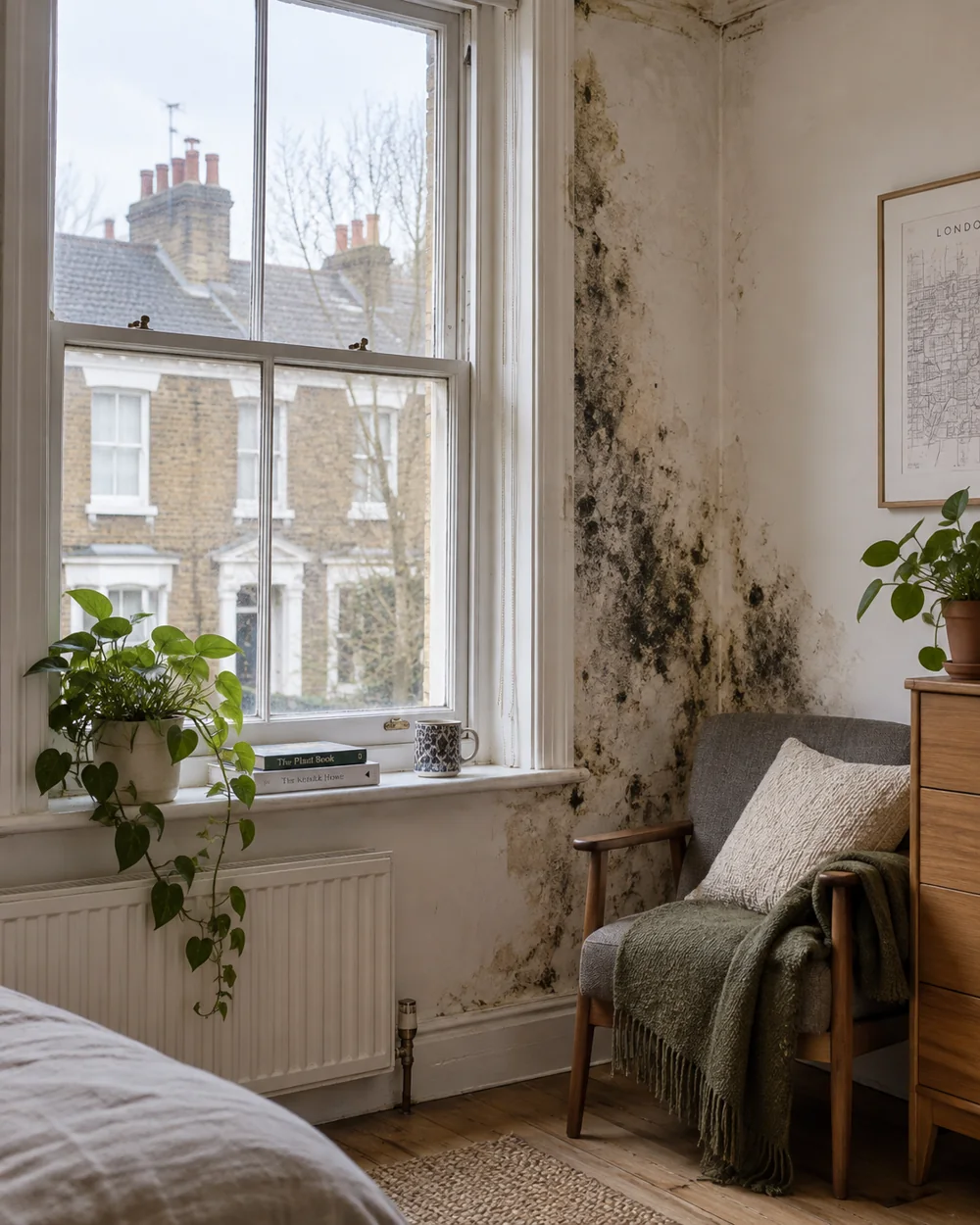
Explain whether the affected bedroom is in a house or flat, its floor level and which walls are external. If it shares a boundary with another room or property, mention that arrangement. We do not infer construction or moisture source from a district name. The actual relationship between rooms, exterior and access provides the useful context for the inspection.
Restricted circulation can leave a cold area behind furniture, but water entering a wall is another possibility. A mould inspection considers those alternatives with the visible evidence. If cold surfaces and recurring condensation appear central, the survey page explains the questions that may be worth pursuing without treating a comfortable room temperature as proof that every corner stays dry.
Questions about this problem
Can a smell identify the affected area?
Not reliably on its own. Visible condition, room layout and the reported timing need consideration. Concealed surfaces may require additional access before their condition can be explained.
Is opening the window enough to prove it was condensation?
No. A change in smell or surface dryness is useful information, but does not confirm the complete cause. Ventilation, wall conditions and possible water sources should be considered together.
Do belongings need to be included in the booking?
Mention what has been affected. Furnishings and wall finishes may need separate scopes or advice; do not assume a room-surface treatment automatically covers everything stored in it.
What to agree before the visit
Have your postcode and a brief description ready. Say who will provide access, whether furniture can safely be moved and what earlier work has been tried. Do not dismantle a fitted unit or remove wallpaper just to make the initial enquiry. Further access should have a defined purpose and be agreed by the appropriate person before any destructive work is contemplated.
For another selected enquiry in this part of London, see Richmond or Kingston. For Twickenham, the aim is to discuss the room as you experience it: visible growth, damaged materials, the timing of the smell and what changes after use or earlier repairs. That information can guide whether the starting point should be treatment, inspection or a more focused moisture assessment.
LET’S DISCUSS THE NEXT STEP
Describe your Twickenham room to the team
If the musty smell in your Twickenham bedroom is easier to describe than the visible growth, say when it is noticeable and which cupboard or corner seems involved. Mention stored belongings and safe access. The initial discussion can begin with those observations without asking you to strip a wall or guess the extent of concealed damage.