
YOUR HOME / BATTERSEA
Black Mould Removal Battersea
Arranging mould removal in a Battersea apartment can involve more than choosing a date. The affected wall may relate to another flat, a shared exterior or a ventilation arrangement controlled elsewhere. We discuss the visible growth and the access needed to understand its moisture source, with clear distinctions between inspection, suitable treatment and any work that needs a separate decision.
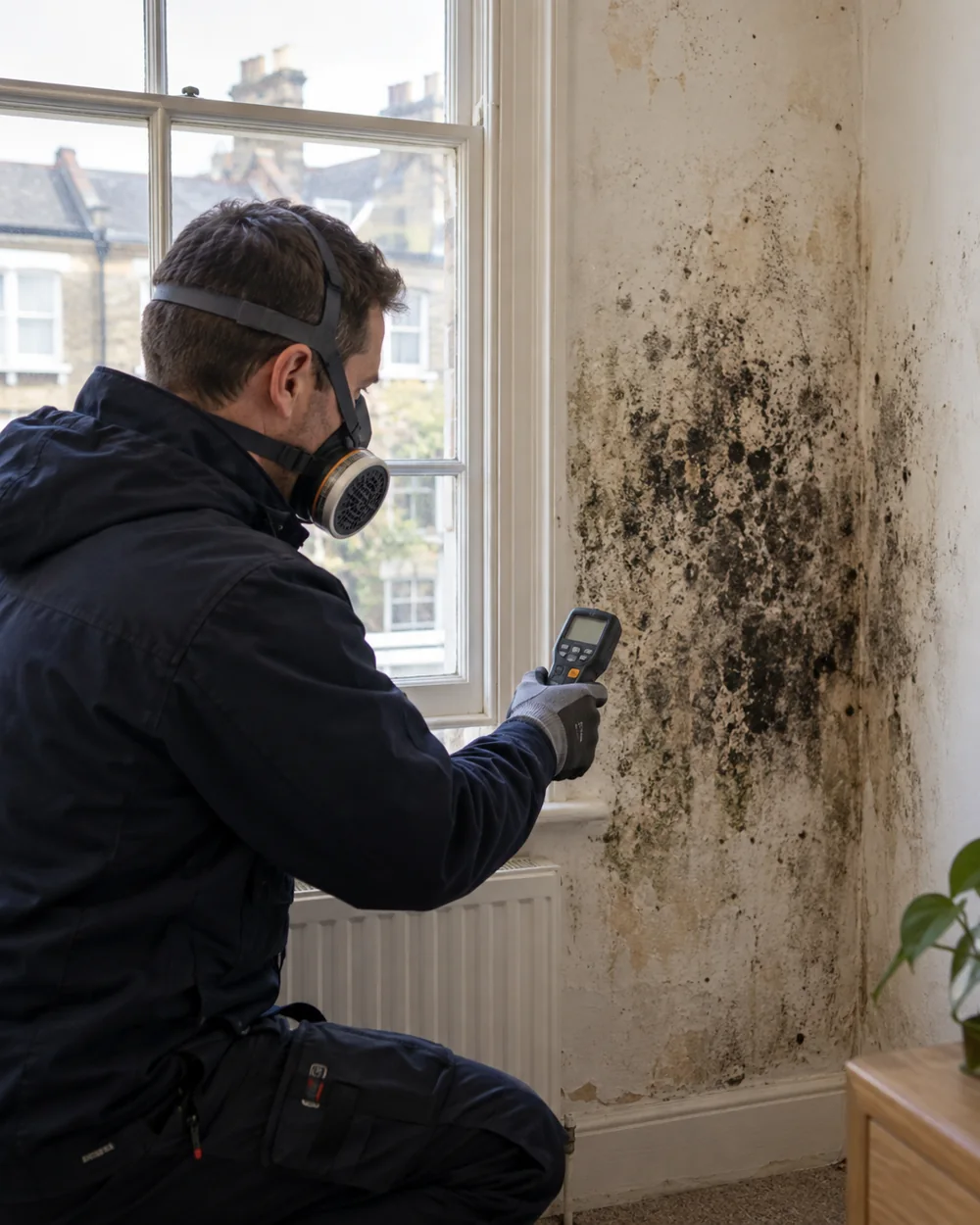
- Plan access in an occupied home
- Distinguish shared-building questions
- Explain the agreed surface work
Access and authority are different parts of planning a visit.
Who can provide access?
The person calling, the person living in the property and the person authorising work may not be the same. Tell us whether you are the owner, tenant, landlord or agent, and who will meet the inspector. This helps avoid an appointment being arranged before anybody has confirmed entry to the room or agreed what can be examined.
A routine inspection does not imply permission to remove a fitted unit, open a wall or enter the neighbouring flat. If the affected surface is partly concealed, describe that restriction. Further access can be discussed from the findings and the purpose of the check. Good preparation is about understanding those limits, not moving everything before anyone has assessed what is needed.
Access and authority are different parts of planning a visit.
Read the apartment layout
For a Battersea flat, explain which floor it occupies and what is above, below and alongside the patch. A mark beneath a bathroom raises different questions from growth behind curtains on an external wall. Managed-building arrangements may influence who can assess an exterior or ventilation component. These relationships are property-specific; the area name does not establish the source or responsibility.
The inspection service considers accessible evidence and the reported pattern. Measurements help only when interpreted with the surface and surroundings. A single visit may leave an intermittent or concealed source unconfirmed. Ask how any limitation affects the conclusion and what further information would help before assuming the assessment has covered every part of the building.
The occupant’s history belongs in the assessment
A room can look dry on the day and still develop wet windows overnight. An occupant may notice that a patch worsens after rain or that a smell returns when a cupboard is closed. Record those observations if possible, along with changes after earlier repairs. They help describe what the building does over time rather than only what is visible at the appointment.
If a written account is needed for management or a rental property file, explain that before booking. Our rental mould reports page discusses purpose and scope. A report should distinguish observations from likely explanations and should not become a legal ruling about who caused a problem. The document needs to serve the practical decision it was commissioned to support.
Different moisture questions lead to different work
Window condensation, a damp wall beside plumbing and mould on a bathroom ceiling can each need a different line of enquiry. Extraction, local airflow and cold surfaces may contribute, but leaks or external water deserve consideration where the evidence suggests them. If several areas are affected, describe the complete pattern rather than selecting the darkest patch as the only concern.
For signs of unexplained wall moisture, damp investigation may be relevant. Surface treatment should still have its own agreed scope, covering the affected materials and their condition. Repairing plumbing, changing extraction and restoring decoration are separate tasks, even if they ultimately form part of one maintenance plan.
From the enquiry to a workable appointment
Call with your postcode, rooms and a short history. Mention access restrictions, previous work and whether another party needs to approve inspection of an adjoining space. Photographs can show the position and extent of growth, but cannot confirm concealed moisture. Keeping that distinction clear helps us discuss whether the first appointment should focus on removal, investigation or reporting.
For nearby selected areas, Clapham considers furniture-hidden growth and Wandsworth explores recurring patches after treatment. For Battersea, we can start with the reported problem and the building arrangements without inventing a standard solution for every flat or claiming access that has not yet been agreed.
Questions about this problem
Can the managing agent arrange the visit?
Yes. Explain the occupancy, entry arrangements and intended scope. Permission for shared or adjacent areas should be discussed separately from access to the home itself.
Will a report say who is at fault?
A routine assessment records evidence, limits and recommendations. Its purpose needs agreeing beforehand; it should not be described as a legal determination of responsibility.
LET’S DISCUSS THE NEXT STEP
Arrange a Battersea mould enquiry
Before choosing an appointment, check who can provide entry to the Battersea flat and who approves access to any shared space. Tell us whether the occupant can describe the room’s daily conditions. With those arrangements understood, the proposed work can distinguish reachable treatment surfaces from building questions that require someone else’s involvement.