
YOUR HOME / WOOLWICH
Black Mould Removal Woolwich
When mould appears in a Woolwich utility cupboard, the room may be out of sight while still containing pipes, appliances or a route for humid air. We discuss the cupboard and adjoining surfaces together. Removal should have a clear accessible scope, while a persistent damp patch or appliance connection concern remains a separate question to investigate.
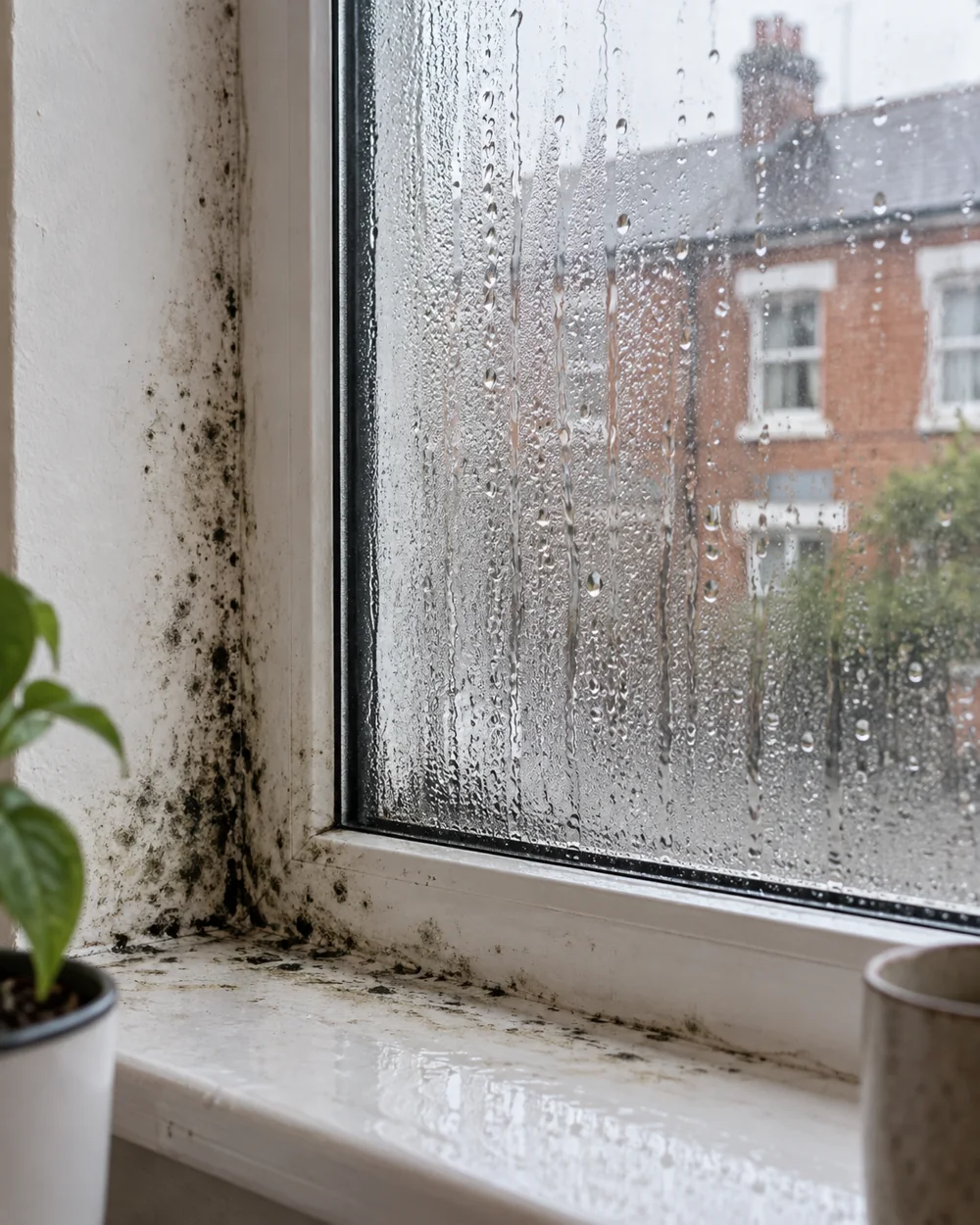
- Describe what the cupboard contains
- Separate humid air from local water
- Plan access around fixed equipment
A closed cupboard can conceal a pattern without explaining its source.
Begin with the cupboard’s actual use
Say whether the space holds laundry equipment, storage, pipes or only household items. Identify which wall is affected and whether growth reaches the door, ceiling or adjoining room. A photograph from the doorway can provide useful context without moving fixed equipment. Include any water stain, damaged covering or recurring smell as a separate observation, since these may lead to different questions.
Our mould inspection service discusses accessible material and the available history. Mention how long the cupboard is normally closed and whether the pattern changes when appliances operate. That timing may help frame an enquiry, but it should not be treated as a diagnosis from a distance. Several sources can influence a small space, including moisture arriving from outside the cupboard.
Appliance use and visible water need separate accounts
Condensation on a cold surface differs from water appearing beneath a connection or along a pipe route. Explain what you have observed rather than trying to disconnect equipment to investigate it. Our hidden moisture detection service can discuss an appropriate next step when the pattern raises a concealed-water question. A suspected connection problem should remain distinct from the wall treatment scope.
Bring any relevant service or repair information, particularly if the cupboard was dry before a known change. State whether the appliance is still in place and who can authorise its movement or isolation. Access to the room does not automatically provide access behind fitted equipment. The proposed appointment should make those limits clear, so an occupant is not expected to solve them without prior arrangements.
Air needs a route, not just a brief open door
If the cupboard receives warm humid air, explain where that air may come from and how the surrounding home is ventilated. A short spell with the door open before inspection may not represent its normal condition. Our condensation service considers moisture production and air routes alongside vulnerable surfaces. Advice should account for the actual layout and any restrictions on alterations.
For a Woolwich flat or house, describe the cupboard’s position relative to the bathroom, kitchen and external wall. We do not assume that relationship from the address. A proposed ventilation change should say what it is intended to achieve and whether it requires permission. Leaving a cupboard permanently empty or open may be impractical, and it would not establish that a separate damp source has stopped.
Access determines which surfaces can be treated
Explain shelves, stored items and fixed equipment before booking. Agree what preparation is safe and practical, which surfaces are included and what remains concealed. Sound painted plaster may need a different decision from loose lining or damaged board. If material repair or decoration is required, its place in the sequence should be clear rather than assumed to be part of removing visible growth.
After agreed changes, use the same wall reference when recording dampness or recurrence. Note appliance use and whether the surrounding room also shows moisture. For selected area enquiries further along the local coverage list, visit Greenwich or Blackheath. Contact us about Woolwich with the postcode, cupboard contents and access limits, so the first step matches the space rather than a generic wall-cleaning description.
Do not put stored items back against a surface simply because the darkest growth is no longer visible. Discuss the condition and any outstanding work first. If an area will remain behind equipment after the appointment, ask how its limits will be explained and what follow-up observation is possible from the normal doorway view without moving connected appliances again.
Questions about this problem
Should I pull out the appliance before calling?
Describe the access first. Fixed or connected equipment needs an appropriate arrangement, and moving it may not be necessary for the initial conversation or safe for the occupant to attempt.
Does a cupboard smell prove a hidden leak?
No. Explain the smell with any visible dampness, timing or surface damage. It can support an enquiry but does not identify a concealed source on its own.
Can wall treatment include a plumbing repair?
Those are different tasks unless specifically agreed. Identify the suspected pipe or connection concern so suitable investigation, permission and the relevant repair scope can be discussed.
LET’S DISCUSS THE NEXT STEP
Ask about mould in your Woolwich cupboard
For a utility-cupboard enquiry, describe its contents and show the wall from the access you already have. Include when dampness appears relative to ordinary appliance use. We can discuss reachable surfaces and any separate connection concern before preparation is agreed, so you are not expected to move connected equipment simply to make the initial description more complete.