YOUR HOME / BLACKHEATH
Black Mould Removal Blackheath
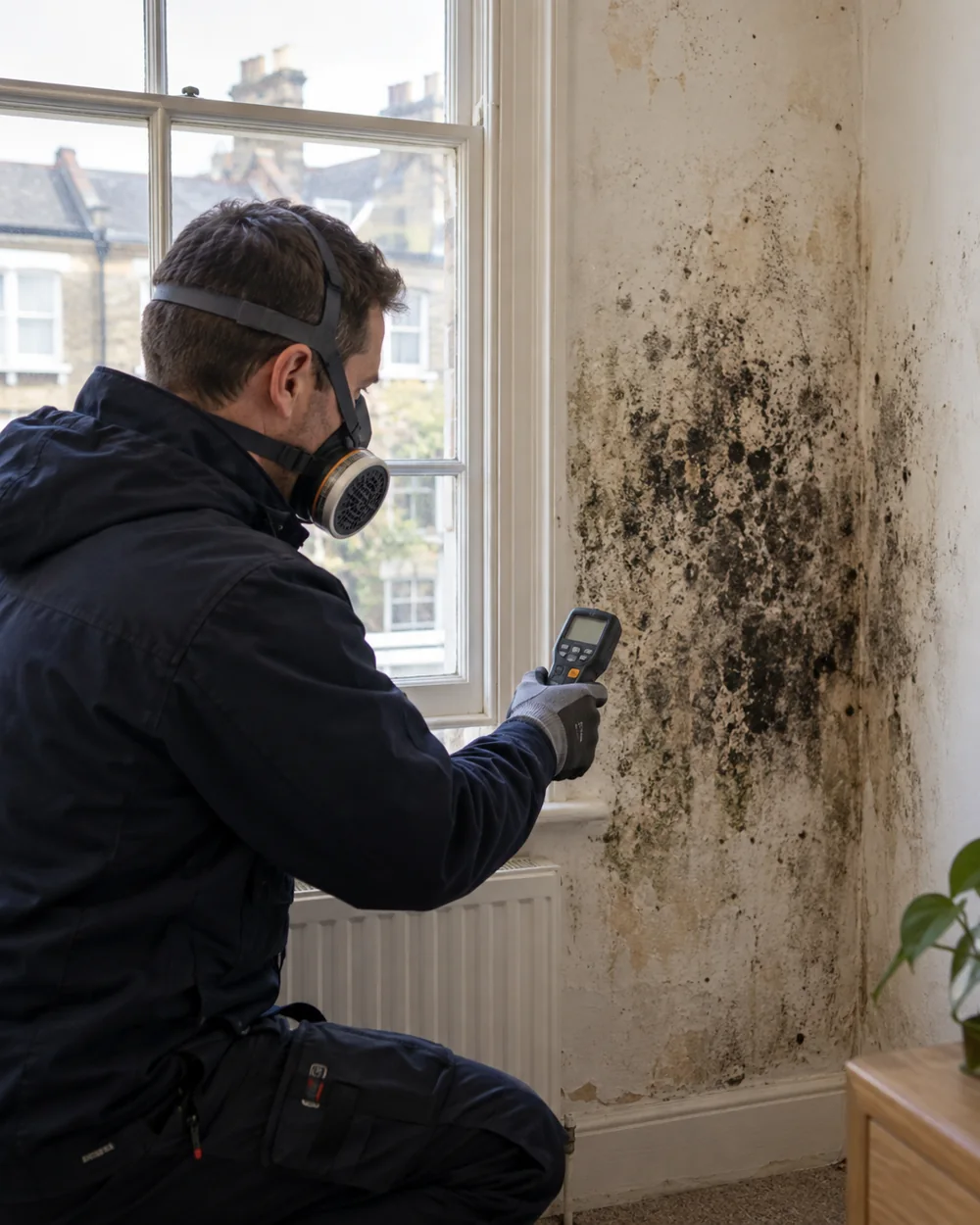
For a Blackheath home, the building’s age or appearance may be useful background, but it does not identify the moisture behind a mould patch. We discuss removal with attention to the room, altered finishes and the surfaces that stay damp. The practical goal is a clear explanation of suitable treatment and any further investigation, rather than an assumed diagnosis based on a period property label.
- Assess the actual wall material
- Consider alterations and exposure
- Explain findings without assuming a cause
Building history helps frame questions; it does not answer them.
Describe the altered wall
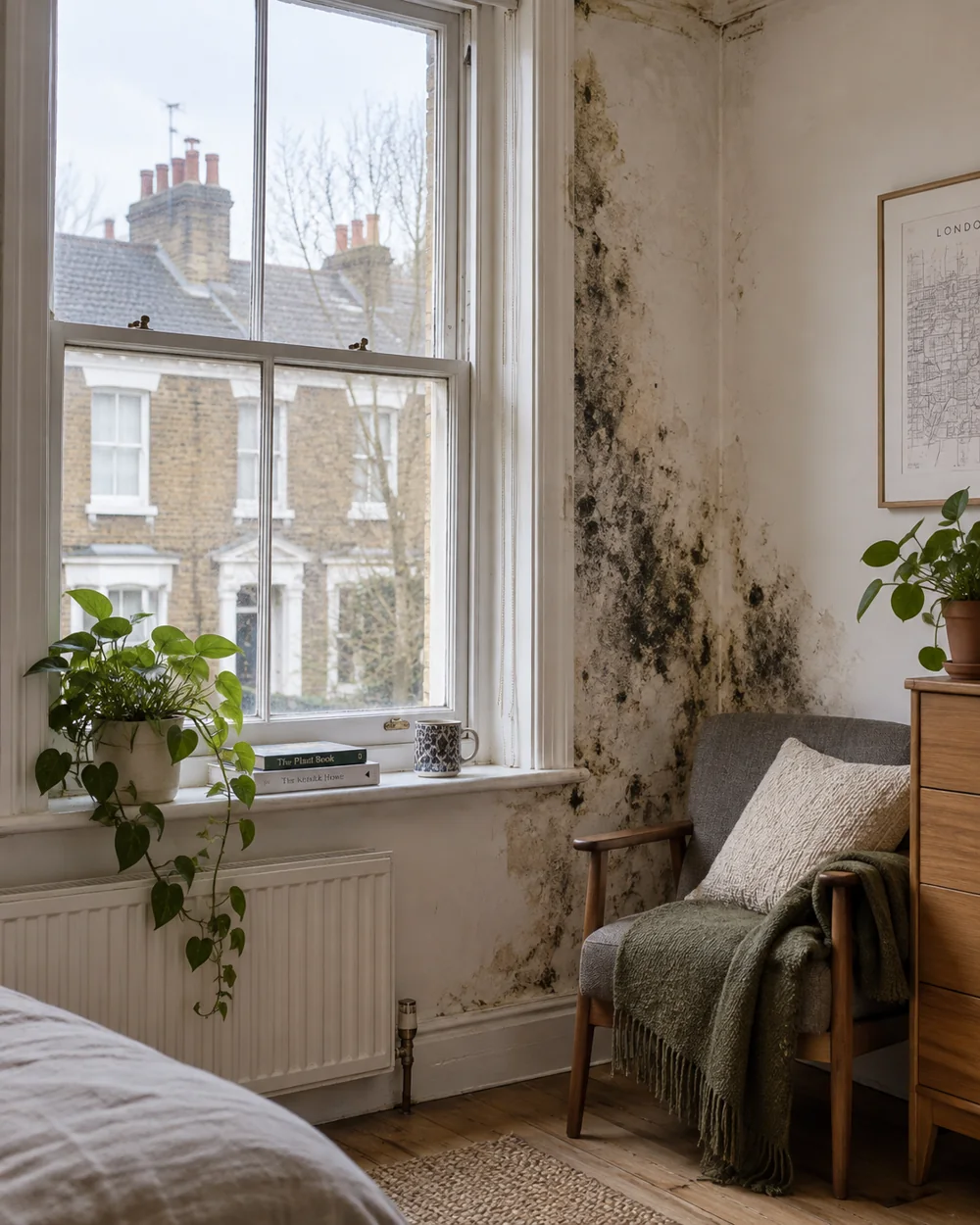
Describe the wall as it is now, including any altered finish or adjoining extension. A building’s age does not show whether moisture is collecting on the surface or arriving through the construction. Say whether your home is a house or flat and whether the affected room has been altered. Repairs and changes can leave adjoining materials with different conditions even within one wall.
Tell us what sits above and alongside the patch and which surfaces face outside. A basement room, upper-floor ceiling and window reveal pose different access questions when those layouts are present. We do not infer a particular defect from them. The inspection needs the actual construction relationship and the reported history before deciding which explanation has support.
Building history helps frame questions; it does not answer them.
Follow the changes over time
A patch changing after rain raises a different question from one that appears at a cold corner during winter. Both can occur in the same home. Keep photographs showing the location and sequence, and mention cleaning, repairs or redecoration. This helps a mould inspection consider the reported pattern rather than only the state of the surface on appointment day.
A damaged finish can conceal or distort that evidence. Loose paper, flaking paint or repaired plaster deserves attention as material condition, not simply as something to clean. Ask whether further access is needed and which limits remain. A reading or visual observation should be explained with the material and surroundings before it is used to justify a specific cause.
Cold areas and damp construction are separate questions
The cold wall service considers surface conditions and airflow where condensation may be relevant. A room can feel warm while a reveal or concealed corner stays colder. These observations do not exclude water arriving through another route. Where the wall pattern suggests more, damp investigation can discuss the appropriate surrounding checks.
Recommendations should state what evidence supports them and whether access to an exterior, neighbouring space or concealed finish is required. Alterations to a building need their own assessment. A surface inspection should not be treated as permission to cover a persistently damp wall or undertake an unspecified building change merely because the property is older.
Treatment within an agreed plan
Appropriate removal can address suitable affected surfaces once the work is defined. Repairs, replacing damaged materials and later decoration are different steps. Ask which action deals with ongoing moisture and which concerns the finish already affected. A practical order helps avoid expecting a clean-looking wall to demonstrate that every external or concealed water question has been resolved.
Call with the postcode, rooms and any repair history. In managed or rented homes, explain who can provide entry and who authorises additional work. For another property description, the guidance for Greenwich and Lewisham can help you frame the room rather than rely on its architectural label. When you enquire about Blackheath, describe the affected surface and the changes you have noticed. Those observations help decide which moisture questions need checking before treatment is agreed.
Questions about this problem
Does a period property mean condensation is the cause?
No. Construction, alterations, room conditions and possible water sources need assessment. Age provides context but cannot establish the reason for a particular damp surface.
Can different sections of one wall behave differently?
Yes. Materials, repairs and exposure can vary. Describe previous work so the inspection can interpret those differences rather than treat the wall as one uniform surface.
Will removal cover building alterations?
Not automatically. Surface treatment and alterations are different scopes, and proposed building work needs appropriate assessment and permission before it is agreed.
LET’S DISCUSS THE NEXT STEP
Discuss the mould in your Blackheath home
Start with the Blackheath room’s actual changes rather than a period-property description: alterations to finishes, glazing or heating, followed by when moisture became noticeable. Add the affected wall’s location and any access limits. We can discuss how those observations inform removal or further checks without assuming the building’s age identifies its current moisture source.