
Condensation or a leak? Start with the pattern
A black patch does not identify its moisture source. The useful starting point is where water appears, what happened beforehand and which materials stay damp. Keeping those observations separate can make an enquiry clearer without asking you to diagnose the building.
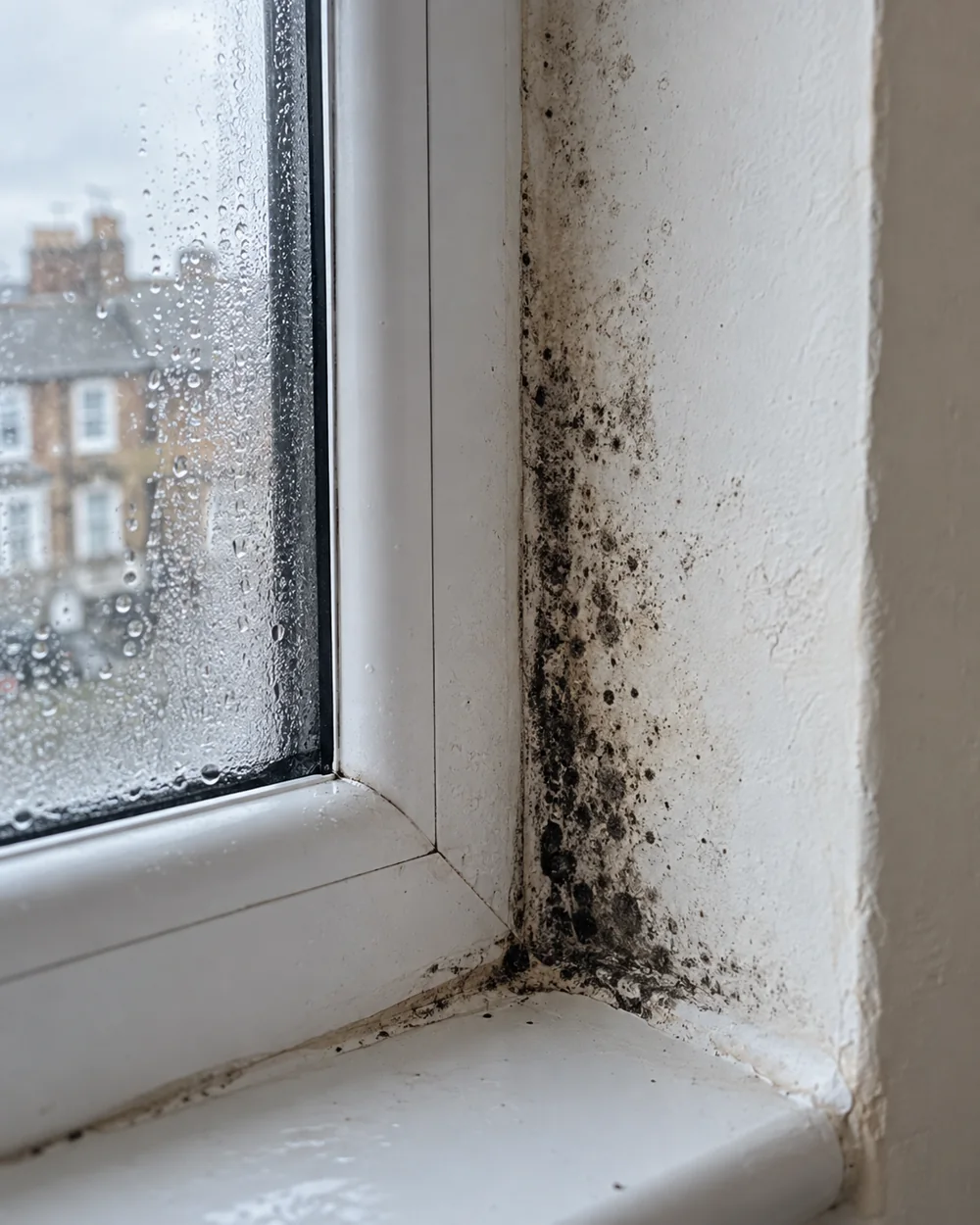
Compare the glass with the surrounding wall
Droplets on the room side of a window are a different observation from moisture between panes or a wet plaster reveal. Show the whole opening in a photograph, including the sill and nearby wall. Say which surface becomes wet first and which takes longest to dry. A close view of the black marks can show condition, but leave out that relationship.
If the glass clears while the surrounding wall remains damp, include that distinction. Do not assume that every mark around an opening needs the same treatment. The window mould service explains how frames, seals and painted surfaces can need different attention. The Fulham page follows this particular window-and-wall question in more detail.
Keep rainfall and ordinary room use in separate notes
A patch changing after rain raises a different question from a colder corner that wets overnight. Both patterns can occur in the same home. Record them rather than forcing every mark into one explanation. Include approximate dates and the position of each patch; you do not need a detailed spreadsheet to make the sequence useful.
Cooking, bathing and drying clothes contribute indoor moisture. Where that moisture settles also depends on the surfaces and ventilation. Our condensation guidance considers the route through the home. A wet window does not exclude another source elsewhere, and a reported water incident does not mean all subsequent growth comes from that event.
Explain what was repaired, not just that a repair happened
Say which pipe, opening or building component was worked on and whether the affected material was replaced or decorated. A repair record can clarify the task. It cannot establish that every surrounding material has dried or that a returning patch has the same cause as before. Keep photographs taken before the finish changed if they are available.
A moisture investigation may help where the accessible evidence leaves a concealed-source question. Water can travel before it becomes visible, so the darkest point need not identify the entry point. The Croydon page considers a patch remaining after repair and how to describe the interval before it returned.
Choose a next step around the unanswered question
Tell the team whether the concern is suitable surface removal, continuing dampness or uncertainty about damaged material. Inspection, repairs and decoration are different tasks. Ask what the proposed visit will assess, which surfaces can be reached and what might need further permission. A focused starting point can be more useful than commissioning several tasks before their purpose is clear.
After agreed changes, record the same location under ordinary use. Note whether water still appears and whether growth returns within the original boundary. That comparison can guide a follow-up without treating a single dry afternoon as confirmation of every condition. You can contact the team with the postcode, affected rooms and a short history.