YOUR HOME / BOW
Black Mould Removal Bow
Mould beside a Bow kitchen can be puzzling when the cooker hood seems to work and the darkest patch is in another room. The useful question is where cooking moisture goes, alongside whether the affected wall has its own source of dampness. We discuss those observations before agreeing removal, so a clean surface does not disguise an unresolved problem elsewhere.
- Follow moisture beyond the kitchen
- Clarify what the hood actually does
- Define treatment room by room
A kitchen appliance and a room ventilation system may perform different jobs.
Start where the moisture is produced
Explain what happens during cooking and where steam or droplets become noticeable. A hood may discharge outside or recirculate air through filters; do not assume its arrangement from the controls or the sound of its motor. If you know the model or can safely photograph the visible setup, that information can help frame the discussion. Avoid dismantling equipment simply to answer an initial enquiry.
Mention whether the kitchen door stays open and which adjacent room contains the growth. Our condensation and moisture service considers production, extraction and the route through the home. A recommendation needs to fit that arrangement. Opening an unrelated window may have little relevance to the affected corner, while a separate leak can coexist with humid indoor air.
A kitchen appliance and a room ventilation system may perform different jobs.
Read the patch in its own setting
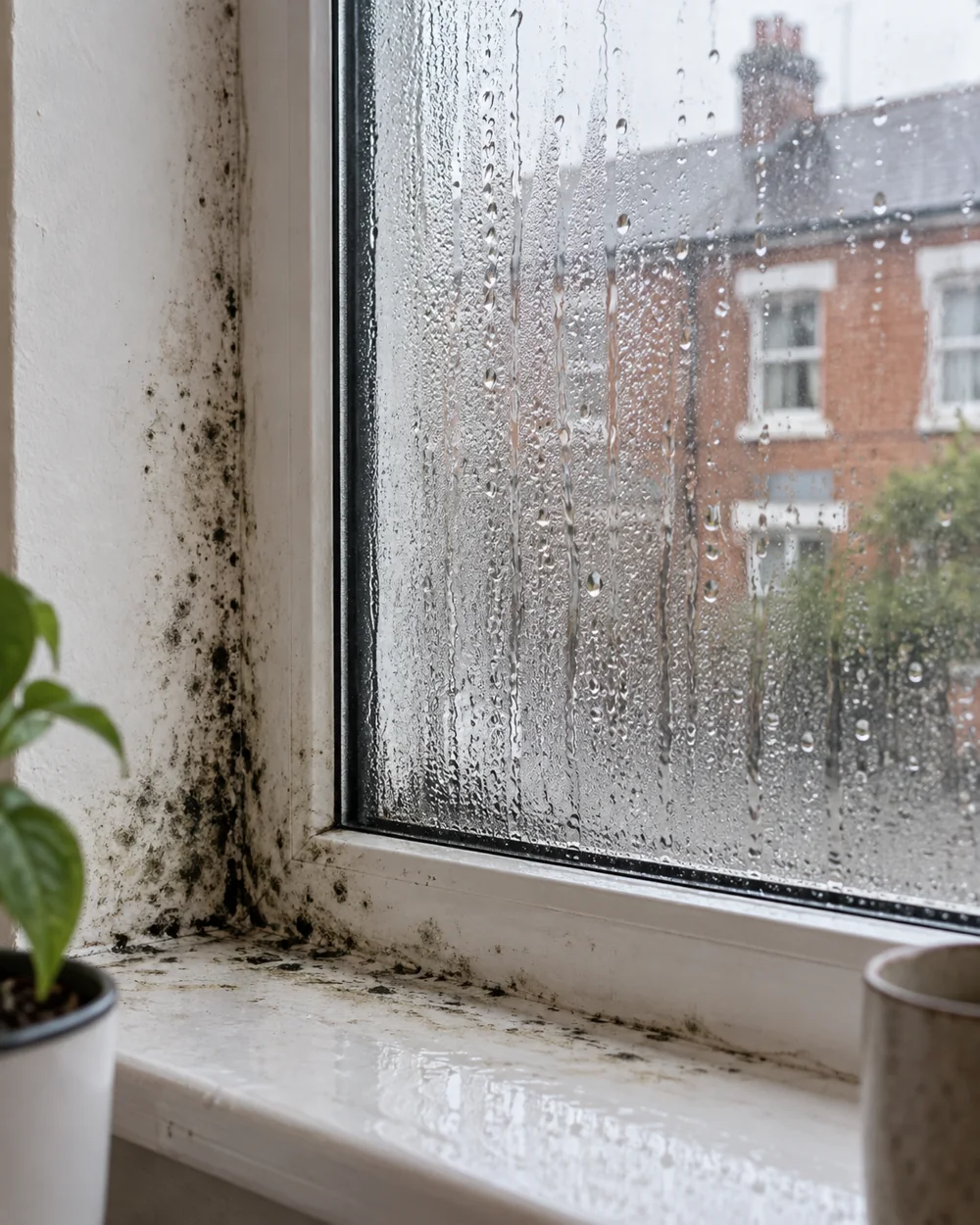
A narrow line behind a dining bench is different from a spreading mark around a pipe. Include the full wall in photographs, showing cupboards, skirting and the connection with the kitchen. Describe whether the finish is wet, blistered or simply marked. These observations help distinguish the surface that needs treatment from a moisture question requiring investigation; colour alone cannot provide that distinction.
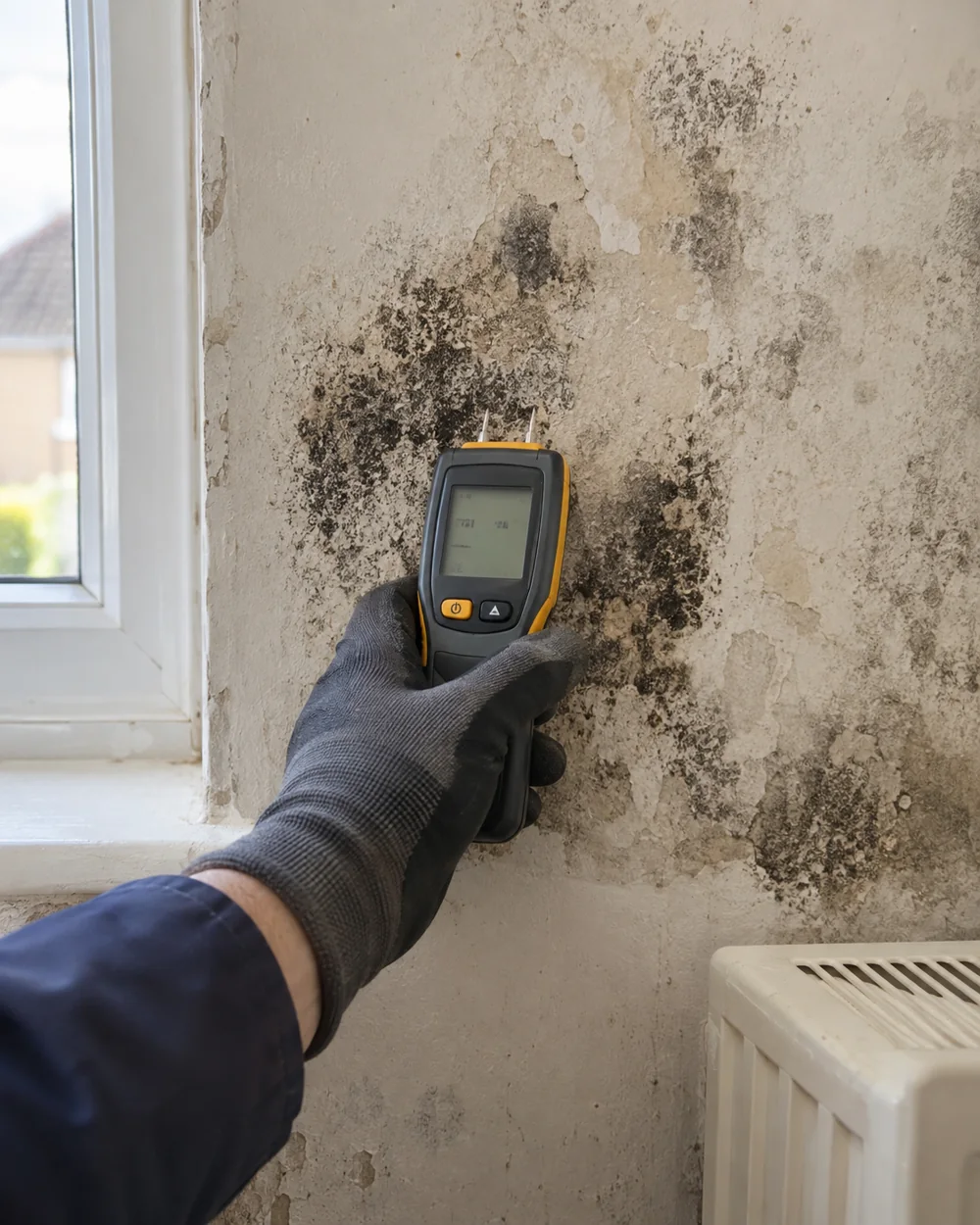
Our damp wall investigation service is relevant when the stain has an uncertain pattern, especially if it changes without cooking or after a reported water incident. Tell us about pipework and repairs you know about. The presence of a sink on the other side is useful context, but does not prove a concealed plumbing fault without supporting evidence.
Make removal a clearly bounded task
The quotation should identify which walls, ceilings or finishes are included. Our black mould removal service explains why dealing with suitable surfaces is separate from correcting a source of moisture. Ask how the condition of paint or board affects the proposed approach, particularly if a finish has already loosened or if previous cleaning exposed fragile material.
Food preparation surfaces, stored items and access around appliances need practical arrangements before work begins. Describe restrictions rather than moving fixed equipment yourself. If a repair to extraction or plumbing is necessary, agree who will arrange it and how it relates to treatment. Decoration also needs its own scope; a freshly painted wall should not be the only measure of whether dampness has settled.
Use the next normal cooking day as a reference
Keep the initial photographs and note what happens under ordinary household use after agreed work. Useful observations include whether glass still wets, whether the affected corner dries and whether the original boundary reappears. There is no need to manufacture an extreme test. A simple account of the usual routine makes follow-up easier than changing several things at once and losing track of the result.
If the property is in Stratford or Bethnal Green, those pages provide another starting point for describing the room reached by humid air. For Bow, send the postcode, the affected room and a brief account of cooking and ventilation. We can discuss an appropriate starting point without treating the district name, a working appliance or one photograph as a complete diagnosis.
Questions about this problem
Does a recirculating hood remove moisture outside?
It does not provide the same outside discharge route as a ducted hood. Its actual arrangement should be established before advice is based on the assumption that cooking vapour leaves the property.
Why is the mould in the dining area rather than the kitchen?
Moisture can travel and meet a colder surface elsewhere. That is one explanation to consider alongside the wall’s condition and any independent water source.
Should I replace the hood before contacting you?
An appliance purchase should follow a clear understanding of the issue. Describe the current setup first; the affected wall may need checks that a replacement alone would not address.
LET’S DISCUSS THE NEXT STEP
Tell us where mould appears in your Bow home
Begin with the journey from cooking to the affected patch: which doors are usually open, what the hood does and where water becomes visible. A kitchen-and-adjoining-room view can help explain that relationship. We can discuss suitable surface work alongside the moisture questions, without making an appliance purchase the first requirement for understanding a damp wall.