
YOUR HOME / WHITE CITY
Black Mould Removal White City
At a property handover, a dated photograph records what you can see without settling what happened before. For White City enquiries, keep known repairs separate from missing history and identify who can provide entry. A readable record helps the next occupant or contractor understand the proposed work and the moisture questions that remain open.
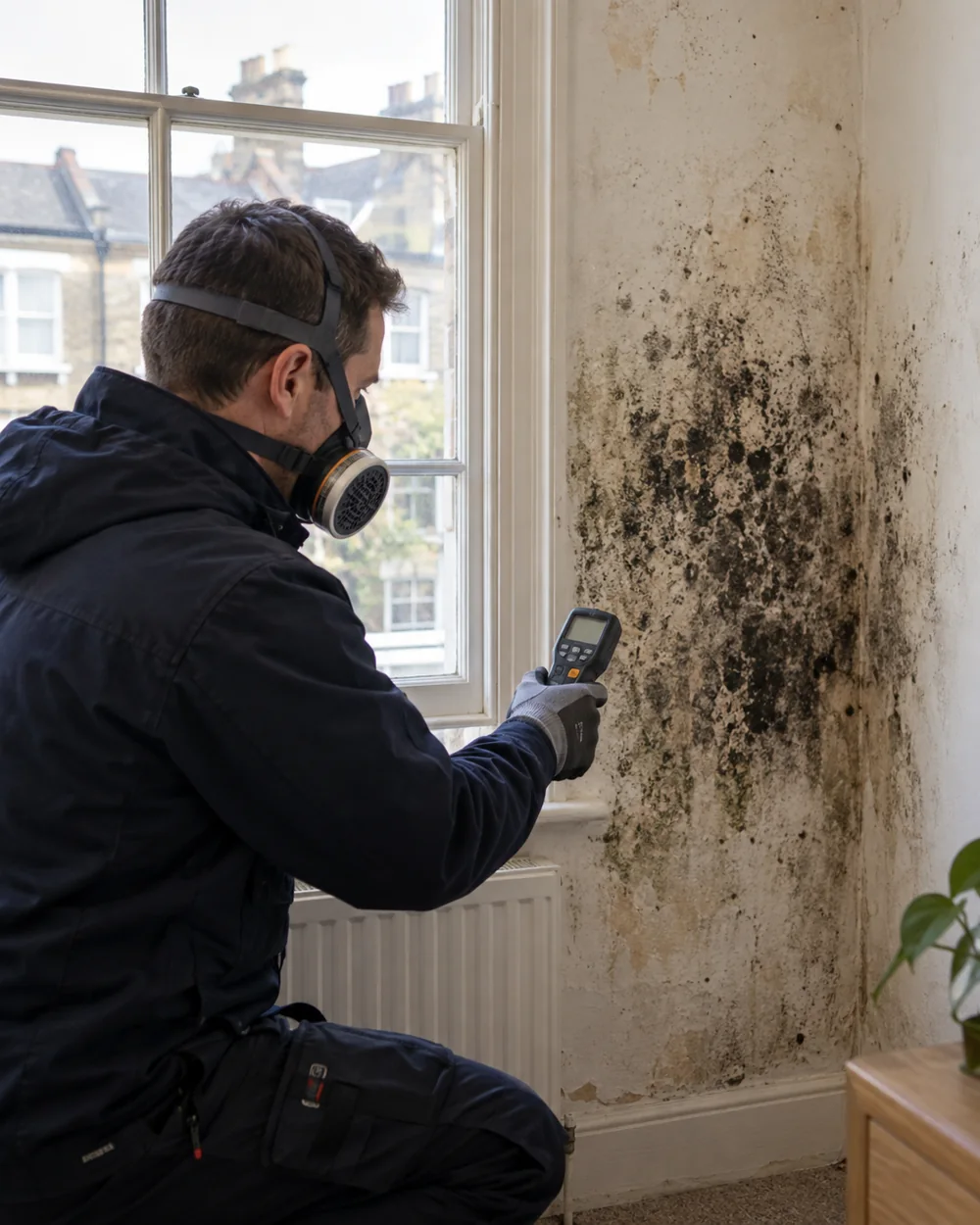
- Record the handover condition clearly
- Keep uncertain history visible
- Agree treatment before decorating again
A discovery date is not necessarily the date a moisture problem began.
Build a record without filling the gaps
Photograph the room and affected surface before any new finish is applied. Include a wide view showing the location, then a closer view of growth and damaged material. Note the date and whether the room has recently been occupied. If earlier condition is unknown, keep that uncertainty in the record; a stain discovered during handover does not establish when it developed.
Ask for available repair information, but distinguish documents from recollection. A statement that the room was treated previously may leave the task and affected surfaces unclear. Our property report service discusses recording visible evidence and limitations. It should not turn a short viewing or a new tenancy date into a confident conclusion about the source or responsibility.
Describe the rooms before allocating tasks
List each affected location separately, including wet windows, a ceiling stain or a patch behind furniture. The same property can contain more than one moisture pattern. Explain which rooms are accessible and whether fitted items hide part of a surface. A request to deal with all the mould needs these boundaries clarified so the agreed work matches the actual concern.
For your White City enquiry, say whether the property is occupied, vacant or awaiting entry arrangements. Include the floor and known shared-space relationships. We do not infer its layout or ventilation from the area name. If an agent or another person holds keys, confirm the proposed access route before booking, and identify who can authorise further checks if concealed material becomes relevant.
Use assessment where the history is incomplete
Our inspection service can discuss an appropriate first step where recent decoration or missing records leave the cause uncertain. Accessible observations and the reported sequence belong together. Fresh paint can hide an earlier boundary, while current growth only shows what is visible now. An assessment should describe those limits and any reason for a further investigation.
If a repair has reportedly resolved leakage, ask what was repaired and when. That helps explain the remaining surface without assuming it is dry or suitable for immediate decoration. Conversely, the absence of a repair record does not prove an active leak. The useful outcome is a clear account of observations, unresolved questions and proposed tasks, rather than a label unsupported by the available evidence.
Agree what removal actually covers
Suitable removal work should identify the accessible surfaces and consider the condition of their finishes. Discuss loosened coverings, persistent wetness and any material requiring a separate decision. Decoration, furniture restoration and repairs are not automatically included. If several people arrange the work, a clear written scope helps them understand the same boundary and practical preparation.
Do not allow a cleaner photograph to become the only measure of completion where a moisture question remains open. Ask which task addresses that question and who is arranging it. A handover timetable may make coordination important, but it should not replace sensible decisions about material condition. Keep before-work photographs available so later contractors can understand what the new appearance no longer shows.
Make follow-up possible after entry
When normal occupancy begins or resumes, note changes at the original locations. Heating, ventilation and room use may differ from the vacant period, so describe that difference when comparing photographs. Record repair dates alongside the observations. This produces a useful sequence if the same patch returns and prevents a dry inspection during vacancy being treated as representative of every later condition.
If your handover concerns a property in Shepherds Bush or Notting Hill, follow those pages and preserve the distinction between current observations and missing history. Contact us about White City with the postcode, current access and available history. We can discuss inspection or removal without requiring a complete account of the past, provided known facts and unresolved details remain clearly distinguished.
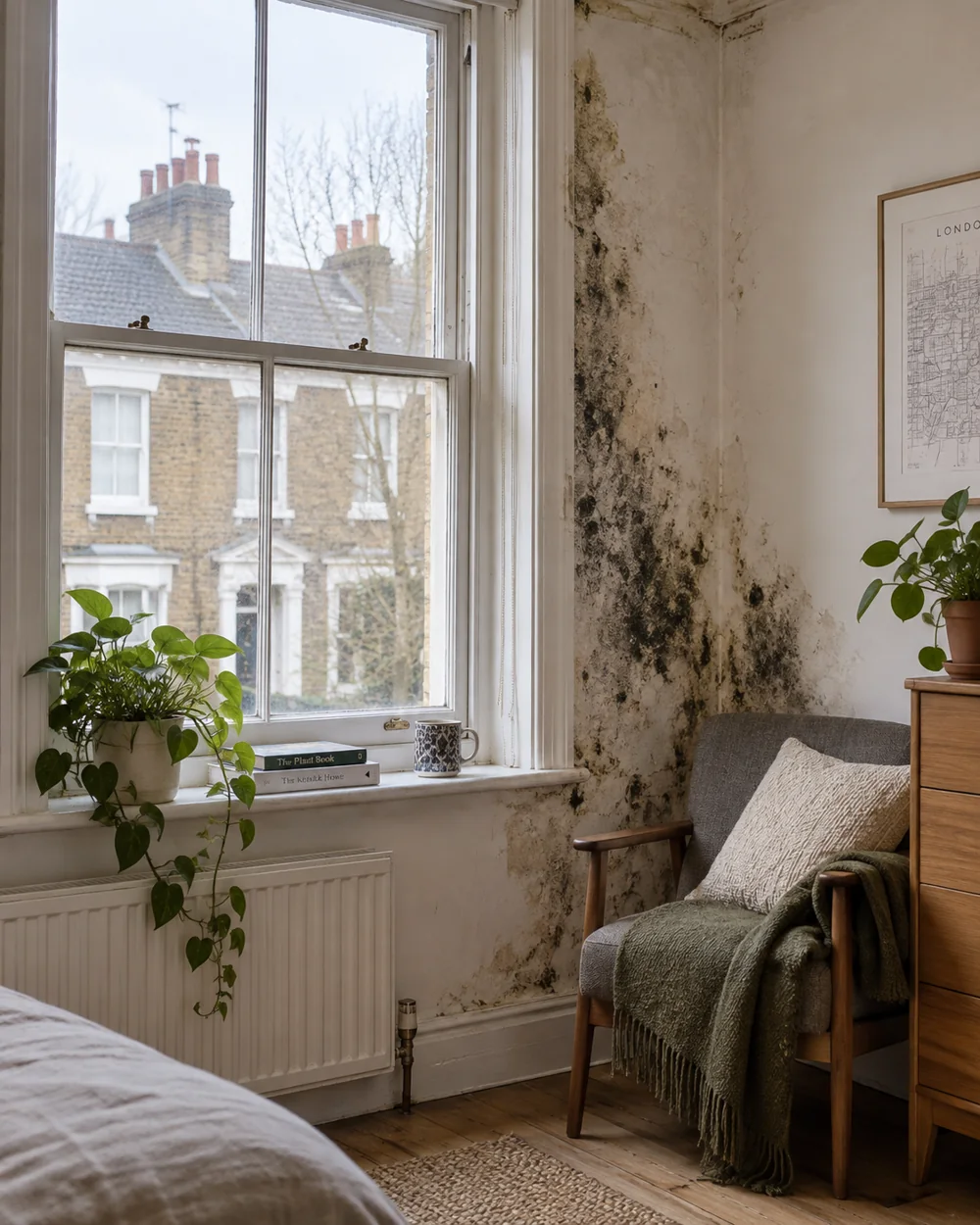
Questions about this problem
What should a handover photograph show beyond the patch?
Include the room layout, nearby openings and any visible surface damage. Label the room and date so later changes can be compared with the condition you actually recorded at entry.
Can an empty-flat inspection establish normal occupied conditions?
Not fully. Heating, bathing and furniture arrangements may change after occupation. The assessment should describe the current setting and identify observations that would become useful when ordinary use resumes.
How should unknown earlier repairs be recorded?
State that the history is incomplete rather than guessing. Known dates and documented tasks can still help, while a missing record should not become confirmation that an inaccessible moisture issue was resolved.
LET’S DISCUSS THE NEXT STEP
Prepare a White City handover inspection
If you are arranging work around a handover, send the present room photographs and identify which parts of the history are unknown. Include the intended entry date and person authorising work. We can explain a starting scope and its limits, allowing the next occupant to understand what was treated and which moisture questions still need attention.