YOUR HOME / GREENWICH
Black Mould Removal Greenwich
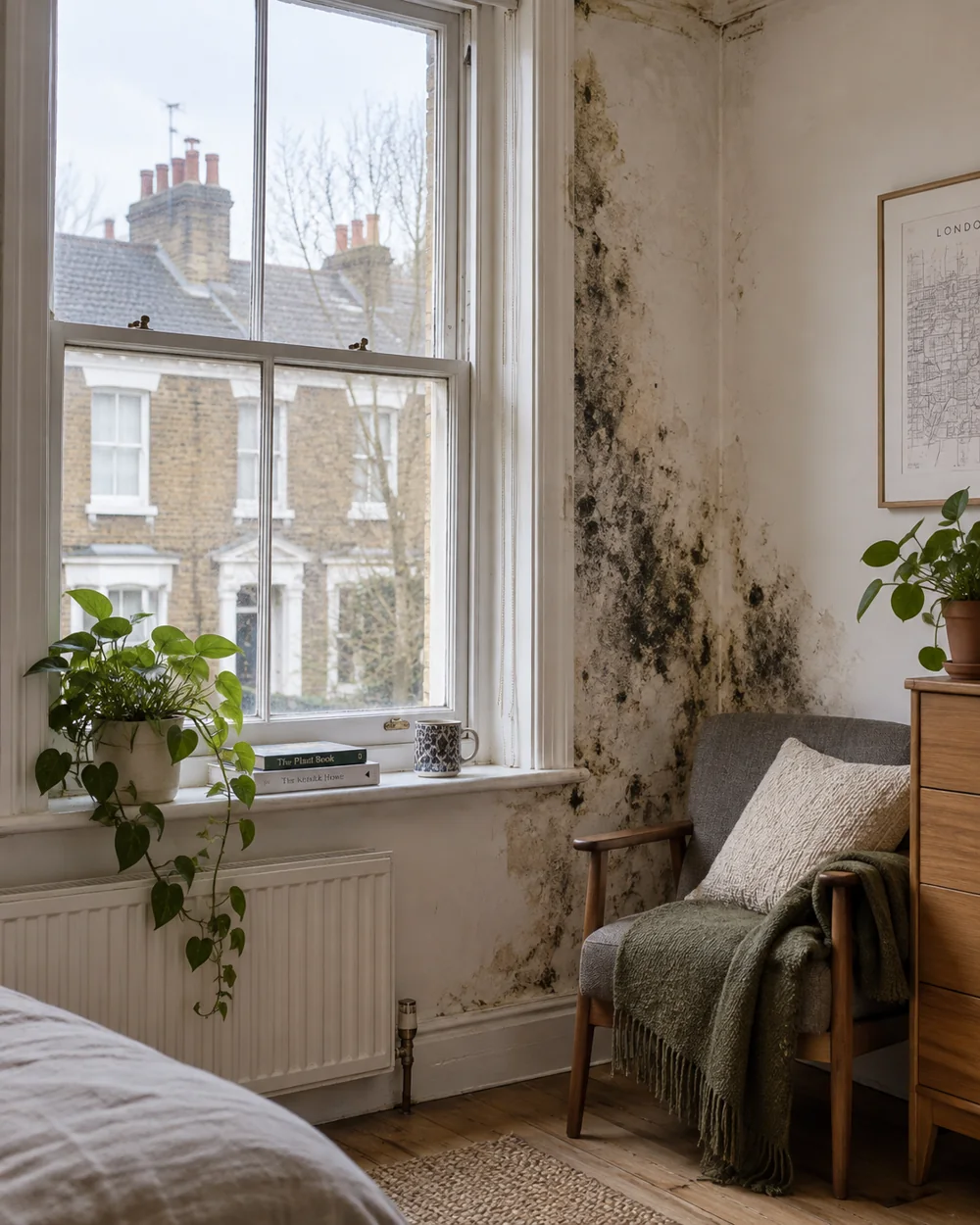
In a Greenwich home, mould beside a window and staining below a ceiling can raise different questions even within the same room. We discuss removal by separating the affected surfaces from the source of their moisture. The room’s relationship with the exterior, roof or another dwelling helps plan the enquiry without assuming that an area’s building history determines what is wrong with your property.
- Consider the room and building together
- Distinguish different moisture patterns
- Explain treatment and access limits
Two patches in one room may not have the same explanation.
Which patch appeared first?
When there are several affected areas, describe the order in which they became noticeable. A ceiling mark after rain and window growth each winter may have different contributing conditions. Photograph their positions in the room and explain what happens after cleaning or repairs. The inspection can then consider whether the patterns are related, rather than treating their colour as proof of one shared source.
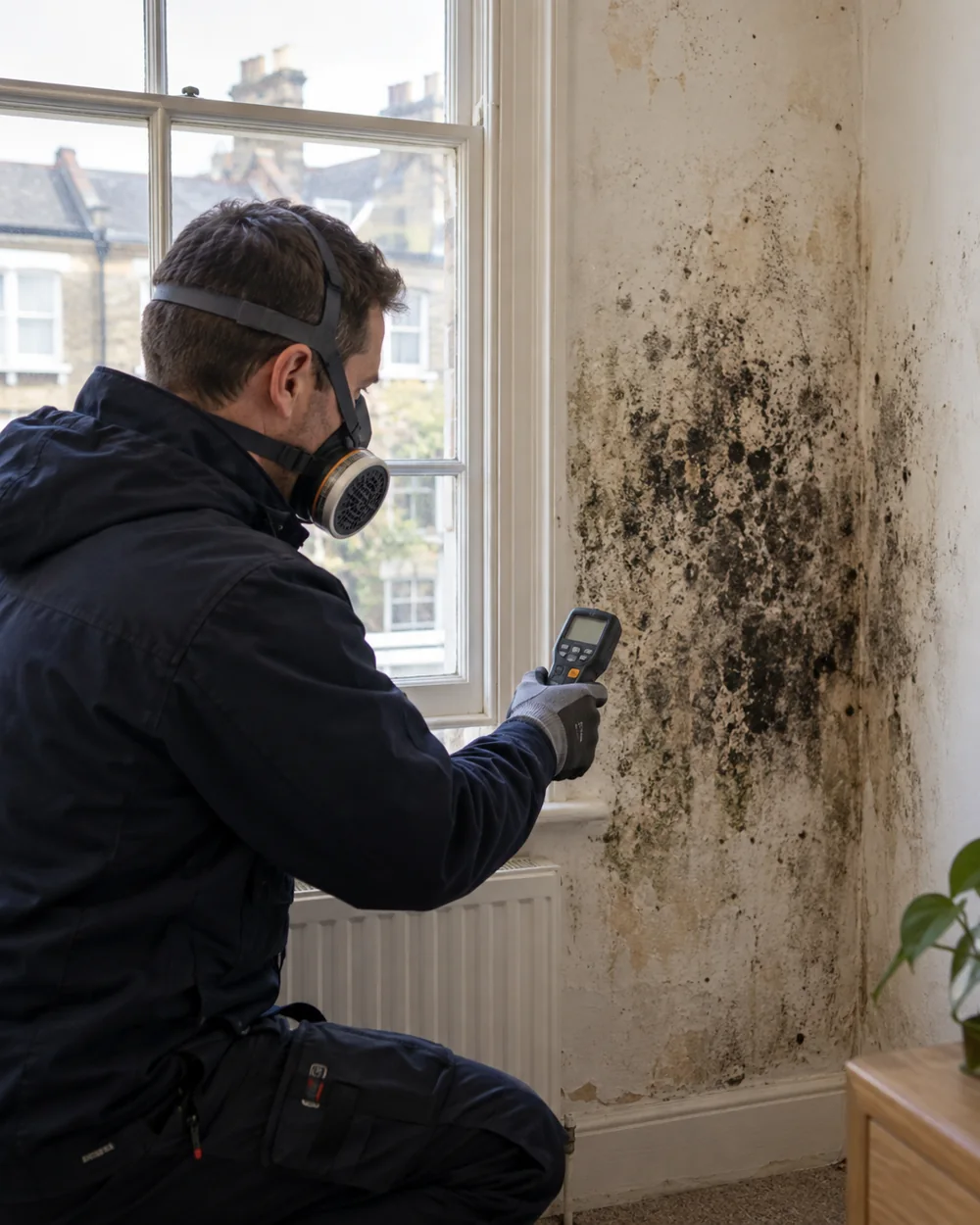
A mould inspection considers accessible evidence and history. It should explain what is supported and what needs another check. A room can have condensation and a separate water problem together. The next steps should leave room for that complexity instead of assuming that one proposed product or ventilation adjustment answers every concern.
Property context without a guess about construction
Greenwich has documented conservation areas and a varied built environment, but that context does not tell us your wall material or ventilation arrangement. Say whether your home is a house or flat, where the room sits and what is above it. If alterations changed windows, extraction or room use, mention when those changes happened relative to the mould.
Permission may differ for the interior and exterior of a managed property. If another dwelling or a shared building element is relevant, access needs discussion. Do not assume that booking a visit to your room provides authority to inspect those other spaces. An explanation should make clear which surrounding areas remained outside the assessment and how that affects the conclusion.
Choose the investigation that fits the evidence
For a wet reveal or damaged window surround, window mould treatment discusses material-specific attention. Glass, seals and plaster are different observations. If wall dampness extends beyond that opening or changes after weather, damp investigation can be relevant. The location helps identify questions; it does not establish their answers before the property is considered.
Moisture readings need interpretation with the material and visible pattern. A device cannot describe every concealed path water might take, nor identify a mould species by colour. Ask what further access, monitoring or trade input would resolve the question if evidence is incomplete. The recommended action should explain its purpose rather than add another unexplained task to the repair history.
Questions about this problem
Can a room have more than one moisture source?
Yes. The observed patterns may need different checks. An assessment should not force every patch into one explanation simply because it appears in the same room.
Does a historic building need a different removal product?
The affected material and condition matter. Building age alone does not determine treatment, and repairs or alterations may require separate assessment from suitable surface work.
Why photograph the whole room?
It shows the relationships between patches, openings, furniture and adjoining construction. A close view adds surface detail, but can miss the context that guides the enquiry.
A clear removal scope and follow-up
Suitable treatment can address agreed affected surfaces. Damaged board, loose coverings or deteriorated paint may need additional assessment, while repairs and decoration are separate decisions. Ask what should happen first and what result the surface work is intended to achieve. This helps avoid mistaking an improved appearance for confirmation that a roof, leak or ventilation issue has been resolved.
Have your postcode, rooms, access arrangements and previous work ready when you call. Keep notes afterwards about which patches return and under what conditions. Nearby selected enquiries can use Deptford or Blackheath. For Greenwich, the useful starting point is the pattern within your particular home rather than a general claim about local properties.
LET’S DISCUSS THE NEXT STEP
Discuss your Greenwich mould problem
Label the Greenwich window patch and ceiling stain separately in your enquiry, with the order in which you noticed them. Include any repair affecting one location but not the other. This helps the proposed appointment retain both questions instead of treating a single plausible explanation as sufficient for every mark in the room.