
YOUR HOME / CHISWICK
Black Mould Removal Chiswick
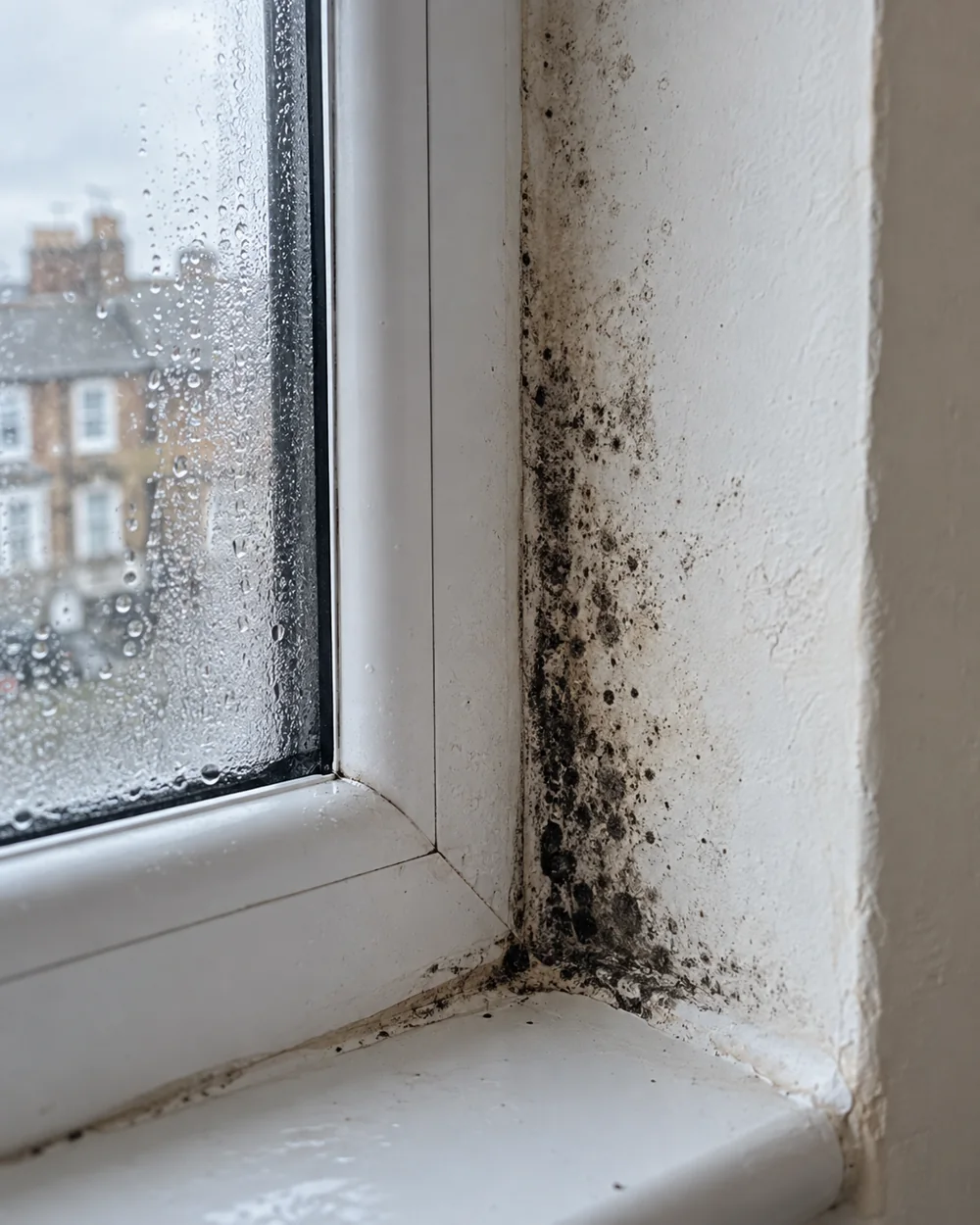
A Chiswick bay window can have several vulnerable surfaces: glass, side reveals, corners and the wall behind curtains. Black mould removal needs to identify which of those materials are affected and what keeps them damp. We discuss the window in the context of the room, including weather-related changes and previous work, so cleaning is not confused with repairing an opening.
- Consider each part of the opening
- Use the weather and repair history
- Explain material-specific treatment
A bay contains several surfaces, not one uniform treatment area.
Different sides of the same opening
One part of a window surround may show growth while another looks dry. Exposure, surface temperature and local airflow can differ across an opening. Curtains and nearby furniture can change how air reaches the reveals. Photograph the whole arrangement and describe where water collects; that helps explain the position rather than simply the extent of the darkest marks.
If the affected opening is a bay, show both side returns as well as the front of the window. Tell us which room and floor are involved and how the opening relates to the exterior. Sound plaster, timber, seals and damaged paint may need different next steps. Treatment should begin with that material distinction.
What happens after rain?
A patch that changes after rainfall deserves a record of that timing. It may raise questions about an external detail, while condensation may appear more consistently overnight or during colder periods. These observations can overlap. The investigation should consider the evidence rather than deciding from a photograph that the window is leaking or that all moisture is household condensation.
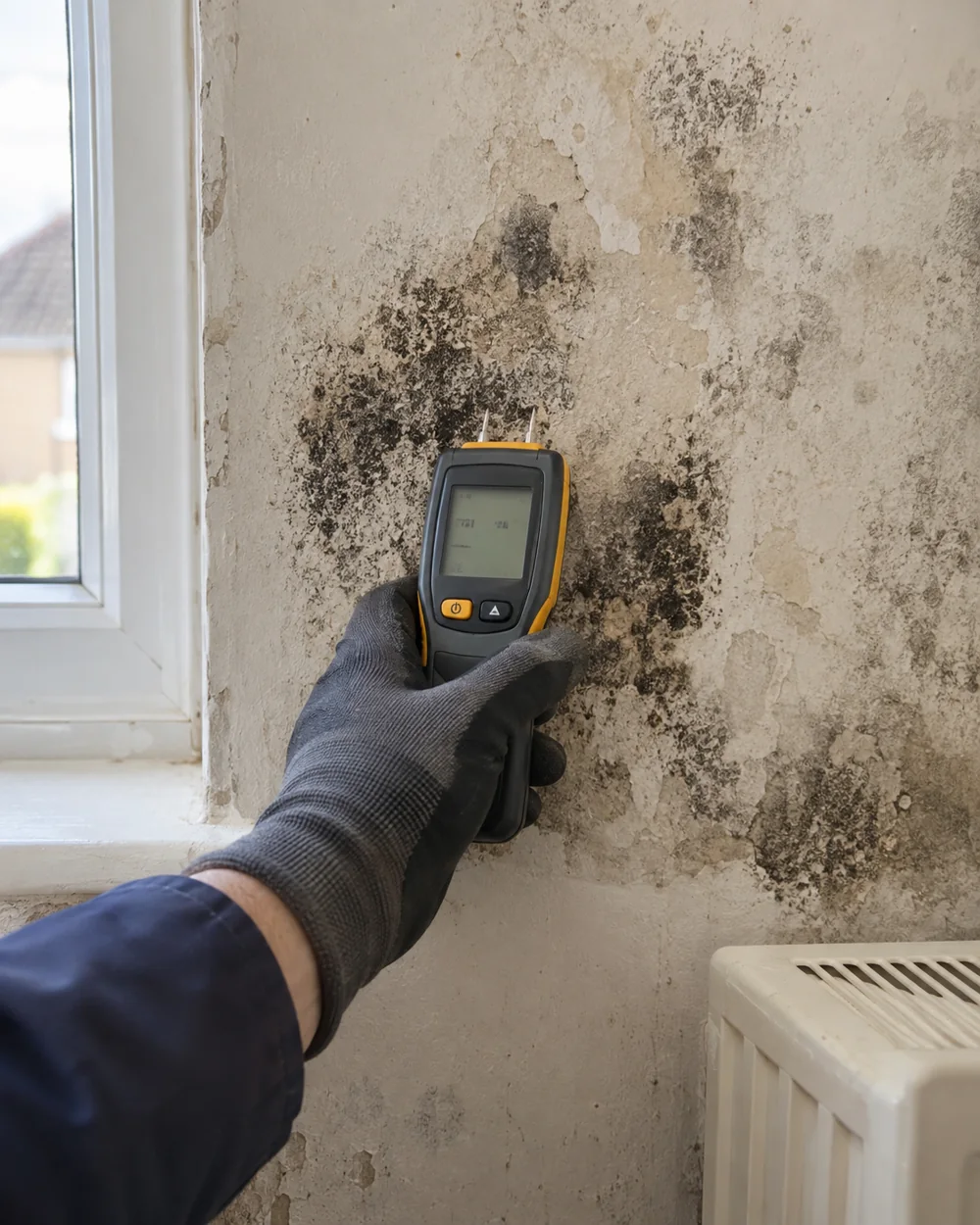
If the exterior cannot be reached within the agreed scope, that limit should be explained. Upper-floor access and managed-building permissions may require separate arrangements. Our damp investigation service considers the relationship with surrounding construction, and helps distinguish a surface treatment concern from a repair that needs further assessment.
Changes to glazing and ventilation
Mention any replacement window, resealing or redecoration carried out before growth became noticeable. A tighter opening can change incidental airflow without being faulty, while an existing cold reveal may continue to collect moisture. Previous stains may also have been covered by a new finish. The sequence matters more than treating a recent alteration as automatic proof of responsibility.
The cold wall survey can help when the principal question is vulnerable surfaces and condensation. It considers local conditions rather than assuming the whole room has one temperature. If water appears between panes rather than on the room side, describe that separately; observations in different locations should not be collapsed into one issue.
What suitable removal should cover
Our window treatment page explains attention to affected surrounds and finishes. Cleaning does not automatically restore deteriorated sealant, repair external details or include redecoration. Ask what the proposed work covers, what needs separate attention and whether further access is required. This makes the plan clearer before materials or belongings are moved.
Where indoor moisture contributes, extraction and room airflow need consideration too. A wet living-room window may reflect humid air arriving from another room. Advice should explain that path and offer a practical next step for the property, rather than a broad instruction that overlooks the opening’s condition or the way the room is used.
Use a simple history for the enquiry
Keep photographs from different times if the pattern changes, and note previous repair attempts. Exact dates are helpful but not essential. Tell us the postcode, room, approximate patch size and who can arrange access. In a rented home, include the occupant’s observations even if an agent is making the call; those day-to-day details can be valuable.
The selected nearby pages for Brentford and Hammersmith cover other starting points in this part of London. For Chiswick, the purpose of the first conversation is to understand the particular opening and the moisture question that remains, without making claims about specific local work or guessing the construction from the area name.
Questions about this problem
Must every part of the window receive the same treatment?
No. Different materials and damage can need different attention. The scope should identify the affected surfaces and distinguish cleaning from repair or replacement.
Does replacement glazing guarantee that mould stops?
No. Surrounding reveals, ventilation and other moisture sources remain relevant. Changes should be assessed from the property conditions rather than offered as a universal cure.
LET’S DISCUSS THE NEXT STEP
Discuss your Chiswick window mould
Show the full bay as well as its most affected corner when enquiring about Chiswick. Identify which side changes after rain and which stays wet behind curtains overnight. If glazing work has been carried out, give its approximate date. We can discuss the separate surfaces without reducing the whole opening to one photograph or one assumed cause.