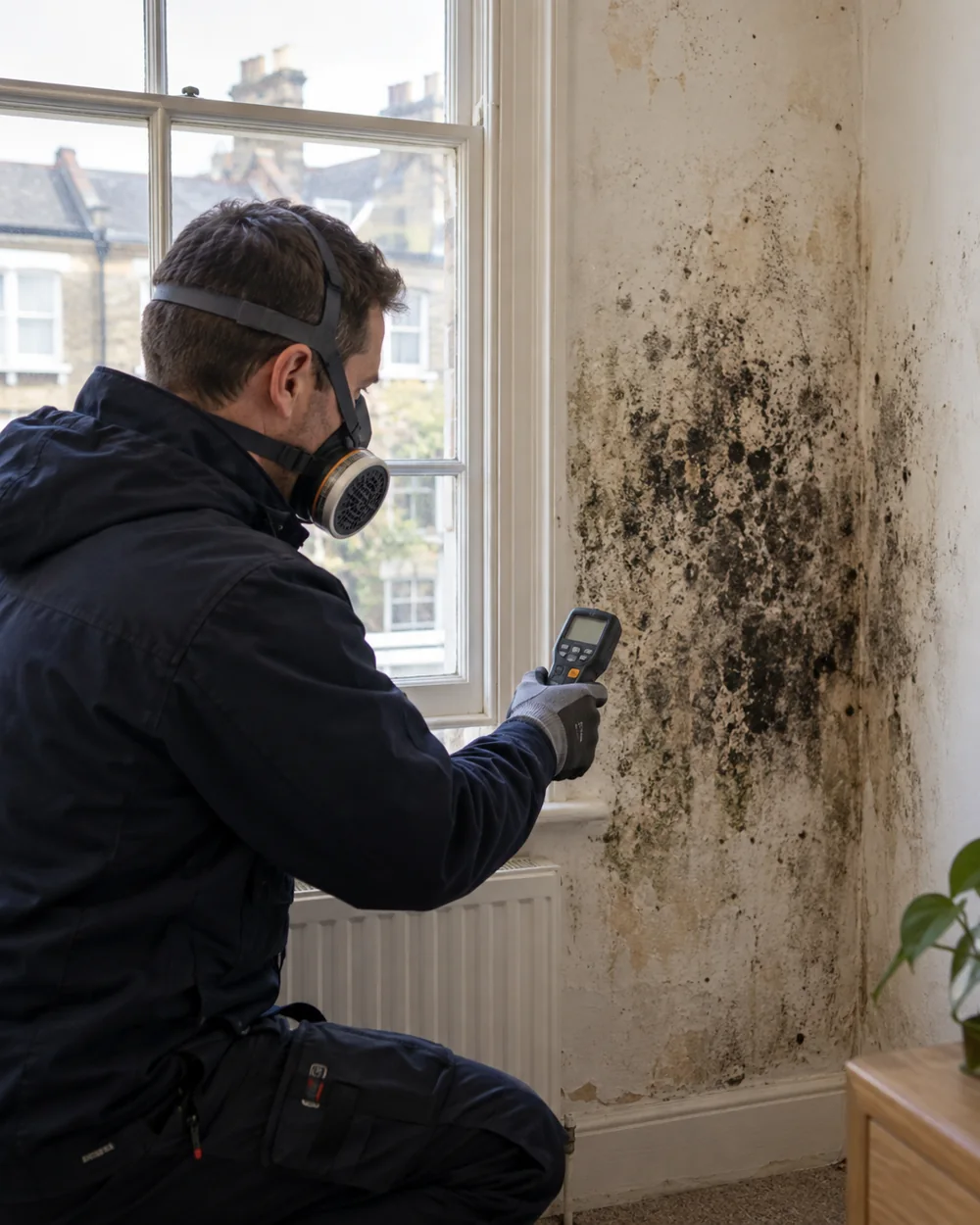
YOUR HOME / CHELSEA
Black Mould Removal Chelsea
Mould beside decorative finishes in Chelsea needs attention to the material as well as the moisture. A carefully painted room can still contain a cold reveal or a damp concealed wall. We discuss removal without assuming that an attractive finish means the surface beneath is sound, and explain where treatment ends and repairs or redecoration begin.
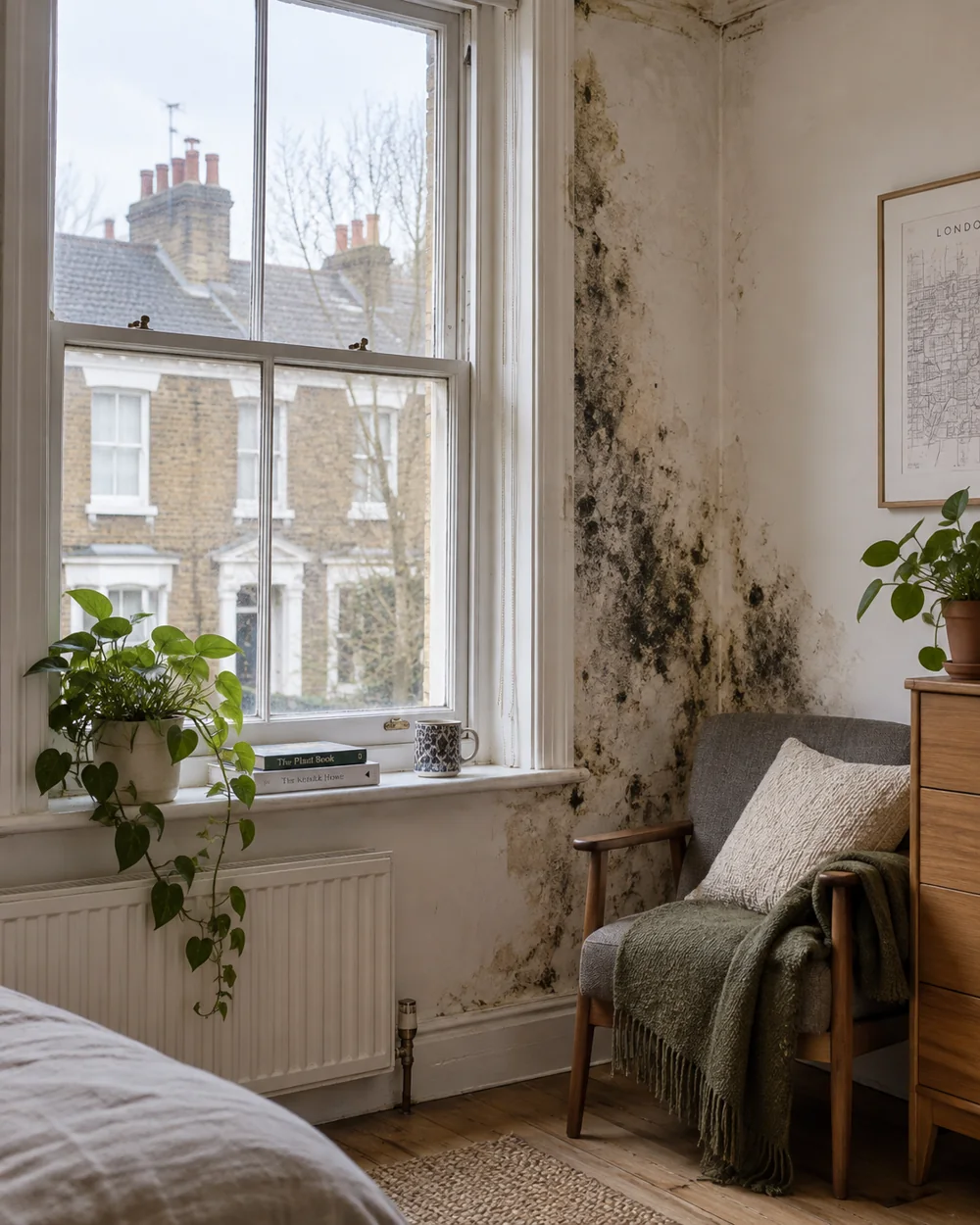
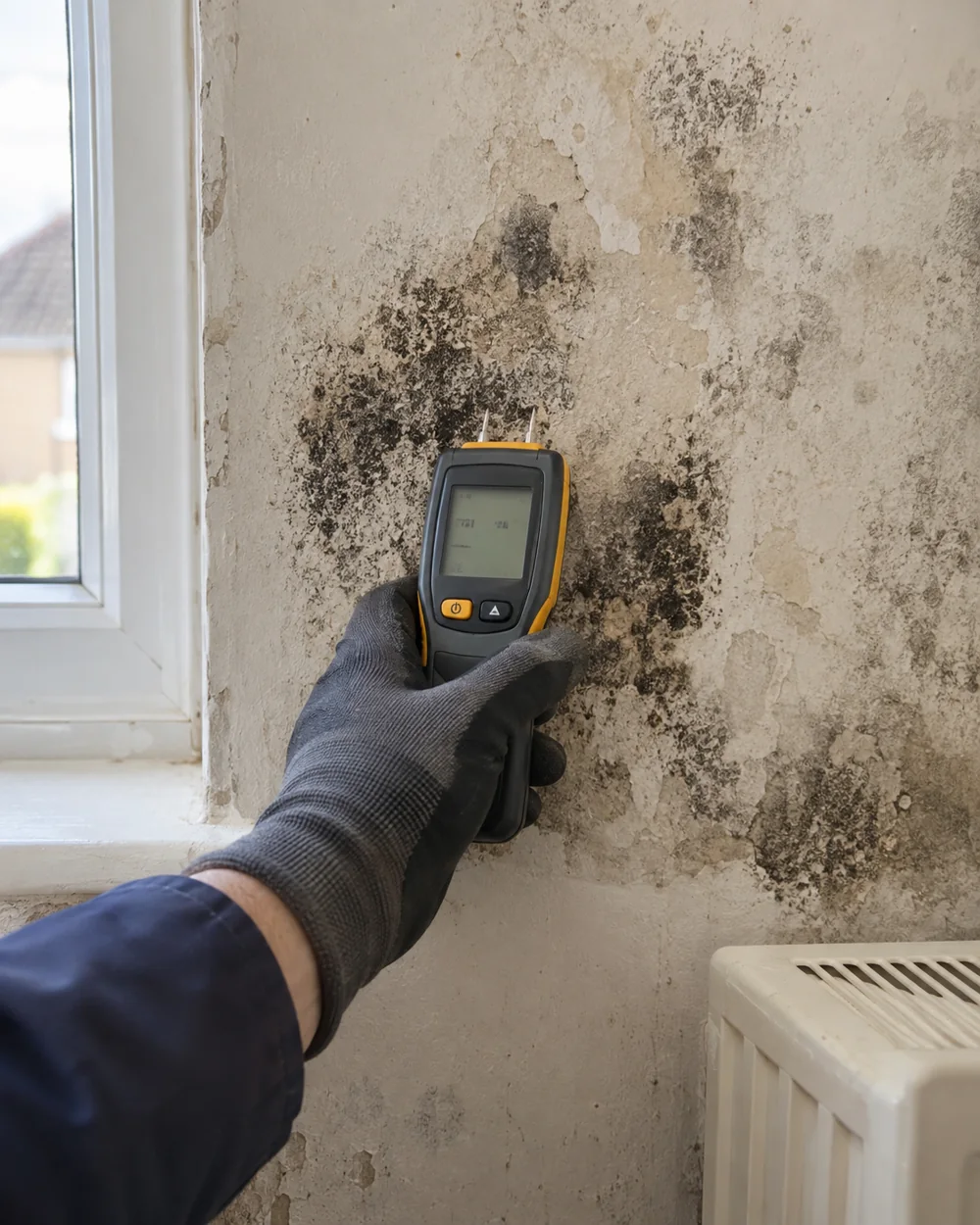
- Consider the finish beneath the growth
- Discuss concealed dampness
- Agree work before redecoration
Appearance and material condition are separate questions.
Before the next coat of paint
Decoration can make a patch less visible without changing its moisture conditions. If mould returns through a newly finished wall, keep a record of what was applied and what happened beforehand. Was the wall assessed, was any leak repaired, and did materials have time to be considered before the new finish? The answers help understand the sequence without blaming the paint automatically.
Loose paper, lifting paint and dark spots on sound plaster may require different next steps. The removal service discusses affected surfaces within an agreed scope. Ask which finish is suitable for treatment and whether making good is separate. A treatment appointment should not be mistaken for restoring every decorative material in the room.
Describe the wall beneath the finish
For a Chelsea wall, explain the finish you can see and any alteration or repair you know about. A well-kept room may still have damp material beneath a newer surface. Tell us whether the room is in a house or flat, whether it has been altered and how it relates to the exterior. Decisions still depend on the individual property.
If the affected room is below ground level or behind a fitted unit, explain that arrangement. Restricted access and different wall finishes can limit what is visible. An inspection should acknowledge those limits. Neither a conservation-area label nor the quality of the decoration proves that a patch comes from condensation, penetrating water or a particular concealed defect.
A mark at the reveal and a mark on the main wall
Compare the location of growth with other signs of moisture. A reveal may be colder than the room, while water entering around an opening can affect nearby plaster. The timing is useful: changes after rain and changes overnight deserve different questions. A complete view of the window and wall helps show those relationships more clearly than a close-up of the darkest spot.
The window treatment page explains why seals, glass and plaster should be considered separately. If the wall itself remains damp or the pattern extends away from the opening, damp investigation may be relevant. Recommendations should follow the evidence rather than a familiar-looking location.
Questions about this problem
Can mould appear through recent decoration?
Yes, if conditions supporting growth remain. The earlier treatment, wall condition and moisture history need checking before assuming the new finish itself is the problem.
Should wallpaper be removed before the enquiry?
Describe its condition and the visible pattern first. Access or removal can be discussed according to the inspection purpose and permission required, rather than undertaken simply to make a booking.
Respect the access arrangements
In an occupied home, fixed storage, furniture and decorative coverings can make inspection difficult. Tell us which areas can be reached and who can approve any further access. Removing finishes requires a separate decision, particularly where somebody else owns or manages the building. A useful initial assessment can explain the restriction without presenting an unseen surface as fully inspected.
If earlier work has been undertaken, share the relevant notes and photographs. A previous repair may explain why one material behaves differently from another. It may also leave questions unanswered. We distinguish reported information from current observations so the conversation about further work is based on what is actually known.
A practical sequence for the room
Where moisture is ongoing, the source and the affected materials need consideration before a new decorative finish is expected to last. Treatment may be appropriate, but extraction, a leak repair or further assessment can form another part of the plan. Ask for the reason behind each recommendation and which tasks depend on the outcome of earlier work.
Call with your postcode, the room and a short history of cleaning or renovation. For a nearby selected property, see Kensington or Fulham. A Chelsea enquiry can start from the visible damage and the access available; you do not need to identify the cause or strip a finish before asking.
LET’S DISCUSS THE NEXT STEP
Discuss mould and affected finishes in Chelsea
Describe the Chelsea finish you want to retain, including decorative details beside the growth, and explain whether paint is lifting or plaster remains damp. A photograph before redecoration is especially useful. We can discuss which areas are suitable for treatment and which material decisions need to precede the next finish, without assuming restoration is included.