
MOULD & MOISTURE / LONDON
Damp Wall Investigation Services London
A damp wall does not explain itself. The stain may be linked to rainwater, a concealed leak, condensation or moisture left in materials after an earlier problem. Our damp wall investigations look at the location, condition and history of the affected area before recommending what should happen next. The purpose is to narrow down the possibilities, not to turn a single meter reading into a diagnosis.
YOUR PROPERTY / THE DETAILS
Read the pattern before choosing a repair
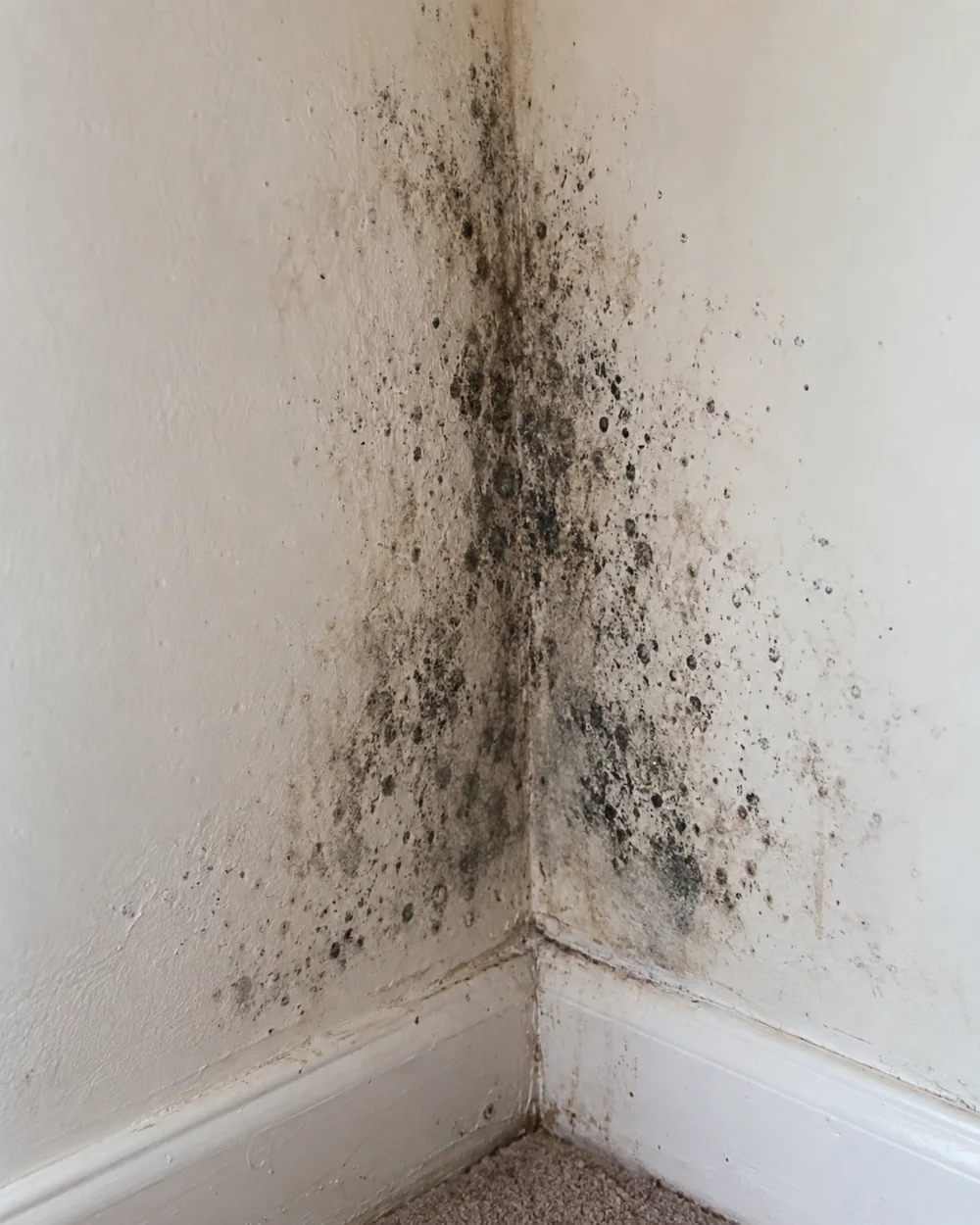
A patch near a window, a stain beneath a bathroom and moisture at the base of a wall raise different questions. We consider whether the damage is localised or widespread, whether plaster or paint has deteriorated, and what lies on the other side. Nearby ceilings, skirting and adjacent rooms can provide clues that a close-up of the main stain misses.
The timing matters just as much. Tell us whether the patch changes after rain, when plumbing is used or during colder months. A recently repaired leak can leave materials damp for some time, while fresh moisture may mean the original source remains active. Previous decoration can also hide the sequence, so a short history is helpful even if dates are approximate.
YOUR PROPERTY / THE DETAILS
Consider the outside and the inside
Moisture entering through external defects can appear some distance from the point of entry. Roof junctions, rainwater goods, window details and exposed masonry may therefore be relevant when access allows assessment. In a flat, the affected wall can also relate to another dwelling or a communal part of the building. Those areas may require permission or a separate inspection.
Inside the property, we consider nearby water services, cold surfaces and ventilation conditions. The room may have more than one contributing issue. For example, a damp material can remain cold and become vulnerable to further condensation. The investigation should leave room for that complexity rather than forcing every wall into a single category based only on the visible stain.
YOUR PROPERTY / THE DETAILS
Understand what moisture readings can tell you
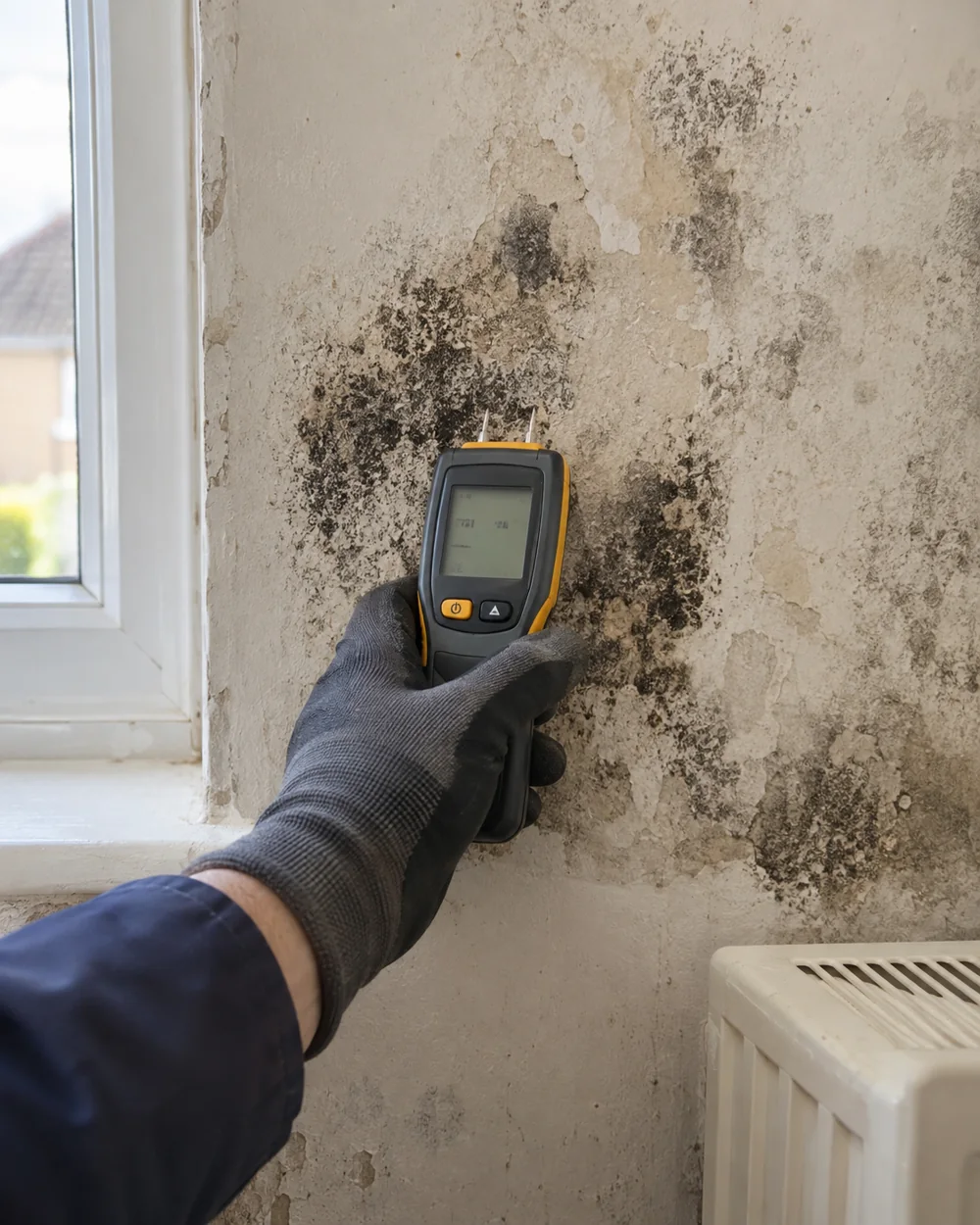
A meter can help compare areas and identify a pattern, but the reading depends on the surface, material and method used. Salts, certain finishes and concealed materials may influence the result. Measurements need to be interpreted with the visual findings and the history. A useful assessment explains how the evidence fits together and where it does not yet support a firm answer.
Where an area cannot be reached, or the wall construction remains concealed, we state the limitation. Opening up a finish, accessing another room or monitoring changes over time may be necessary for further investigation. These steps should be discussed and agreed. An inspection does not give unrestricted permission to remove materials or enter parts of the property controlled by somebody else.
YOUR PROPERTY / THE DETAILS
Separate investigation from the remedial work
Once the likely moisture sources have been considered, the next steps need a sensible order. A plumbing repair, external maintenance, drying, mould treatment and redecoration are different jobs. Some can be planned together; others depend on the outcome of earlier work. We explain which recommendations address the source and which concern materials or decoration already affected.
It is reasonable to ask why a proposed repair is being recommended. You should know what evidence supports it, what remains uncertain and whether further checks are needed before committing to work. Covering a damp wall or repainting it may hide the symptom without changing the moisture conditions. That is why the explanation is as important as identifying the affected area.
YOUR PROPERTY / THE DETAILS
Bring the history to the inspection
Before you call, note where the stain begins and whether it is spreading. Mention musty smells, previous leaks, gutter or roof work, plumbing repairs and recent decorating. If you have photographs from before a repair, keep them available. They can show a pattern that is no longer visible at the time of the visit, without being treated as proof of a concealed cause.
For a rented or managed property, access may need arranging with several people. Explain whether adjacent rooms, a neighbouring flat or an external wall can be inspected. If the main concern is a possible concealed leak, our hidden leak and moisture detection service may be relevant. If recurring growth accompanies the dampness, mould treatment can be discussed once the source is better understood.
BEFORE YOU CALL
A few useful questions
Does a high meter reading prove rising damp?
No. A reading alone does not establish a specific cause. Material, salts, finishes and other moisture sources need consideration before a diagnosis or major remedial treatment can be justified.
Can you investigate a wall with no visible mould?
Yes. Damp staining, damaged decoration or unexplained moisture can warrant investigation without mould being visible. Describe the location and history when arranging the visit so the concern is clear.
Are repairs included in the investigation?
Do not assume that they are. Inspection, opening-up work, plumbing, external repairs and decoration are separate matters. The scope and any further work should be discussed before it is authorised.
TELL US WHAT YOU HAVE NOTICED
Need help with this problem?
Have your postcode and the affected rooms ready. Tell us when the problem started, what has changed and any work already tried. We can discuss the appropriate starting point and the access or reporting arrangements before a visit is agreed.