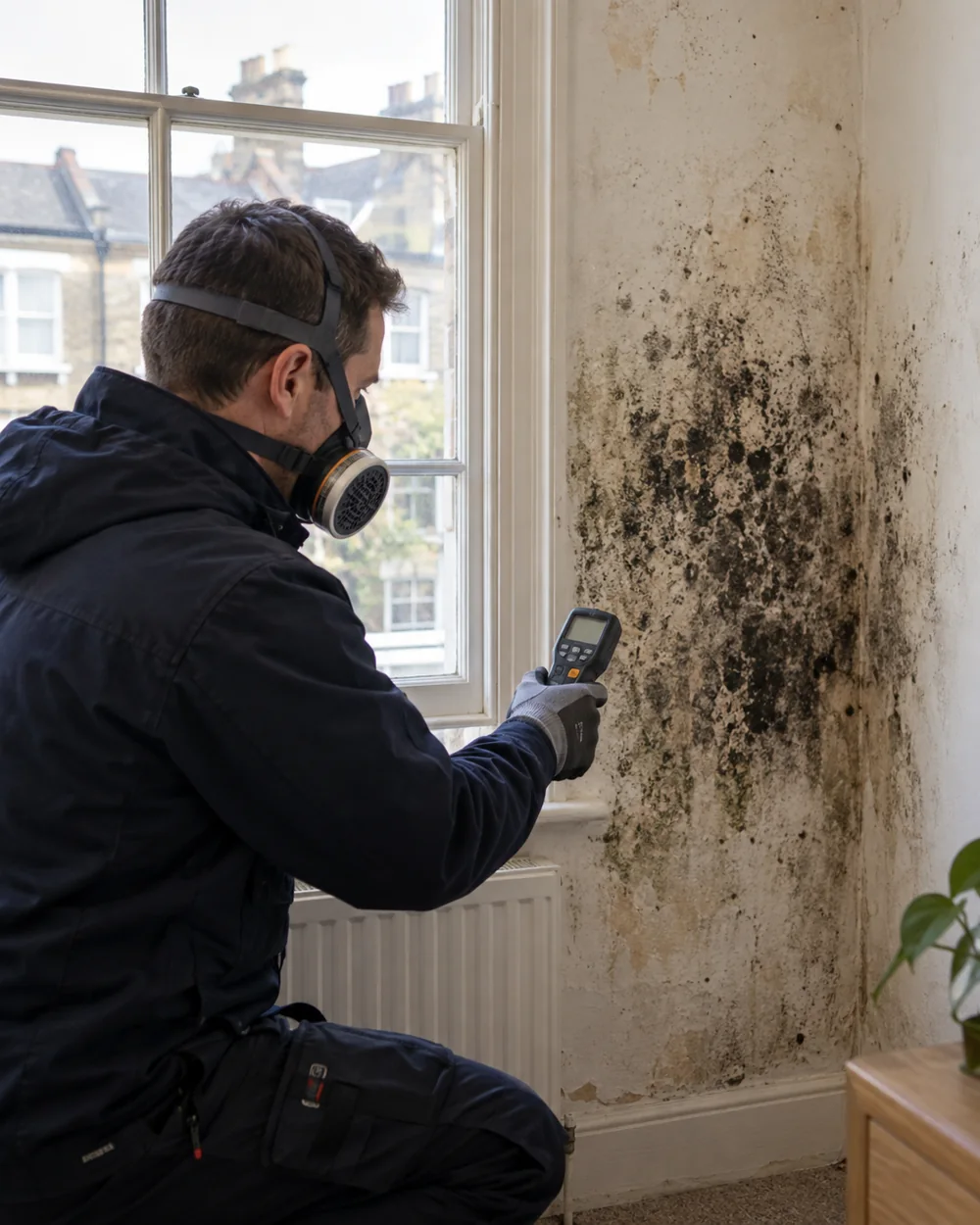
YOUR HOME / CROUCH END
Black Mould Removal Crouch End
Mould first noticed after loft or roof work in a Crouch End home deserves a careful timeline. The work may be relevant, but the date alone does not prove a fault or identify the moisture route. We discuss the affected room, roof-space access and the condition of its surfaces, keeping removal decisions separate from questions that need inspection or another authorised trade.
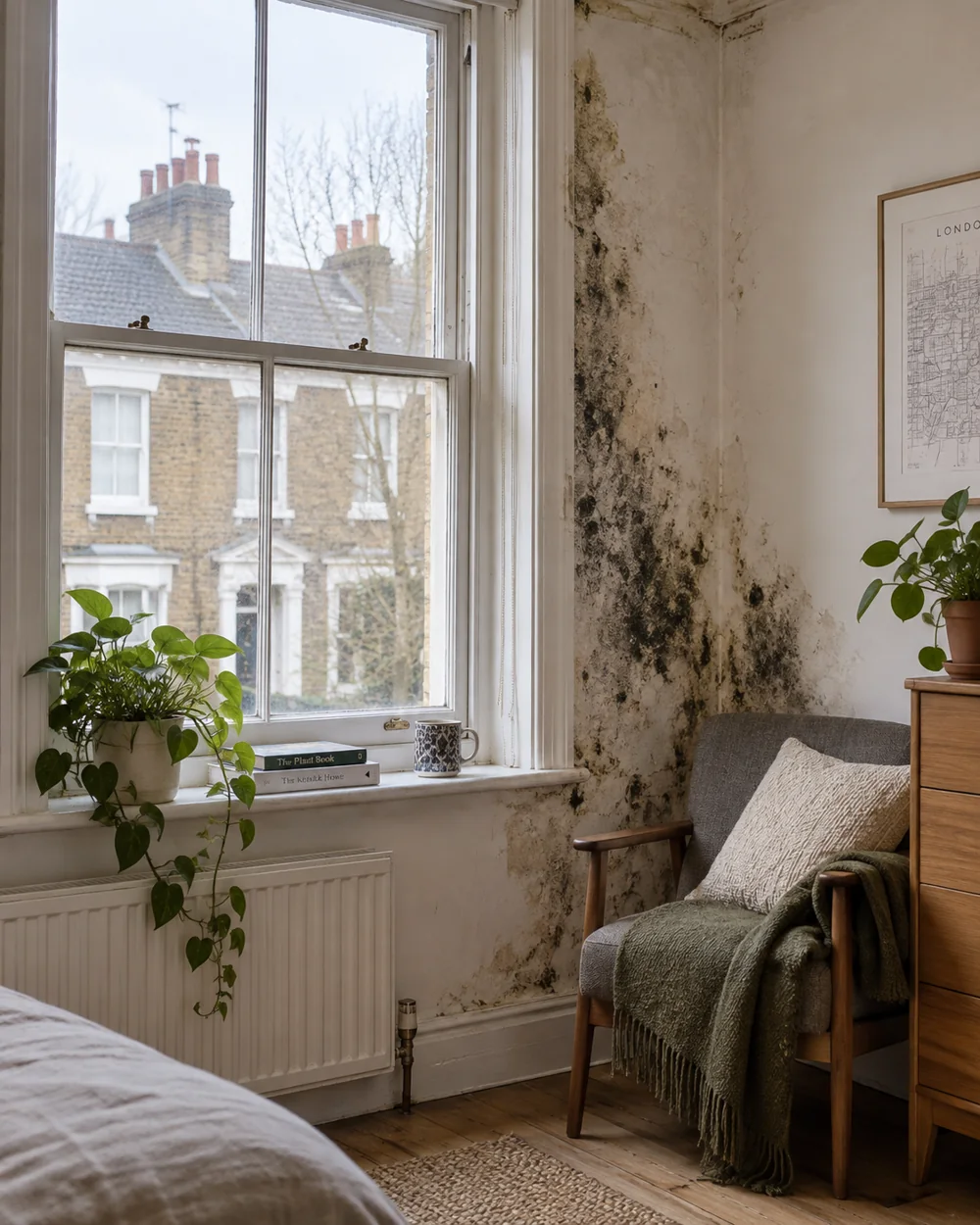
- Connect observations with a clear timeline
- Respect roof-space access limits
- Separate treatment from repair attribution
A mark appearing after work is evidence to record, not proof of who caused it.
Record what changed, with dates where known
Mention whether work involved a roof covering, insulation, a roof window or the layout of an upper room. Include when it finished and when the first mark was noticed. If the room was redecorated at the same time, explain that too: a new finish can obscure an older pattern. Keep available descriptions of the work without assuming they reveal every concealed detail of the completed construction.
Describe whether the mark changes after rain, during colder weather or when the room is used more frequently. Our damp wall investigation service considers a timeline alongside the accessible surfaces. Several events may overlap, so distinguishing observations from suspicions is valuable. A report should identify what supports a proposed explanation and what remains beyond the available evidence.
Show the room’s upper junctions
Wide photographs can show a sloping ceiling, roof window, wall junction and the location of furniture beneath the patch. Tell us whether paint is flaking, the finish feels damp or there is a separate discoloured water mark. A steeply sloped surface may also create an access question. Explain ceiling height and obstructions before booking rather than assuming the same preparation as a standard room.
Our cold wall condensation surveys discuss surface patterns where colder junctions are a possibility. That should not dismiss a reported water entry simply because condensation is plausible. The two questions may require different evidence. A view from the room cannot always establish roof construction or the condition behind a lining, and those limits should be stated plainly.
Access should answer a defined question
A loft hatch or roof window does not automatically make every relevant part accessible. Say what can be reached from ordinary indoor access and who can authorise any further work. Do not climb onto a roof or remove insulation for the initial enquiry. If specialist roof access is required, its purpose and arrangements should be agreed rather than treated as an incidental part of mould removal.
Where another contractor completed work, keeping their scope and any follow-up information available can help organise the next step. This does not make a mould inspection a finding of contractual responsibility. Ask which observations are being made now and whether further evidence is needed before a repair is proposed. Clear limits make the information easier to share without overstating what a visit establishes.
Treat the finish in the right sequence
Our black mould removal service separates suitable treatment from roof repairs, damaged-material replacement and decoration. If the surface remains wet or has lost strength, explain this before booking. A cleaner upper corner can still need a separate moisture decision. Agree how any required repair fits around removal, and what condition is expected before a new finish is applied.
Keep photographs of the original junction for later comparison, particularly after any separately arranged roof work. Selected nearby pages are available for Muswell Hill and Highbury. For Crouch End, begin with the postcode, room photographs and work timeline, so the discussion can focus on the actual upper-room problem and the access required to understand it.
Questions about this problem
Does mould after roof work prove a defect?
No. The timing is relevant history, while a defect or moisture route needs supporting evidence. Room use, finishes and other changes may also matter.
Will a removal appointment include roof access?
Do not assume that it does. Describe access beforehand and confirm the agreed scope, especially where a separate specialist or permission is required.
Should I repaint while waiting for inspection?
Changing the finish can obscure a useful pattern. Discuss surface condition and the next step before expecting new paint to resolve an uncertain moisture issue.
LET’S DISCUSS THE NEXT STEP
Explain your Crouch End roof-room mould history
For an upper-room enquiry after roof work, bring the work timeline together with photographs of the ceiling junction and any separate water stain. Explain the access available indoors. We can discuss what a visit could establish and where another authorised inspection is needed, without turning the timing of the mark into a finding about the earlier contractor.