YOUR HOME / DEPTFORD
Black Mould Removal Deptford
Fresh paint can make it hard to explain a wall that becomes marked again soon after moving in. In Deptford, start with what changed on that particular surface and what you have observed since occupation began. Earlier decoration is useful history, but it does not tell you whether growth was removed or a moisture source repaired.
- Record the condition at handover
- Mark gaps in the repair history
- Agree access before belongings arrive
An empty flat offers visibility, but it does not supply the missing history.
Describe what the new finish is doing
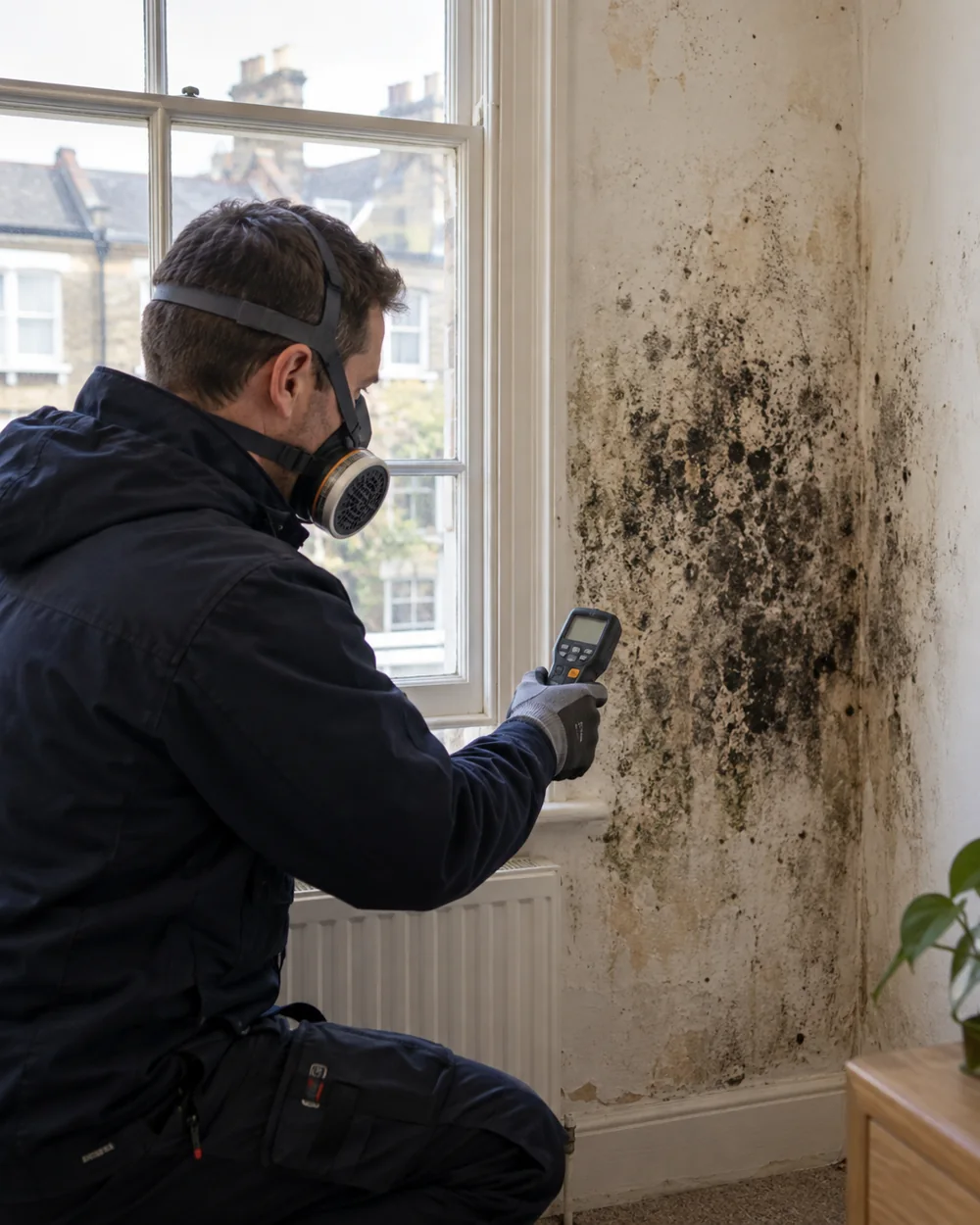
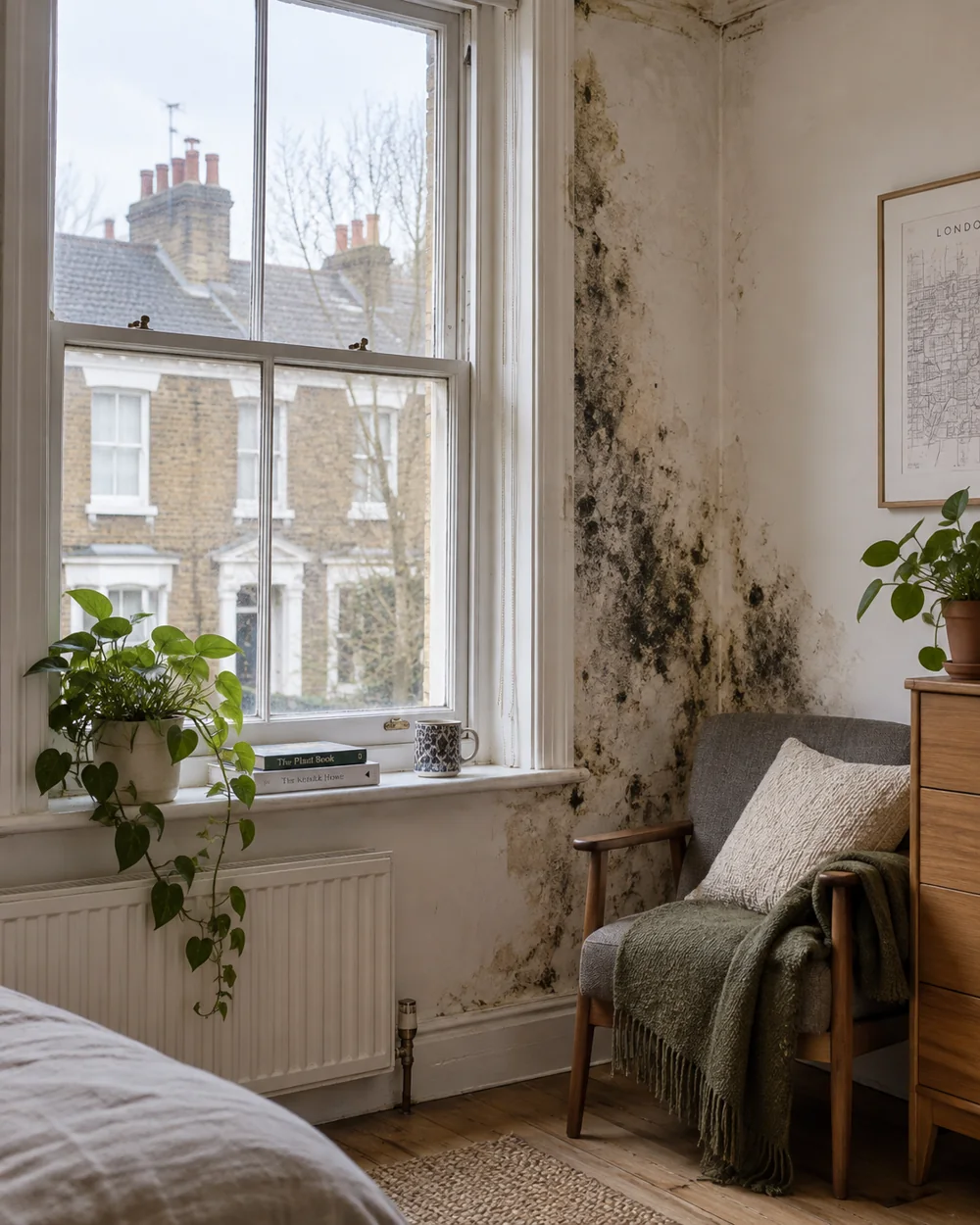
Is the paint spotting, blistering, lifting at an edge or showing a damp boundary underneath? Photograph the whole wall before adding another coat. Include the affected finish close up, without scraping it away to produce a sample. Each visible change helps explain the material question; the word mould alone may leave an important part of the damage undescribed.
Write down when the room was first used and when the change became noticeable. A wall freshly painted before entry may have no accessible earlier photograph. Say that plainly. Our inspection service can consider the current condition without treating missing history as evidence that the wall was previously dry.
An empty flat offers visibility, but it does not supply the missing history.
Ask what happened before the paint went on
A useful question for whoever arranged decoration is whether it followed a leak, visible growth or ordinary refurbishment. Ask which surface was prepared and what work was recorded. A repainting date and a plumbing repair date are different facts. Keeping them separate avoids turning the general statement that the flat was done up into a diagnosis.
If information is supplied by another person, retain the wording or document rather than presenting it as your own observation. A rental mould report can distinguish accessible findings from reported history. That distinction is particularly useful when several people arrange the next task but none saw the wall before it was covered.
Use the occupied room to add new information
Note when the window becomes wet, whether the wall changes after bathing nearby and whether the same boundary responds to rain. The room may now be heated, furnished and used differently from the period before entry. Record normal conditions rather than deliberately altering them to provoke a result. A short dated sequence gives a later visit something specific to consider.
Check the surroundings in the description: external wall, adjoining bathroom, roof or another dwelling, where known. Those relationships help frame a moisture question without proving its answer. Furniture can limit what is visible, but a newly occupied room should not automatically be blamed for a building issue that has not been assessed.
Decide whether the finish can be treated or needs another task
Suitable removal depends on the reachable surface and its condition. Sound painted plaster is a different proposal from wet board or a covering that no longer adheres. Ask what the appointment includes, which material requires further assessment and whether decoration must wait for a water-source question to be resolved.
For the Deptford enquiry, identify who can authorise access and any task affecting a fixed finish. A clear scope should remain useful to the person arranging later repairs. Nearby selected pages include Greenwich for separate patches within one room and Lewisham for growth uncovered when furniture moves. Follow the same wall references after work so a changed appearance can be compared with the original condition.
Questions about this problem
Can mould show through a recently painted wall?
A new finish does not establish that the underlying material is dry or that the moisture source has been addressed. Describe whether the change is fresh spotting, damp staining or paint damage so the next check has a clear purpose.
Should I remove the paint to show what is underneath?
Do not disturb a finish just to prepare an enquiry. Show the visible condition and discuss whether further access would answer a specific question, who can approve it and what making good would involve.
What information matters if I have only just moved in?
The entry date, first visible change and normal room-use observations are useful even without older records. Distinguish those facts from information passed on by someone else.
LET’S DISCUSS THE NEXT STEP
Explain mould returning through a Deptford finish
For Deptford, show the wall’s present finish and say when the room entered ordinary use. If the decoration history is uncertain, include what is known without filling in the gaps. We can discuss whether the accessible material needs treatment, further assessment or another task before repainting, with a scope that remains clear to whoever arranges the next work.