
YOUR HOME / HAMPSTEAD
Black Mould Removal Hampstead
Mould around a Hampstead ceiling junction can be linked to a local cold surface, but its position does not rule out water from above. We discuss removal in the context of the room, roof or neighbouring space and the pattern you have noticed. The proposed work should explain both its material scope and any moisture question that needs further attention.
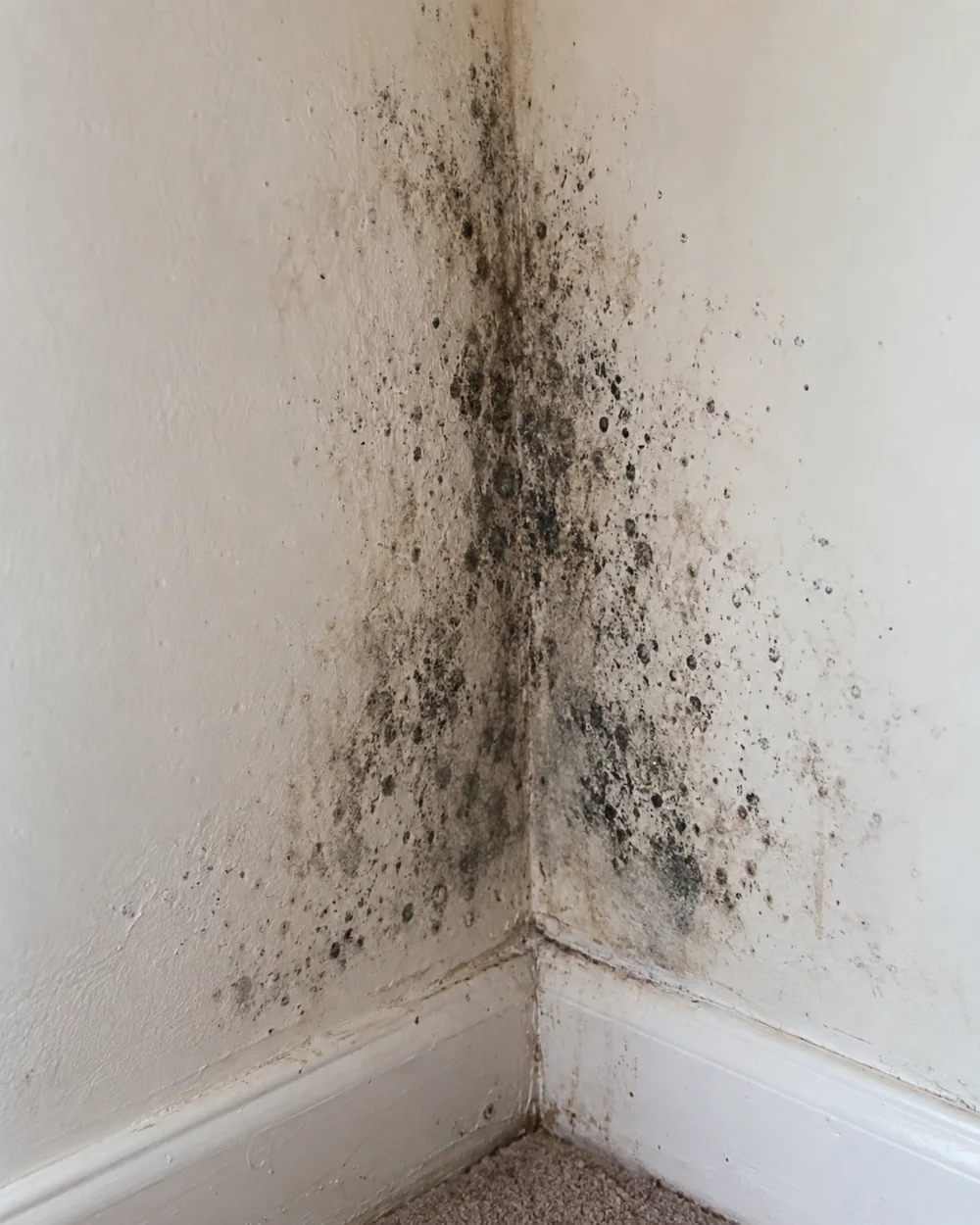
- Consider the ceiling junction
- Compare seasonal and weather patterns
- Separate finishes from water-source work
A familiar corner pattern still needs its own assessment.
Draw the ceiling relationship before naming a cause
For a Hampstead ceiling-junction enquiry, a simple description of the room above is especially useful. Is the affected edge beneath a roof space, another occupied room or a neighbouring dwelling? If you do not know, say so. Mark the affected location in a wide photograph using the window or door as a reference. A close-up can show the finish, but it cannot explain that vertical relationship.
Describe the shape of the boundary as well as its colour. A narrow band following the wall may raise a different question from a stain spreading across the ceiling. Include clear sections of the junction so the pattern can be compared. A mould inspection can discuss which parts are accessible and whether the evidence supports a further question about the space above.
If loft or adjoining-room access already exists, explain who controls it and any limitations. There is no need to enter a difficult roof space or lift ceiling material for an initial enquiry. An additional check should have a defined purpose, appropriate permission and a workable access arrangement. Being able to inspect the bedroom does not automatically make every roof detail or neighbouring surface available.
Keep two timelines when cold weather and rainfall overlap
Write down when the junction looks wetter and what happened beforehand. An overnight change after the room was occupied is different from a stain enlarging after rainfall. Both may occur in the same week, so retain the two observations instead of forcing them into one explanation. Include the approximate time of photographs and whether the room had been heated, ventilated or left unused.
Our cold wall service considers colder surfaces in relation to indoor conditions. Measurements taken during a visit need context: weather, recent heating and moisture production can affect what is observed. A dry afternoon does not erase a consistent overnight account. The useful explanation identifies which present findings support the reported pattern and what cannot be reproduced during that visit.
If rain-related changes or a previous water event are part of the history, our damp investigation service may address a different question. Keep dates and locations of roof or plumbing work alongside the observations. A repair record can help compare the pattern before and after an event; it does not establish that every remaining mark is old damage or that a suspected entry route has been confirmed.
Where the timelines remain uncertain, state the uncertainty. Asking which observation would help next is more useful than collecting isolated meter values without an assessment question. Further monitoring, records from above or suitable additional access may be relevant. The recommendation should connect that step to the unresolved evidence, rather than propose the same investigation for every mouldy ceiling corner.
Put the junction’s finish into the work sequence
Describe what the affected edge is made of where known, whether paint is loose and whether material feels or looks deteriorated. Do not disturb a damaged finish to test it for the enquiry. Sound paint, loose coverings and weakened board can require different decisions. A removal appointment needs a stated reachable area and should explain whether damaged-material assessment or replacement belongs in another scope.
If a building repair is proposed, ask how it relates to the evidence and where it fits before decoration. Work on the source, treatment of existing growth and restoring a finish do different jobs. A cleaner junction does not establish that inaccessible construction above it is dry. Keeping the original photographs helps later assessment if a fresh surface changes the visible boundary.
After agreed work, record the same junction through ordinary use and relevant weather. Note whether growth returns along its previous line, whether a separate stain changes or whether the affected location moves. For selected nearby enquiries, see Camden or Kilburn. Start a Hampstead conversation with the postcode, ceiling relationship and the most useful observations rather than a presumed diagnosis.
Reading a ceiling junction without guessing what is above
Is a mouldy ceiling corner necessarily condensation?
No. Local cold conditions are one possibility, but water from above and other sources may need consideration. The history and surrounding construction matter.
Can a dry inspection day limit the explanation?
It can affect what is observed. Earlier photographs and a clear record of timing help interpret conditions, while further monitoring or access may still be needed.
Does removal include repairing the roof?
Not automatically. Surface treatment and building repairs are different tasks. The scope and responsibility for arranging any additional work should be explained beforehand.
LET’S DISCUSS THE NEXT STEP
Talk about the mould pattern in Hampstead
Describe whether the Hampstead junction lies below a roof, another room or a neighbouring dwelling, and which parts are accessible. Mention both rain-related changes and ordinary window moisture if present. We can discuss checks directed at those separate observations, followed by appropriate surface work, without assigning every ceiling-corner patch the same cause.