
YOUR HOME / CAMDEN
Black Mould Removal Camden
A Camden bedroom can show mould in a concealed corner even when the visible centre of the room looks dry. We discuss removal with attention to the surface and the way the room is arranged. Where access is limited by storage or fitted furniture, the inspection should explain what is known and what needs another check rather than assume the visible edge describes the whole problem.
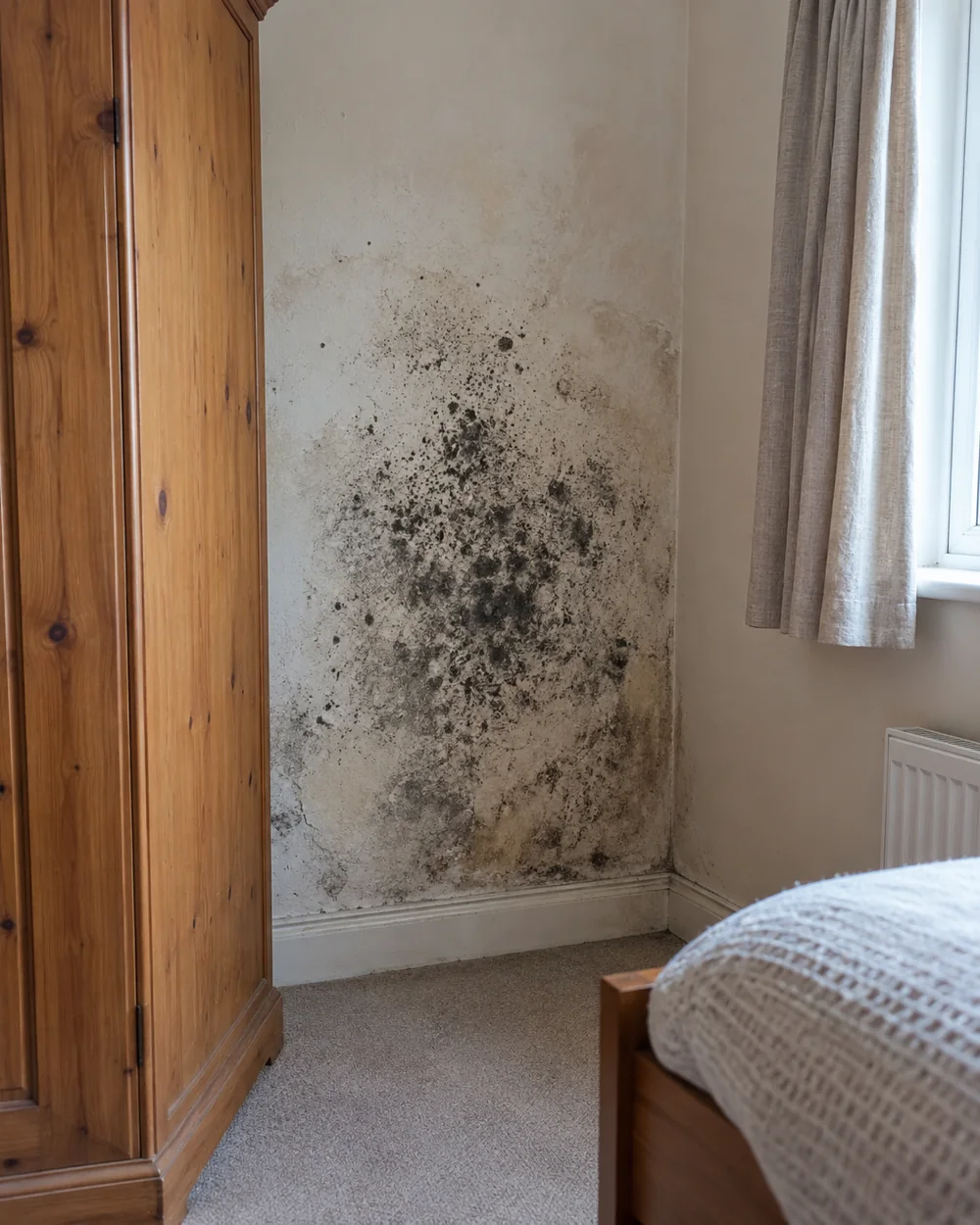
- Consider concealed corners
- Explain accessible findings
- Define suitable bedroom treatment
A room’s centre and its concealed edge can behave differently.
Three views that explain a concealed corner
For a Camden bedroom enquiry, start with a photograph from the doorway. It shows how the bed, window and storage relate to the affected corner. Add a view of the wall at ordinary standing height and a close photograph of any exposed growth. Together these can be more helpful than several close-ups of the same dark edge, because they show both condition and access.
Describe the unphotographed area honestly. If a unit hides the wall from floor to ceiling, say so; if a gap gives a partial view, explain which part is visible. Do not slide a heavy wardrobe or remove a fitted panel to improve the photograph. The initial enquiry can use the accessible evidence without pretending that the hidden boundary has already been mapped.
Freestanding furniture and fitted storage need different plans
Tell us whether the obstruction is a bed, movable wardrobe or fitted cupboard attached to the room. That distinction changes preparation. A movable item may require a safe arrangement before the appointment, while opening fixed furniture may need permission or another trade. Our bedroom treatment service discusses reachable wall finishes; it should not be assumed to include dismantling units or restoring belongings.
If the room cannot be emptied, identify the space that remains available. Ask whether it permits an appropriate visit and which wall surfaces would stay out of reach. An agreed access plan is more useful than an instruction to move everything without considering the household. It also makes clear when a limited visit cannot establish the extent behind an immovable unit.
Questions about inspecting a concealed bedroom corner
Can a small visible patch extend behind a unit?
It may, but inaccessible extent should not be invented. Explain the restriction so further access can be considered according to what the inspection needs to establish.
Does wall removal cover damaged clothes?
Not automatically. Stored belongings and wall finishes are different scopes. Mention what is affected before work is agreed so those needs can be discussed separately.
Is moving furniture proof that airflow caused it?
No. A change can provide useful observations without establishing the complete moisture source. The wall, surrounding construction and history remain relevant.
Compare an exposed strip with the room you can see
Where a small section of wall is visible beside the furniture, describe whether paint, paper or plaster differs from the open wall nearby. Note dampness, lifting finish or a continuing stain separately from growth. A cold wall survey can discuss vulnerable surface conditions where that is the relevant question, with accessible readings interpreted alongside the room’s current use.
A warm reading in the centre of the bedroom would not establish the condition behind a cupboard. Equally, a concealed location should not automatically become a furniture diagnosis. Explain whether a bathroom, external wall or another space adjoins the patch. If the hidden area requires further assessment, the proposed check should state what evidence is missing and why that access would help.
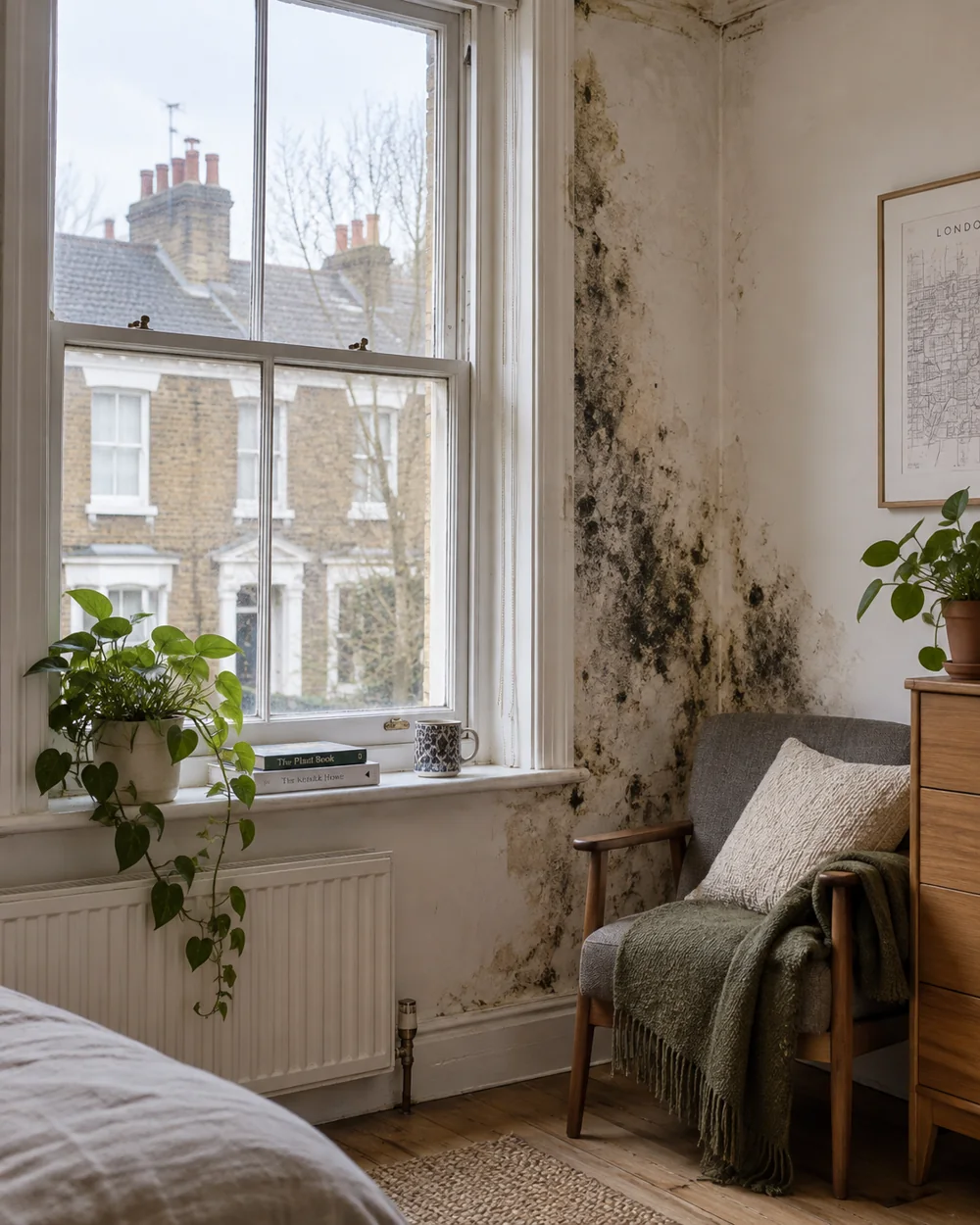
Turn the discovery history into a useful inspection question
Perhaps the concern started with a smell, or a damaged strip of paper became visible while the bed was moved. Describe that sequence and any earlier repairs. Our inspection service can discuss a visit aimed at the unresolved question: material condition, the accessible extent, or a moisture pattern. The discovery date is a useful record without being treated as the date growth began.
For a rented Camden home, confirm who can approve preparation and any additional opening. The occupant can describe overnight window wetness and daily use; an owner may hold earlier wall or plumbing records. Neither needs to supply a complete building history before the first conversation. Gaps should be stated clearly, so the proposed visit does not promise an answer that depends on unavailable evidence.
Keep the same corner reference after changes
Once agreed work is complete, compare the original exposed strip and surrounding wall rather than choosing a new camera angle each time. Record whether the same location stays wet or a smell persists. If furniture is repositioned, include that change in the notes. A drier accessible edge is useful information, but it should not be described as confirming the condition of a wall that remains concealed.
Selected nearby enquiry routes include Hampstead and Islington. For Camden, contact us with the postcode, furniture arrangement and the question you most need answered. That gives the first appointment a practical purpose, whether suitable surface treatment is already clear or further access needs discussion before a treatment scope can be agreed.
LET’S DISCUSS THE NEXT STEP
Discuss your Camden bedroom mould
For a Camden corner with restricted access, a clear account of the obstruction is useful even without a complete photograph. Tell us whether storage is fitted, movable or heavy and show the visible wall beyond it. We can discuss practical preparation before setting a treatment scope that acknowledges which surfaces remain unseen.