
YOUR HOME / DULWICH
Black Mould Removal Dulwich
A cold corner behind a Dulwich sofa can develop mould before the visible wall elsewhere in the room shows anything unusual. We discuss removal by looking at the affected material and the room around it. Furniture may influence airflow, but it should not be treated as the complete explanation without considering the wall, moisture history and any signs of water entering the property.
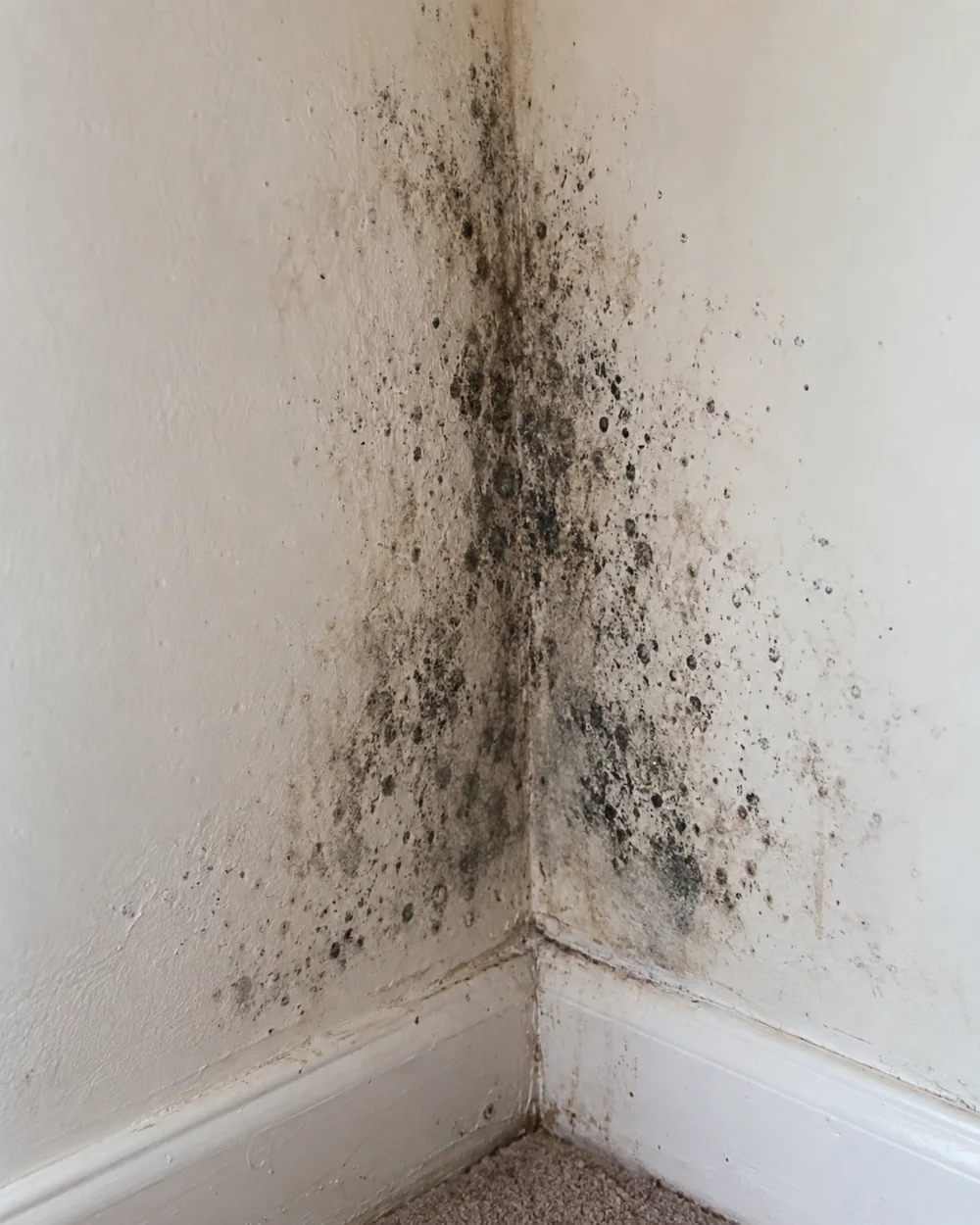
- Look at the concealed corner
- Explain local airflow limits
- Discuss suitable surface work
A dry-looking wall beside the sofa does not describe the wall behind it.
The corner is a small part of a larger wall
A sofa or cabinet can leave less circulating air in one area while the rest of the room feels comfortable. If the wall is external, that concealed surface may stay cooler too. Describe where the patch sits and whether the finish is damaged. A view of the room and furniture position helps explain the relationship more clearly than a close-up of growth alone.
This is not proof that furniture caused the problem. Moisture entering the wall, an earlier leak and local condensation remain different possibilities. Keep notes about what happens after rain or heating changes and whether the patch returns in the same position. The investigation should use those observations rather than assume the visible edge is the complete affected area.
Cold surfaces and other water sources
Our cold wall survey explains why room temperature does not describe every surface. A local corner may be vulnerable even when adjacent walls look dry. Measurements need interpretation with materials, weather and recent room use. A visit captures useful evidence, but should not pretend to reproduce every condition that develops overnight or during another season.
If the history points beyond surface condensation, damp investigation can consider the wider wall arrangement. The room may have more than one contributing condition. An explanation should distinguish observed findings from a likely cause and identify what further access or evidence would be needed before a specific repair is recommended.
The Dulwich room and the material scope
For a Dulwich enquiry, tell us whether the room is in a house or flat, which walls face outside and whether the furniture is movable. If there are previous repairs or coverings behind it, mention them. These details describe your particular property without making claims about the construction or defects of homes across the area.
Our living room treatment page discusses affected finishes. Sound paint, loose wallpaper and damp material may need different decisions, while upholstery and the furniture itself are separate scope questions. Ask what is included, what needs preparation and whether repair or decoration is a later task rather than part of the proposed surface treatment.
Plan access and use the history afterwards
Do not move fixed units or remove finishes simply to enquire. Explain the access available and who can authorise additional work. In an occupied rental, the tenant’s observations and the landlord’s repair record may both help. A well-planned visit can then focus on the unresolved question rather than repeat cleaning of the only surface that happened to be reachable.
After changes, keep a record of whether the corner dries and whether new growth appears there or elsewhere. That information can guide further discussion without treating an improved appearance alone as proof of resolved moisture. The selected pages for Peckham and Camberwell may help with a different address, while your sofa-wall corner still needs its own accessible evidence. Call about Dulwich with the postcode and room description so inspection or treatment can be discussed from the actual pattern.
Questions about this problem
Is a furniture gap always the answer?
No. More circulation may help some rooms, but it does not repair a damp wall or prove the source. The wall and the history need assessment alongside furniture position.
Does wall treatment include the sofa?
Not automatically. Belongings and wall finishes can require separate attention. Describe what has been affected so the agreed work does not leave that distinction unclear.
Could an external defect affect only the hidden corner?
It is possible for moisture patterns to be localised. The position and history need consideration; neither a concealed location nor a dry adjoining wall rules out another water source.
LET’S DISCUSS THE NEXT STEP
Ask about hidden wall mould in Dulwich
Mention the sofa’s size and the space available to reach the Dulwich corner before attempting to move it. If accessible, show where growth extends beyond the furniture and identify any separate water mark. We can discuss preparation suited to the room and a treatment boundary that does not silently exclude the hidden part of the wall.