
OUR APPROACH
About Black Mould On Walls
We help people in London make sense of mould, dampness and recurring moisture in their homes. That means looking at the affected wall or ceiling, listening to what has been happening and explaining the next steps in ordinary language. Our services cover inspection, moisture investigation and mould treatment for homeowners, tenants, landlords and property managers. The visible patch is where the conversation begins, rather than where it ends.
ABOUT OUR WORK
A property problem needs a proper explanation
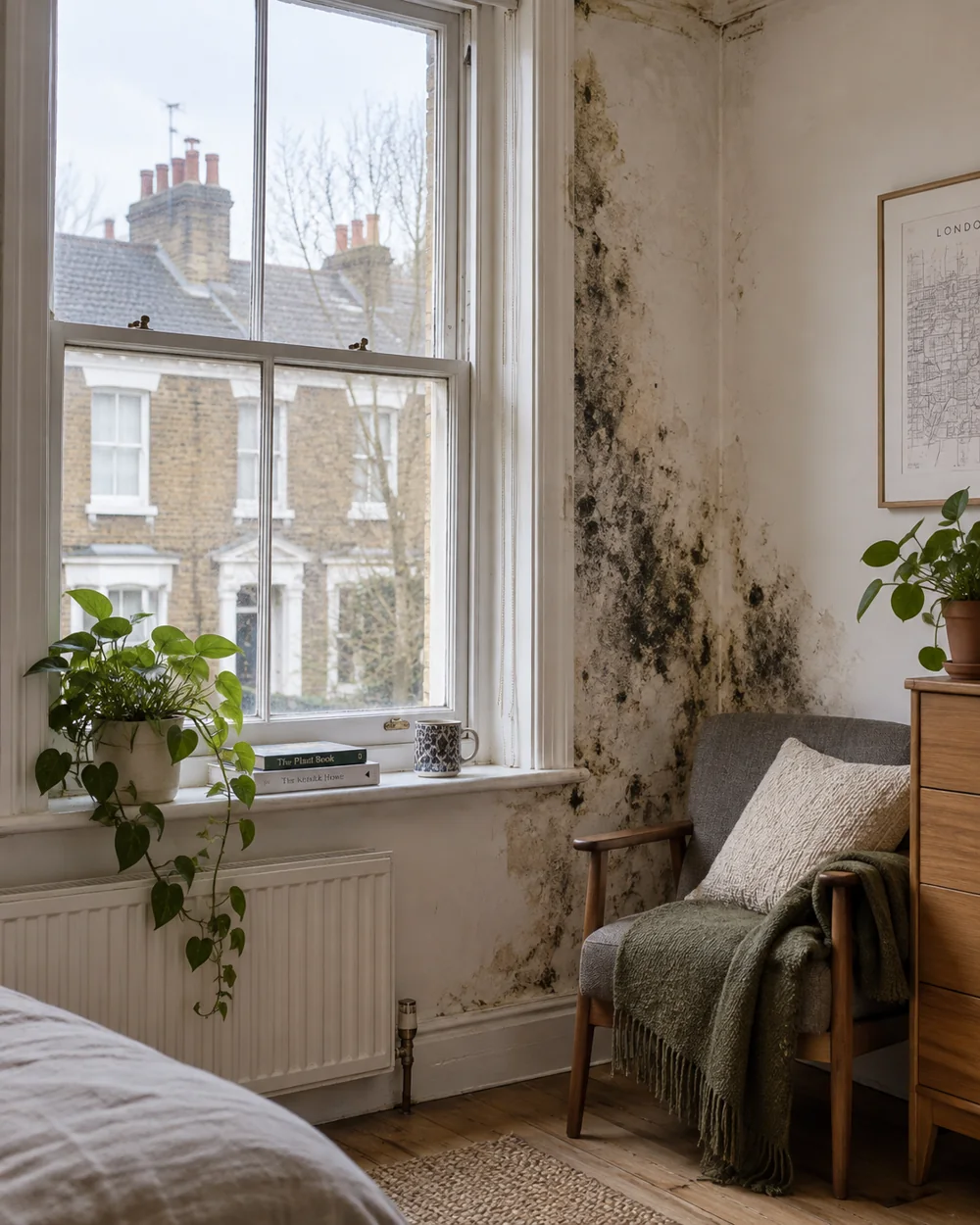
Someone contacting us may have cleaned the same corner several times, repainted a bathroom or moved a wardrobe to find staining behind it. By that point, another vague instruction to improve ventilation is not much help. We focus on understanding the reported pattern and considering the room and building conditions that could be keeping the surface damp.
That might involve condensation on a cold wall, limited circulation behind furniture, a ventilation problem or water entering the building. More than one factor can be present. Our approach is to explain what is supported by the inspection, what needs closer attention and what cannot yet be confirmed. We would rather make those distinctions clear than offer a simple answer that overlooks an important part of the property.
ABOUT OUR WORK
The person living there knows the history
An occupant can describe what a room does across a day or a season. They may know that a window gets wet overnight, a patch grows after heavy rain or a smell returns when a cupboard is closed. Those details matter even when they are not apparent during a visit. We ask about previous cleaning, repairs and changes to the home so the inspection has useful context.
Listening is particularly important in rented properties. The person arranging the appointment and the person using the room may be different people. A tenant’s observations, a landlord’s repair records and an agent’s access arrangements can each contribute information. The aim is to understand the reported condition and the work it may need, rather than start from an assumption about who is responsible.
ABOUT OUR WORK
Treatment and investigation have different jobs
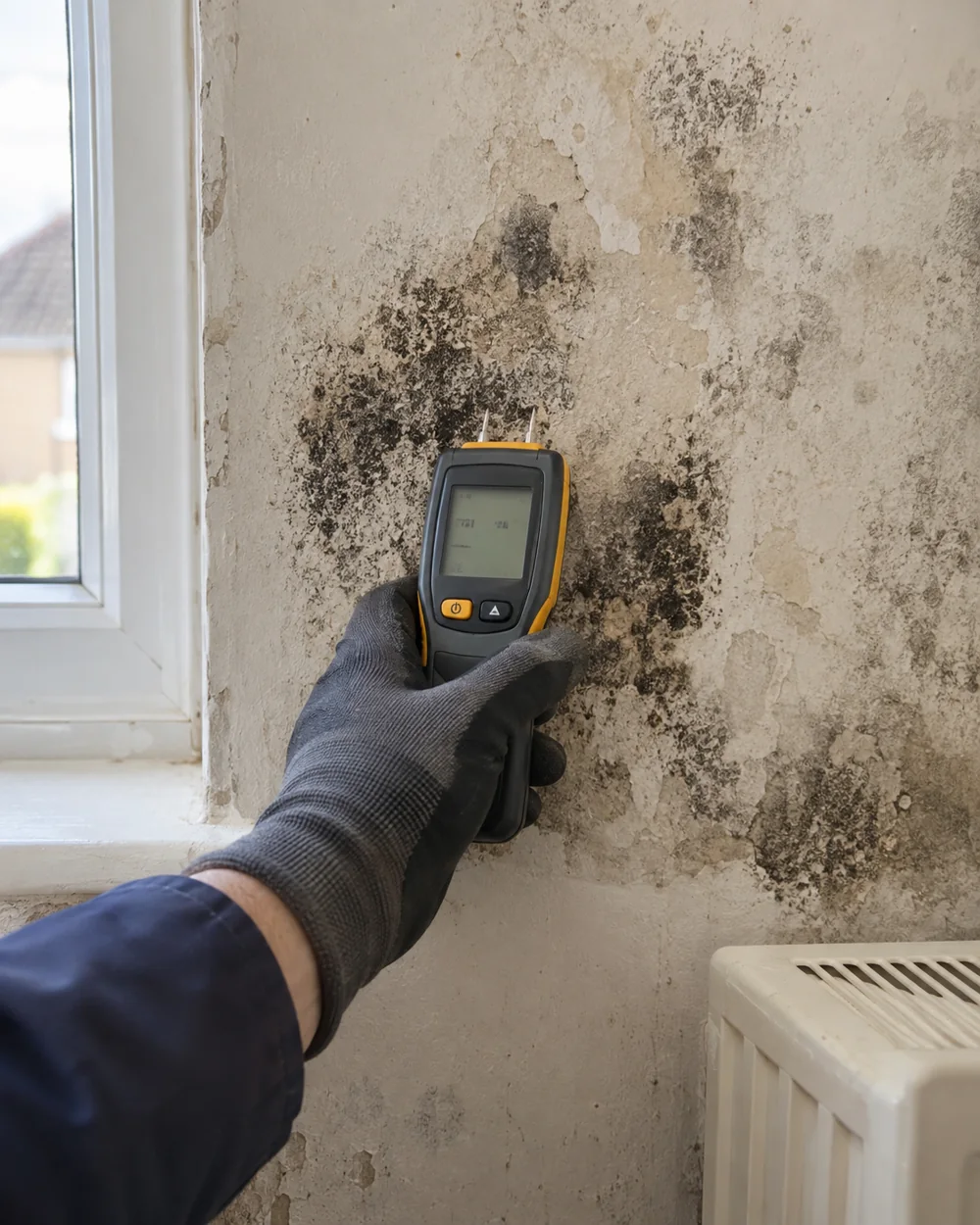
Mould removal addresses affected surfaces within an agreed scope. A moisture investigation considers why those surfaces are becoming damp. Neither should be confused with every possible repair to a building. Where plumbing, external maintenance, ventilation changes or redecoration are relevant, we discuss them as separate parts of the plan so you can decide what needs arranging and in what order.
This distinction helps prevent disappointment. A wall can look better after treatment while still being vulnerable to fresh growth if moisture continues. Equally, a repaired leak can leave damaged decoration that needs attention after the materials have been assessed. We explain the relationship between the source, the affected finish and the proposed work, instead of treating appearance alone as the measure of whether a problem has been resolved.
ABOUT OUR WORK
London homes do not all behave alike
A Victorian terrace, a converted flat and a modern apartment can have different construction and ventilation arrangements. Within the same home, an exposed bedroom corner may behave differently from the hall or kitchen. Our service pages explain common patterns in these spaces, including mould around windows, bathroom ceiling growth, cold external walls and damp patches that suggest another moisture source.
We do not use those patterns as a shortcut to diagnosis. A familiar location can still have an unusual cause, and accessible evidence may leave questions unanswered. The history, surface condition and surrounding construction need to be considered together. If access to another flat, a concealed area or an exterior is needed, that requirement should be discussed rather than hidden behind a confident conclusion.
ABOUT OUR WORK
What a useful recommendation should give you
You should understand the concern being addressed and the reason for the proposed next step. Is the priority a moisture investigation, surface treatment, checking extraction or arranging another repair? What access is needed? What is included in the work? We encourage those questions because a recommendation is only useful if the person commissioning the work can act on it.
Practical advice also needs to fit the home. Leaving a window open indefinitely may not be realistic, and moving a fitted wardrobe may not be possible without preparation. We discuss what is achievable and when an issue needs attention beyond household adjustments. The intention is to leave you with a clearer picture of the property, not a long checklist that ignores the way it is actually used.
ABOUT OUR WORK
Talk to us about what you have noticed
You can contact us without knowing which service to choose. Explain where the mould appears, how long it has been there and what has already been tried. Your postcode helps us discuss availability, while a few photographs can show the pattern before a visit. Images are useful context, but they cannot establish what is happening inside a wall or confirm every possible moisture source.
We will discuss the appropriate starting point and any access or reporting requirements. If you need a written assessment for a rented property, tell us what the document is intended for. If the concern is a damp wall or possible concealed leak, describe that clearly. Straightforward information at this stage helps the enquiry lead to an inspection or service that addresses the actual problem.
BEFORE YOU CALL
A few useful questions
Who can contact the team?
Homeowners, tenants, landlords and property managers can enquire. Explain your role and who can arrange access so the proposed visit and any work are clear to everyone involved.
Do I need to identify the cause first?
No. Describe the location, timing and history of the problem. The inspection can then consider the evidence and help distinguish the appropriate next steps.
TELL US WHAT YOU HAVE NOTICED
Need help with this problem?
Have your postcode and the affected rooms ready. Tell us when the problem started, what has changed and any work already tried. We can discuss the appropriate starting point and the access or reporting arrangements before a visit is agreed.