
MOULD & MOISTURE / LONDON
Mould Around Windows Treatment London
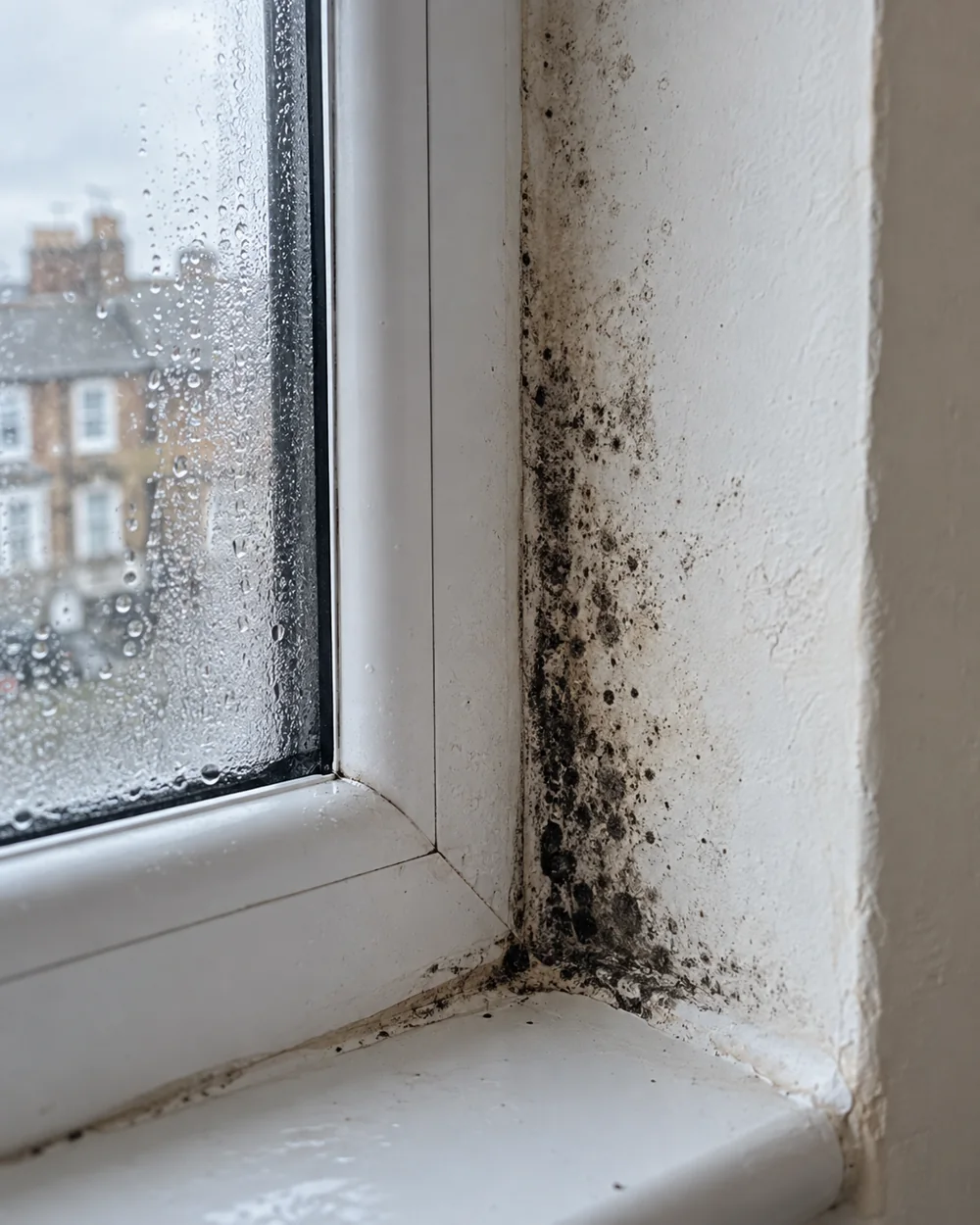
Mould around a window often begins along the edge of the frame or in the bottom corner of the reveal. The spots disappear after cleaning, then return when the weather turns colder. We look at the affected finish, condensation and airflow, while checking whether water entering around the window could also be involved. Treatment should suit the material and the reason it keeps becoming damp.
YOUR PROPERTY / THE DETAILS
Glass, frames and reveals behave differently
A window contains several surfaces with different conditions. Water may collect on the glass, stay along a seal, or reach the painted plaster around the opening. Black marks in silicone and mould on a wall are not necessarily the same treatment problem. We look at the location and material so the proposed work does not treat the entire window surround as one uniform surface.
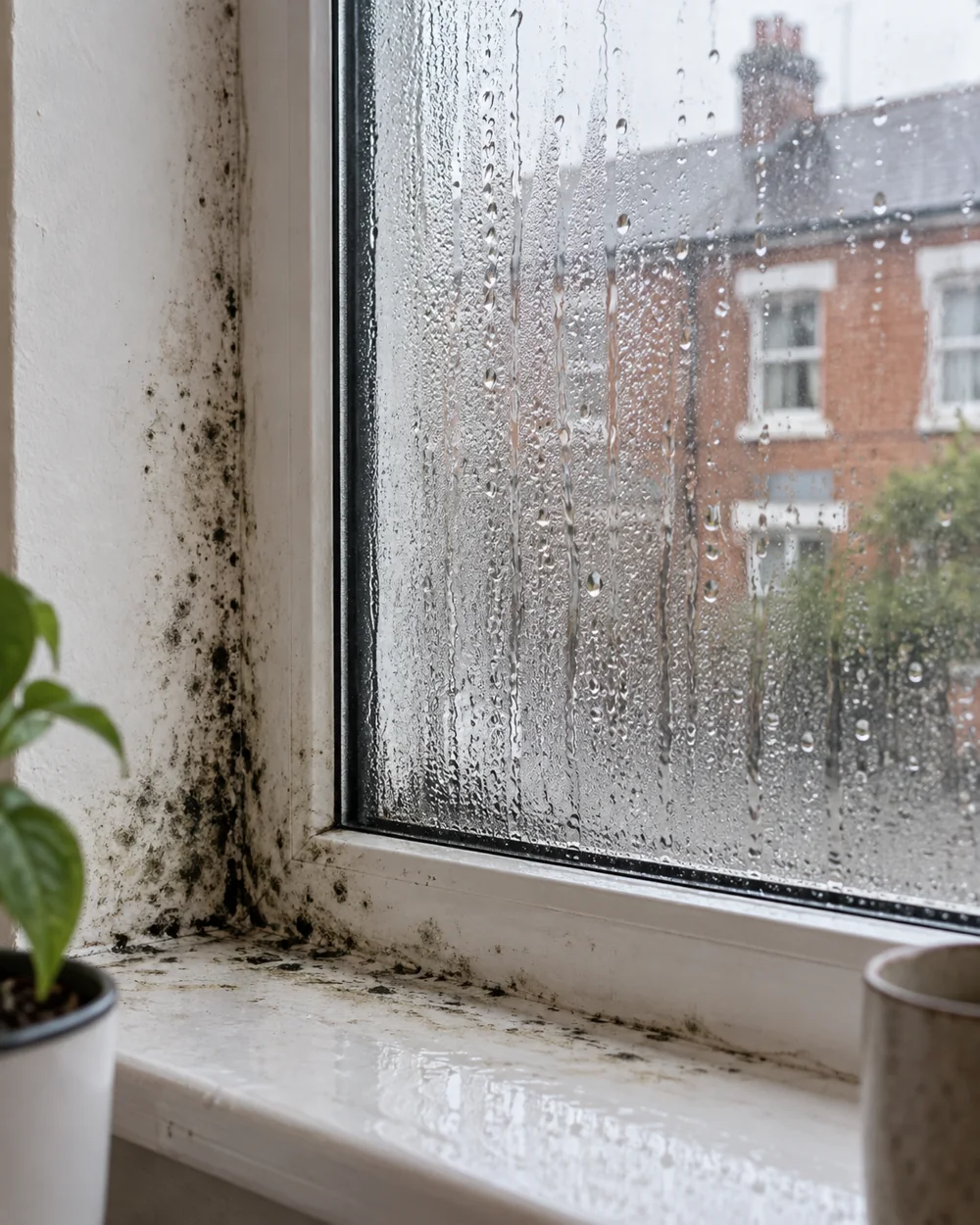
Cold glazing and reveals can collect condensation from humid room air. Curtains and blinds may reduce circulation around the opening, allowing moisture to linger. But damaged external details or a leaking seal can also contribute. Tell us whether the affected area changes after rain, overnight or during everyday use of the room. Those differences are worth exploring rather than ignoring.
YOUR PROPERTY / THE DETAILS
Why a new window may still show mould
Changing a window can alter how air moves through a room. An older opening may have allowed incidental airflow that a newer, tighter unit does not. That does not make the new window inherently faulty, but the ventilation arrangement needs consideration. A colder reveal beside better-insulated glazing may also remain vulnerable even when the main pane shows less water.
We ask about any replacement glazing, changes to background vents and previous repairs around the opening. If the wall was already damp before installation, that history matters. Mould beginning after a change is useful information, not automatic proof that the change is the sole cause. The surrounding room and the external condition of the opening should remain part of the assessment.
YOUR PROPERTY / THE DETAILS
Decide what can be treated and what needs repair
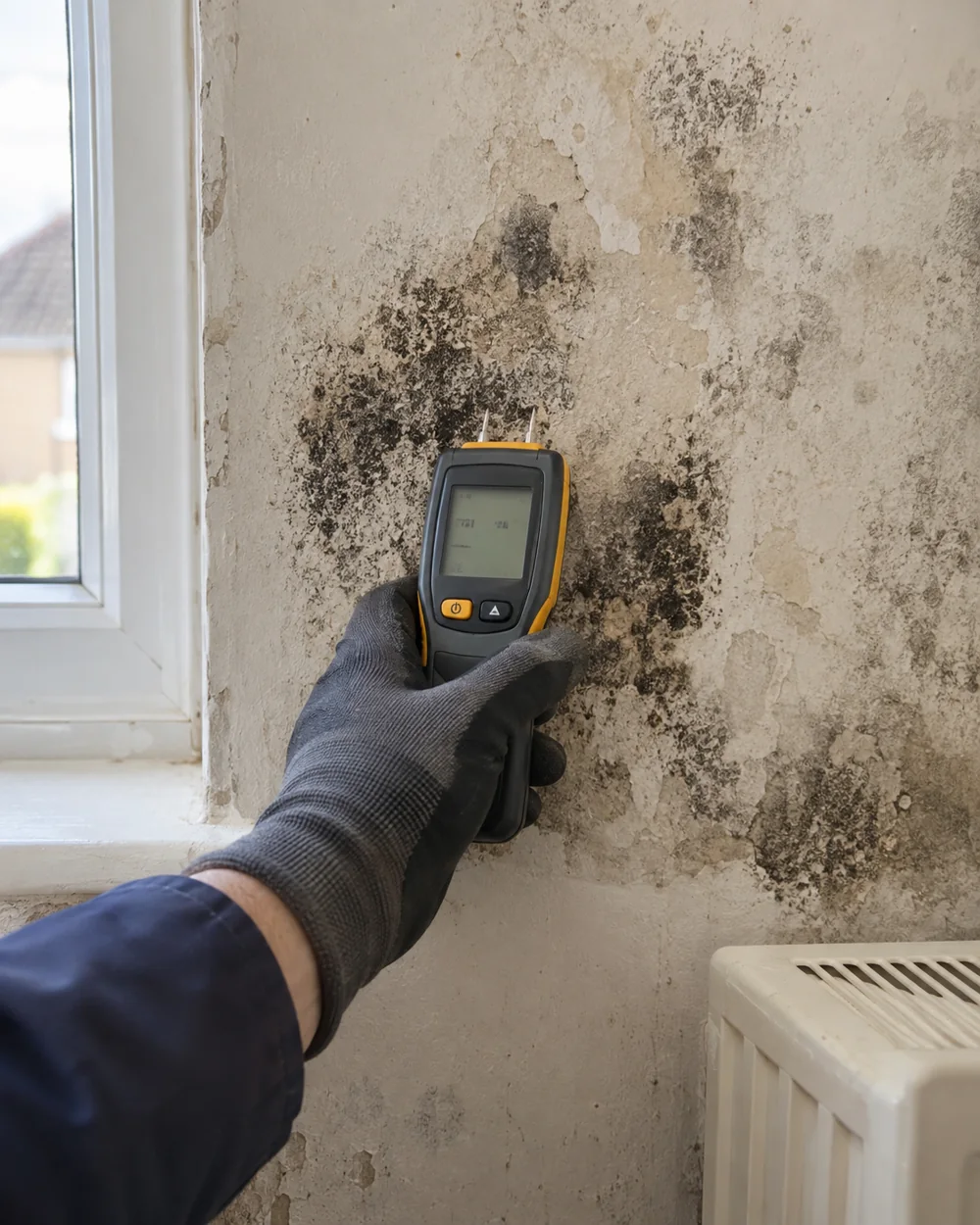
The condition of the frame, sealant and wall finish affects the next steps. Sound painted surfaces may be suitable for treatment, while deteriorated finishes or deeply stained sealant may need separate attention. We discuss what the proposed work covers and whether repairs or redecoration are likely to be needed. The aim is to avoid confusing cleaning with restoring damaged materials.
If evidence suggests water entering around the window, treatment should not be presented as a repair to the opening. External seal work, drainage details or other building maintenance may require another assessment and suitable access. In an upper-floor flat, responsibility for the external part of the building may involve the managing agent, so arrangements need to be clear before work is planned.
YOUR PROPERTY / THE DETAILS
Reduce the conditions that keep the surround damp
Where condensation is a contributing factor, advice should relate to extraction and airflow in the property. A wet bedroom window may reflect moisture arriving from elsewhere in the home. We discuss the affected room in that wider context, including how it is heated and whether the window area dries between episodes. Simply repeating an instruction to wipe the sill is rarely a complete plan.
Curtain position and furniture near a window can affect local circulation, but changes need to be practical. We consider what is feasible in the room and explain why a particular suggestion may help. If several windows or external walls show the same pattern, a condensation assessment or cold wall survey may give a better picture than treating each window as an isolated problem.
YOUR PROPERTY / THE DETAILS
Show the pattern when you contact us
A photograph of the whole window helps show where the growth sits relative to the frame, glass and surrounding wall. Add a closer photograph of the affected area if available. Mention whether there are droplets on the glass, damp plaster, flaking decoration or a musty smell behind curtains. Explain what has already been cleaned, replaced or resealed and whether the problem returned.
For rented flats, let us know who can arrange access and whether the window has been repaired previously. The observations of the person using the room are valuable, even when somebody else is commissioning the visit. A clear account helps distinguish the visible treatment concern from any ventilation or external maintenance questions that need to be addressed separately.
BEFORE YOU CALL
A few useful questions
Can treatment remove staining inside silicone?
Not every stained seal can be restored through surface cleaning. Its condition needs assessing, and replacement may be a separate task. We explain the distinction before agreeing what the treatment will include.
Does water on the inside of the glass mean a leak?
It can be condensation, but location and timing matter. Moisture on the glass, between panes and in adjacent plaster are different observations. Describe where the water appears when arranging an inspection.
Will new windows stop the mould?
Not automatically. Ventilation, room moisture and the temperature of the surrounding reveal still matter. Replacing glazing should not be treated as a guaranteed cure without understanding the conditions around the opening.
TELL US WHAT YOU HAVE NOTICED
Need help with this problem?
Have your postcode and the affected rooms ready. Tell us when the problem started, what has changed and any work already tried. We can discuss the appropriate starting point and the access or reporting arrangements before a visit is agreed.