
MOULD & MOISTURE / LONDON
Condensation & Moisture Control London
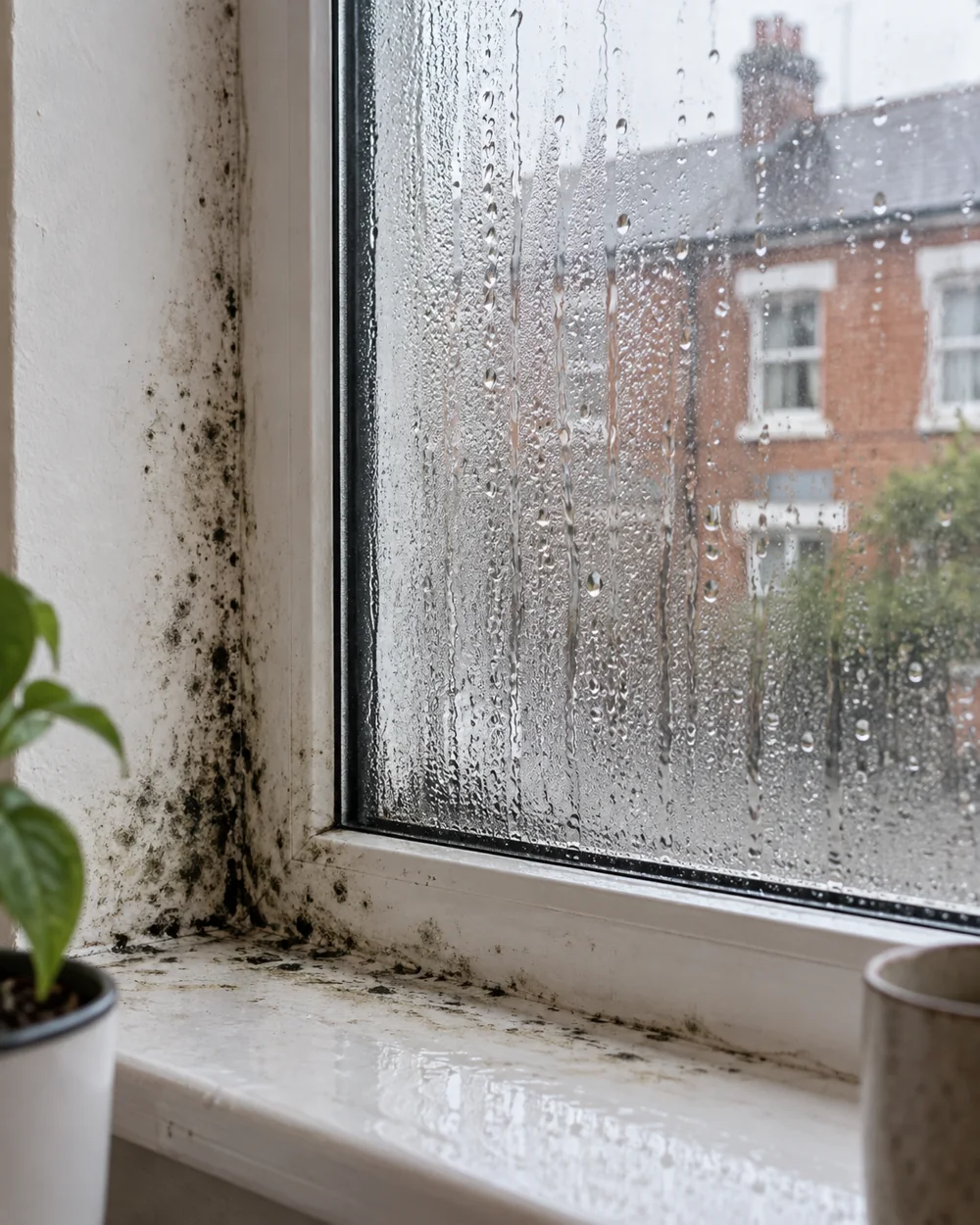
Wet windows in the morning, mould at the edge of a ceiling and a room that never quite dries can all point to an indoor moisture problem. Our condensation and moisture control service looks at how moisture is produced, where it settles and how it leaves the home. We help you separate useful changes from repeated cleaning that does little to alter the conditions.
YOUR PROPERTY / THE DETAILS
Moisture follows the way a home is used
Cooking, showering, washing and drying clothes add moisture to indoor air. That is normal household use, not evidence that someone has done something wrong. The question is whether the property can remove that moisture and keep vulnerable surfaces sufficiently dry. A compact flat with an internal bathroom may depend heavily on extraction and routes for replacement air.
Problems can develop away from the room where the moisture began. Humid air from a bathroom or kitchen may reach a colder bedroom and settle around its window. Closing a door, changing a fan or moving furniture can change the pattern, but those observations need to be interpreted alongside the building. We consider the moisture path rather than treating each patch as an unrelated problem.
YOUR PROPERTY / THE DETAILS
Find out what the ventilation is doing
We discuss the ventilation arrangements and the places where water or mould is appearing. Extractor fans, openable windows and background ventilation all contribute differently. A fan that sounds active may still have a restricted duct or a dirty grille. A window that is difficult to open may also make apparently simple advice unrealistic for the person living in the room.
Air needs a route into a space as well as a route out. A room cannot be understood simply by noting that a fan has been fitted. Its operation and the surrounding arrangement matter. Tell us if a fan was recently replaced, if windows were upgraded, or if the problem began after the layout or use of the property changed.
YOUR PROPERTY / THE DETAILS
Look at cold surfaces and persistent dampness
Condensation develops where indoor conditions and surface temperature allow moisture to settle. Cold corners, glazing and external-facing walls can therefore show growth before warmer surfaces do. Limited circulation behind furniture can make a small area more vulnerable. We consider the position of the problem and how the room dries between periods of normal use.
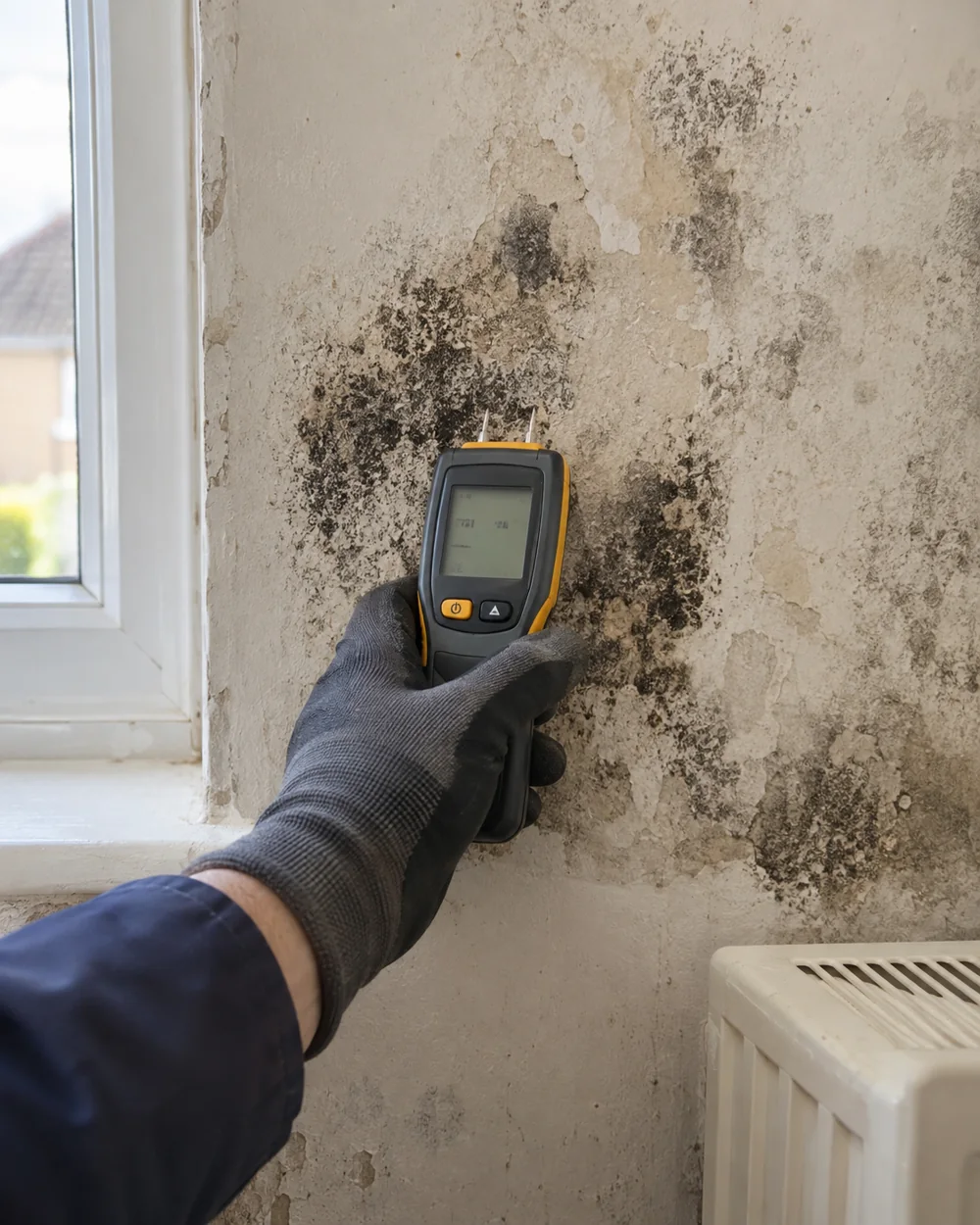
Not every damp patch is condensation. A wall that becomes wetter after rain or a stain below plumbing needs a different line of investigation. Persistent moisture can also remain after a previous leak has been repaired. We explain when evidence supports condensation and when another source needs checking, rather than fitting every report into a ventilation explanation.
YOUR PROPERTY / THE DETAILS
Choose changes in a sensible order
The most useful recommendations are specific enough to act on. They may concern extraction performance, airflow, a cold surface or an unresolved repair. We discuss what can be checked first and what would require another trade or a more detailed survey. This helps you distinguish an adjustment to day-to-day use from a building issue that needs its own work.
A dehumidifier can collect moisture from air, but its presence does not prove the source has been dealt with. Likewise, leaving a window open for longer is not a complete answer to a defective extraction system or leaking wall. We discuss the role of proposed measures without treating a single appliance, product or household habit as the universal solution.
YOUR PROPERTY / THE DETAILS
Measure whether the pattern is changing
After making changes, note where condensation continues and whether surfaces dry between uses. Photographs taken over time can show whether a patch is stable, growing or returning after treatment. That record is useful when the initial problem was seasonal, because a dry afternoon does not necessarily represent the conditions that develop overnight or during colder weather.
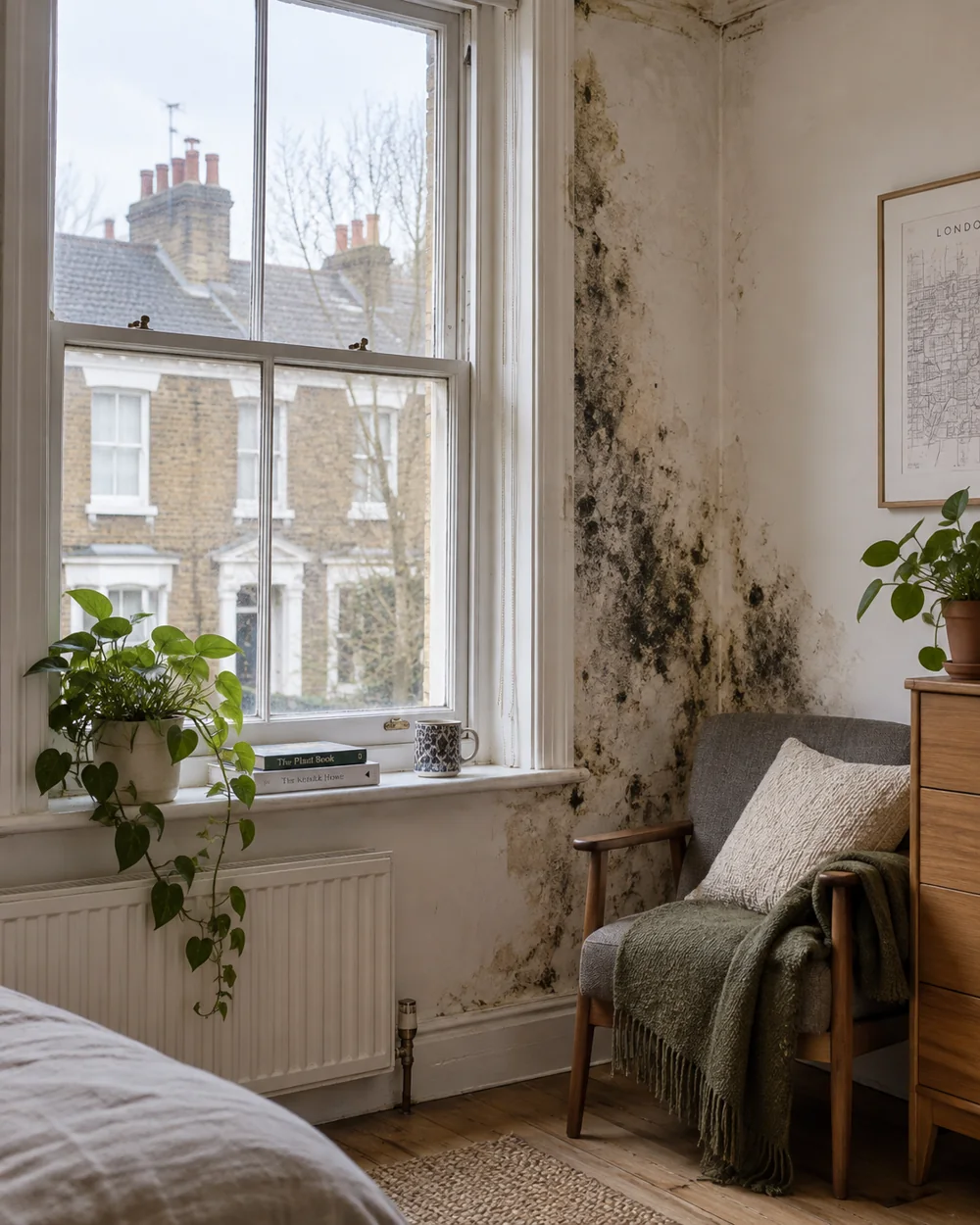
When you contact us, describe the affected rooms, your postcode and any repairs already attempted. If there is visible mould, treatment may need to be considered alongside moisture control. If one wall remains unusually cold, a cold wall survey may help. You do not need to choose between those services yourself; explain the pattern and we can discuss the appropriate starting point.
BEFORE YOU CALL
A few useful questions
Does condensation always mean poor household habits?
No. Moisture is part of normal living. Extraction, building condition, surface temperature and airflow all influence whether that moisture becomes a problem, and each deserves consideration before any conclusion is drawn.
Will a dehumidifier fix the cause?
It may help manage air moisture, but it does not repair a leak or automatically correct ventilation. Whether it is useful depends on the property and the findings of the investigation.
Can mould treatment and moisture control be planned together?
Yes. Visible growth and the conditions supporting it can be discussed together. The proposed work should still distinguish surface treatment, ventilation changes and any separate repairs needed in the building.
TELL US WHAT YOU HAVE NOTICED
Need help with this problem?
Have your postcode and the affected rooms ready. Tell us when the problem started, what has changed and any work already tried. We can discuss the appropriate starting point and the access or reporting arrangements before a visit is agreed.