
MOULD & MOISTURE / LONDON
Mould Inspection London
If you cannot tell why mould keeps returning, an inspection is a sensible place to start. We look at the affected surfaces and the conditions around them, then discuss what the evidence suggests. You do not need to diagnose condensation, a leak or a cold wall before contacting us. Describe what you have noticed and we can discuss the scope of an inspection for the property.
YOUR PROPERTY / THE DETAILS
The room tells part of the story
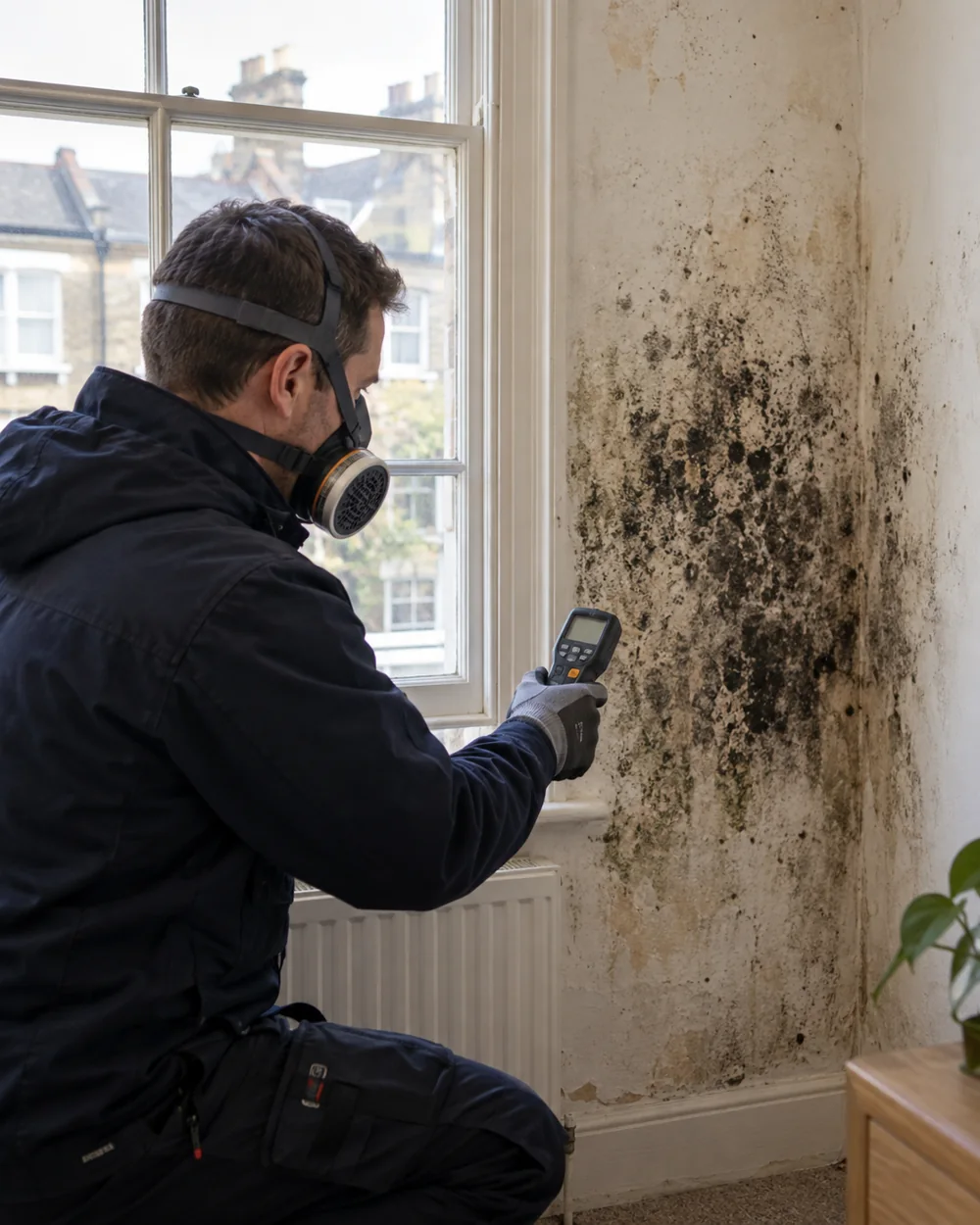
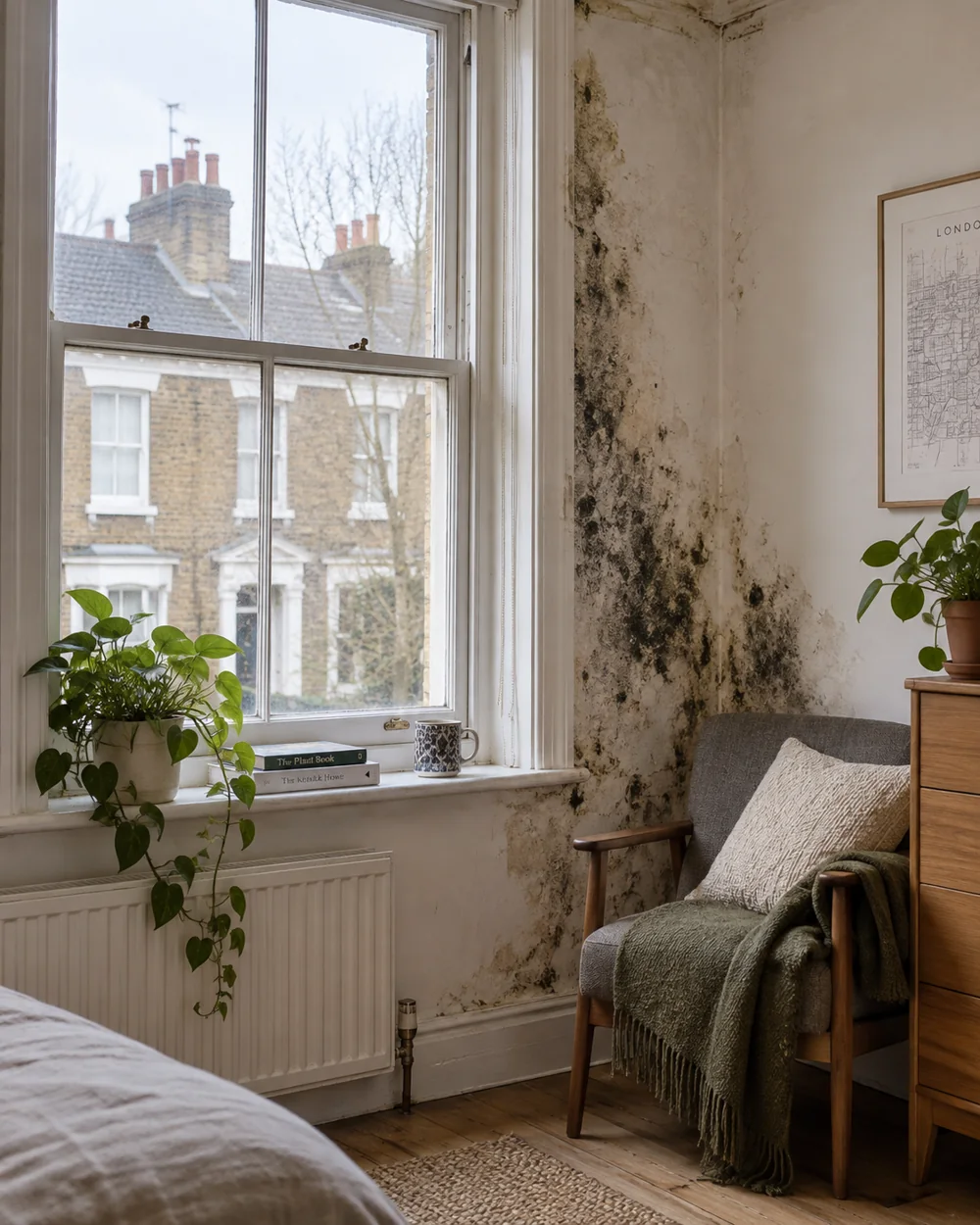
We consider where the growth appears, the condition of the finish and what is nearby. A patch above a shower raises different questions from staining beside a bedroom window. Growth hidden behind a wardrobe may reflect local airflow, a cold external wall or another moisture source. Looking at the room helps put the visible mould into context rather than treating the photograph as the whole problem.
Your observations help too. Tell us whether the problem is seasonal, whether it changes after rain and what happened following cleaning or repairs. The property may look drier on the inspection day than it does overnight or in colder weather. A useful history helps explain that difference and identifies questions that a one-off visit may not settle on its own.
YOUR PROPERTY / THE DETAILS
Consider moisture sources and ventilation
Condensation can form on colder surfaces when indoor moisture meets the right conditions. We discuss airflow, extraction, room use and areas that remain noticeably colder. These are relevant factors, but they should not become an automatic explanation for every damp patch. The building condition and signs of other water sources need consideration alongside what happens inside the home.
Leaks and rainwater ingress can leave materials damp even when household ventilation is reasonable. Where the location or history suggests those possibilities, further investigation may be needed. The inspection should explain why one cause seems more likely, what evidence supports it and what remains unconfirmed. An honest limit is more useful than a definite answer that the available access does not justify.
YOUR PROPERTY / THE DETAILS
Readings support the investigation
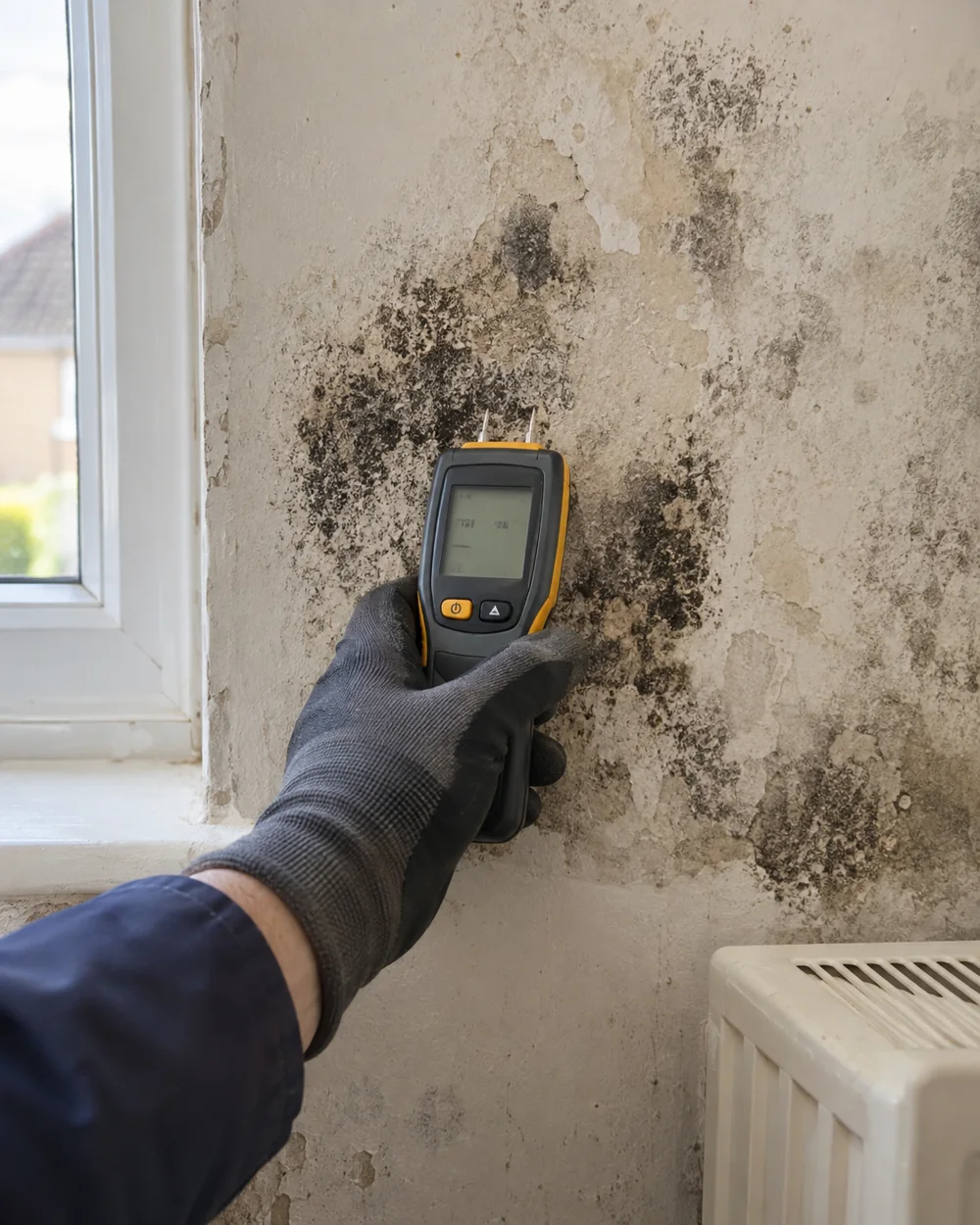
Moisture measurements can help compare surfaces and identify areas needing closer attention. They must be interpreted with the material, finish and surroundings. A reading is not a photograph of a hidden leak and does not establish a mould species. We discuss what the checks contribute to the assessment rather than using a number to stand in for an explanation.
Access also affects the conclusions. Fitted furniture, concealed construction and adjacent properties may prevent assessment of some areas. Further access, monitoring or a specialist investigation can be appropriate where uncertainty remains. The proposed scope should distinguish a routine inspection from additional tests, opening-up work or a written report intended for a particular purpose.
YOUR PROPERTY / THE DETAILS
Turn the findings into usable next steps
After the affected areas have been considered, the practical question is what to do next. There may be suitable surface treatment, a ventilation check, a repair to arrange or a need to investigate another part of the building. We discuss those actions separately so you can see which address the growth and which address the moisture supporting it.
Not every property needs the same combination of work. A bathroom ceiling and a cold bedroom corner may share a moisture contribution but need different surface attention. Where treatment is proposed, its scope should be clear. Where further investigation is suggested, the reason and access requirements should be explained. The aim is a sensible order of action, rather than several unrelated recommendations.
YOUR PROPERTY / THE DETAILS
Prepare without trying to diagnose the problem
Have your postcode, affected rooms and a brief history ready when you call. Mention recent decorating, window replacement, plumbing repairs or changes to extraction. Photographs of the room and the patch can help explain your concern. There is no need to remove finishes or move fixed furniture before discussing whether access to those areas is necessary and how it would be arranged.
If the property is rented, tell us who is commissioning the visit and who will provide access. If you require written findings, explain what you need the document for. Our rental property mould reports service may be relevant. Clear arrangements at the outset help make sure the inspection addresses the reported problem and that everyone understands what the visit will and will not establish.
BEFORE YOU CALL
A few useful questions
Do I need to book removal at the same time?
No. An inspection can help decide whether treatment is appropriate and what else needs attention. Work should be agreed from the findings rather than assumed before the affected surfaces have been assessed.
Can the inspection identify the mould species?
A visual inspection does not reliably identify a species from colour or appearance. If a separate sampling requirement exists, discuss it in advance rather than assuming it forms part of a routine visit.
What if the affected wall cannot be reached?
Explain the restriction when arranging the visit. The inspector can discuss accessible areas and limits, but concealed surfaces may need further permission or preparation before a fuller assessment is possible.
TELL US WHAT YOU HAVE NOTICED
Need help with this problem?
Have your postcode and the affected rooms ready. Tell us when the problem started, what has changed and any work already tried. We can discuss the appropriate starting point and the access or reporting arrangements before a visit is agreed.